
Orchid Care
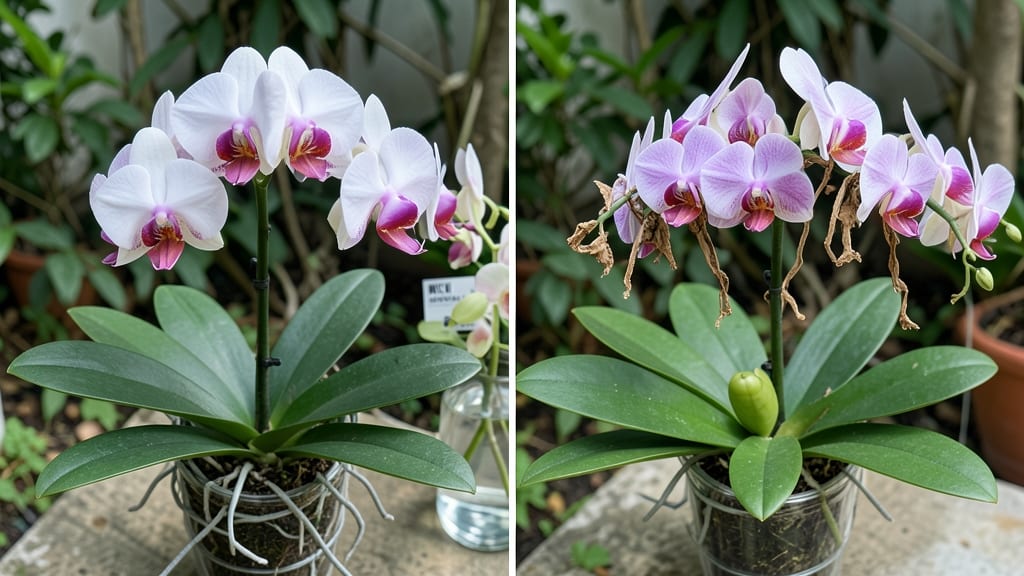
Orchids do not rebloom after they die back completely, but their roots often survive underground, storing nutrients in pseudobulbs that can regrow with proper care, light, and moisture.
When an orchid's foliage yellows and falls off, it's not always game over. 🌱 The plant's pseudobulbs—those thick, swollen stems—act like natural storage units, holding water and nutrients until conditions improve.
Many orchid varieties, especially Phalaenopsis or Cattleya, can remain dormant for months before sending out new shoots when they sense stable warmth and bright, indirect light. I've seen orchids "resurrect" themselves after months of dormancy when moved to a spot with consistent humidity and a gradual watering routine.
The key is patience: roots often revive before you see any visible growth above ground.
What's fascinating is how orchid roots adapt. Epiphytic orchids (those that grow on trees) have specialized root structures that absorb moisture from the air, while terrestrial types rely on soil. Both can enter a survival mode during dieback, but epiphytic orchids often need slightly higher humidity to bounce back.
If you're unsure whether your orchid's roots are still alive, gently check them after a watering session—they should feel plump and firm, not mushy or hollow.
💡 In This Article
- How Orchid Roots Survive After Dieback
- Reviving Dormant Orchids: Step-by-Step Care Guide
How orchid roots survive after dieback
Orchid roots rely on a clever survival mechanism when the plant appears "dead." Inside those thick pseudobulbs—often mistaken for stems—are specialized cells that store starches, sugars, and water like a natural battery.
These nutrients fuel root respiration even when the above-ground plant has died back, allowing roots to remain alive for months. 🌱 For example, Phalaenopsis orchids can maintain root viability for up to 6 months in dormancy, while Cattleya species may last even longer.
The root tips contain meristematic cells that can reactivate when conditions improve, making them far more resilient than most gardeners realize.
Epiphytic orchids (like Phalaenopsis) and terrestrial types (such as Paphiopedilum) handle dieback differently. Epiphytes have velamen—a spongy root layer—that absorbs moisture from air and bark, allowing them to survive with minimal soil contact. When dormant, their roots slow metabolism to 10-20% of normal activity, conserving stored nutrients.
Terrestrial orchids, however, need consistent moisture in their growing medium, so their roots remain slightly more active during dormancy. The key difference? Epiphytes can revive with just humidity and light, while terrestrial types often need repotting to refresh their root environment.
Photosynthesis plays a surprising role even after dieback. Green pseudobulbs continue producing energy through chlorophyll, though at reduced capacity. This energy maintains root cell viability until new shoots emerge. Place your dormant orchid near bright, indirect light (like an east-facing window) to support this process.
Too little light weakens revival chances, while direct sun can scorch reactivated roots. I've seen orchids with yellowed foliage produce new growth within 4-8 weeks when moved to optimal light conditions—proof that roots were still alive and ready to spring back.
Temperature also determines survival rates. Most orchids enter dormancy when nights drop below 60°F, but their roots can tolerate brief dips to 50°F if kept dry. The danger zone starts at 40°F, where root cells begin freezing.
This is why indoor orchids often revive more reliably than outdoor ones—consistent warmth prevents extreme temperature swings. If your orchid shows no signs of revival after 3-4 months of proper care, the roots may have died, but until then, they're likely biding their time.
One misconception is that all orchid roots die when the plant does. In reality, only the older, outer roots typically perish first—the younger, inner roots often remain viable. These inner roots can produce new shoots when conditions improve, which is why some orchids seem to "come back from the dead."
For instance, a Cattleya orchid might lose all its leaves but still produce a new bloom spike from dormant roots within 2-3 months of proper care. The secret lies in those hidden reserves and the plant's ability to prioritize root survival over immediate growth.
To test root viability, perform a simple "float test" after watering: healthy roots will feel firm and sink in water, while dead roots feel hollow and float. Even if only 20-30% of roots remain alive, they can often regenerate the entire system given time and proper conditions.
This resilience is what makes orchids such fascinating survivors in the plant world. 💫