
Blooming
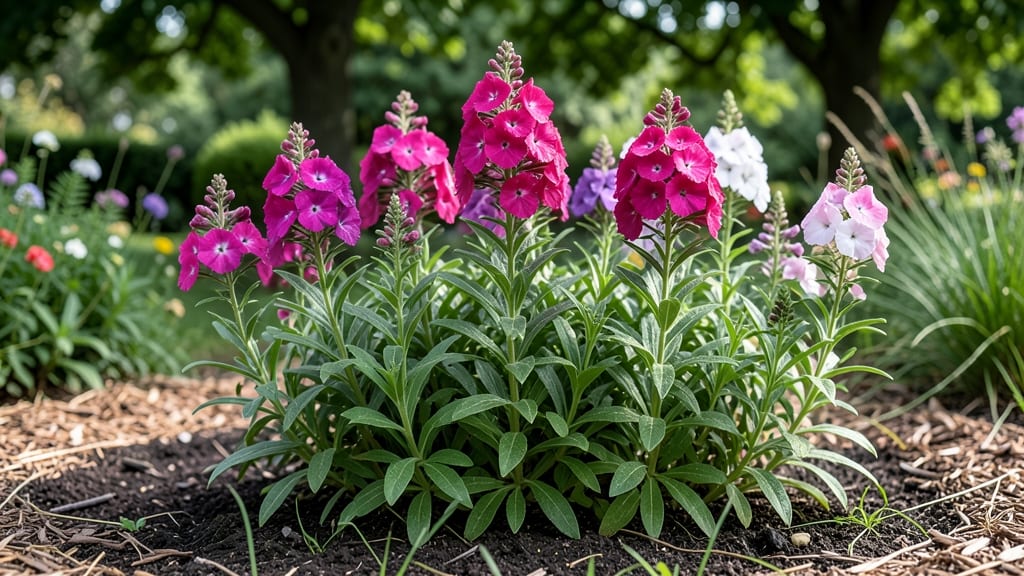
Phlox blooms all summer only in reblooming varieties like tall garden phlox or David phlox, which produce flowers from early summer through fall with proper care. Single-bloom types, such as wild phlox, flower once in spring or early summer.
Not all phlox varieties stay in bloom throughout summer—it depends entirely on the type you're growing.
Reblooming phlox, like the popular David phlox or tall garden phlox, are bred to produce continuous flowers when given the right conditions: consistent moisture, well-draining soil, and regular deadheading. 🌸 These varieties can extend their show from June well into October, while single-bloom types like wild phlox focus all their energy on one burst of spring color.
The key difference lies in their genetic makeup—rebloomers have been selectively bred to respond to seasonal cues differently.
For gardeners wanting summer-long color, reblooming phlox is the clear choice. These varieties thrive when planted in full sun with afternoon shade in hot climates, and they reward proper care with extended flowering. The tradeoff? They typically require more maintenance than their once-blooming cousins.
If you're working with wild phlox or other perennial types, you'll need to accept their seasonal rhythm unless you're willing to invest in hybrid varieties specifically bred for longer bloom periods.
💡 In This Article
- Phlox Blooming Seasons by Variety
- Tips to Encourage Longer Phlox Blooms
Phlox blooming seasons by variety
Phlox blooming patterns are fundamentally tied to their genetic classification. Reblooming varieties like tall garden phlox (Phlox paniculata) and David phlox (Phlox divaricata) have been selectively bred to respond to seasonal triggers differently than their single-bloom counterparts.
These hybrids possess a trait called continuous flowering, which allows them to produce new flower buds throughout the growing season rather than in one concentrated burst. The science behind this involves their photoperiod sensitivity—they're less dependent on specific daylight hours and more responsive to consistent growing conditions.
Wild phlox and other native varieties, however, follow a strict seasonal rhythm dictated by their natural environment. These plants typically bloom for just 2-4 weeks in spring when day lengths increase and temperatures rise to 60-70°F.
The blooming period ends when they shift energy to seed production, a survival mechanism that ensures the next generation.
Reblooming phlox, on the other hand, can continue producing flowers as long as they receive 6-8 hours of sunlight daily and consistent moisture, with some varieties like dwarf border phlox even reblooming in partial shade conditions.
The color spectrum also plays a role in bloom duration. Darker-colored phlox flowers (deep purples, blues) tend to have slightly shorter bloom times because their pigments absorb more heat, which can stress the plant.
Lighter flowers (whites, pinks) often last longer because they reflect more sunlight and heat. 🌸 This is why you'll often see white or pale pink reblooming phlox varieties maintaining their display for 8-10 weeks or more, while deep magenta types might fade after 6-7 weeks without proper care.
Temperature thresholds further explain the seasonal differences. Most phlox varieties require soil temperatures above 55°F to break dormancy and begin flowering. Reblooming types can tolerate slightly cooler nights (50-55°F) better than single-bloomers, which often need warmer nights (60°F+) to continue producing flowers.
This temperature resilience is another hybrid trait that gives rebloomers their extended season advantage. In regions with hot summers, afternoon shade becomes crucial to prevent flower buds from forming too quickly and then dying back in the heat.
Light exposure creates another critical difference. While all phlox varieties need sunlight to flower, reblooming types can handle slightly less intense light conditions. They'll often produce smaller but more numerous flowers in partial shade, whereas single-bloomers may fail to flower at all if deprived of full sun.
This adaptability makes reblooming phlox excellent choices for garden edges or under trees where light competition exists. The tradeoff? Their flowers may be slightly less vibrant in lower light conditions compared to their full-sun counterparts.
Consider these key variety characteristics when planning your garden:
- Tall garden phlox: Blooms 6-10 weeks with proper care, reaching 2-4 feet tall
- David phlox: Compact 1-2 feet height, blooms 4-6 weeks but often reblooms lightly in fall
- Creeping phlox: Ground cover type, blooms 3-5 weeks in spring only
- Wild phlox: Native species with 2-3 week bloom period in early summer