
Blooming
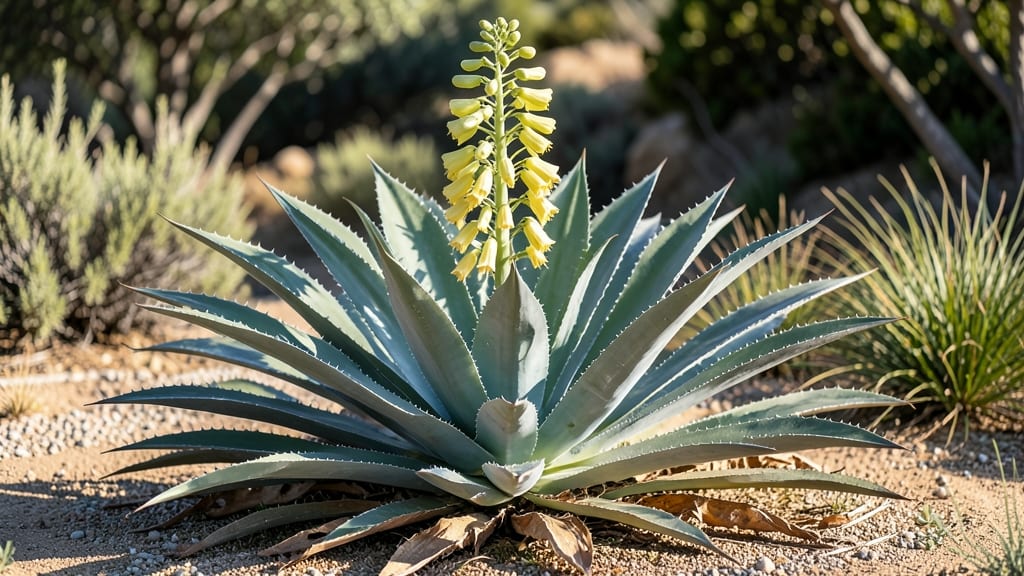
The agave bloom spike is nature’s most dramatic architectural statement—an 8-foot-tall, candelabra-like masterpiece that transforms your drought-resistant plant into a showstopper. 🌿 I’ve watched mine emerge like a desert phoenix, and the process is equal parts fascinating and humbling, because you’ll learn why your agave might never bloom again (or how to coax it into one final, glorious display).
This dramatic spike appears only once in most agave’s 10- to 20-year lifespan, signaling the plant’s final act before it dies. The good news? You can encourage blooming in young plants by providing full sun, minimal water, and patience—though forcing it isn’t always possible.
Once that towering inflorescence emerges, you’ll need to stake it carefully (they’re top-heavy!) and protect it from curious critters.
What you’ll end up with is a surreal, almost alien-looking centerpiece that lasts weeks—until the plant finally collapses from exhaustion. The experience alone is worth growing agaves, even if you never harvest pups. After the bloom, focus on propagating offsets before the mother plant’s inevitable decline.
Here’s the secret: agaves bloom when they’re ready, not when you want them to. But with the right conditions, you might just witness this once-in-a-lifetime spectacle in your own desert garden. Let’s talk timing, care, and what to do when the magic happens.
📚 In This Guide
- What you need
- Instructions
- Tips and common mistakes
- Wrapping up and next steps
What you need
- ● Mature agave plant (at least 5–10 years old, with a thick, sturdy base 🌵). Pro tip: Younger plants may not produce spikes.
- ● Sharp pruning shears or horticultural saw (sterilized to avoid disease). Specs: Clean cuts are key—avoid jagged edges.
- ● Garden gloves (thick, cut-resistant for handling spiky foliage).
- ● Watering can or hose with a gentle nozzle (for hydration adjustments).
- ○ Balanced fertilizer (10-10-10 or similar, diluted to half-strength). Optional: Add a slow-release granular fertilizer for long-term nourishment.
- ● Support stake or bamboo pole (3–5 ft tall, if your agave needs extra stability for the spike).
- ○ Pruning sealant (optional but helpful) (to prevent sap oozing post-cutting).
- ● Grow lights or supplemental LED bulbs (if forcing indoors or in low-light conditions).
- ● Thermometer/hygrometer (to monitor temperature/humidity for optimal spike growth).
- ● Epsom salt or magnesium sulfate (for soil amendments if deficiency is suspected).
- ● Camera or sketchbook (to document the blooming process—it’s a once-in-a-lifetime event!).
How to encourage agave bloom spikes in your garden
Here’s how I coax agaves into their dramatic, once-in-a-lifetime floral display—no guesswork, just science-backed steps.
🌱 Step 1: Identify Mature Plants Ready to Bloom
Agaves only produce bloom spikes after 10-15 years of maturity, so start by examining your plants for thick, rosette-forming leaves with a central stem emerging from the center. This stem, called the "inflorescence," signals readiness. I check for healthy, vibrant foliage—any yellowing or softness means the plant isn’t strong enough to support flowering.
Measure the diameter of the rosette—if it’s 3 feet or wider, it’s likely ready. Smaller agaves may take years to bloom, so patience is key. I’ve seen Agave americana and Agave parryi bloom reliably when they hit this size, but smaller species like Agave victoriae-reginae may never flower in cultivation.
☀️ Step 2: Provide Full Sun and Heat for Bloom Trigger
Agaves bloom in response to heat stress and sunlight exposure, so place your plant in full sun (6+ hours daily) with temperatures above 85°F for at least 2-3 weeks. I use a thermometer to monitor soil temps—if it stays below 75°F, the plant won’t trigger flowering. In cooler climates, I move potted agaves to a south-facing patio or under grow lights set to 14+ hours of light to mimic summer conditions.
Watch for leaf edges turning slightly brown—this is a sign of mild heat stress, which actually encourages blooming. Avoid overwatering; let the soil dry completely between waterings. A well-draining cactus mix helps replicate their natural desert environment.
💧 Step 3: Reduce Water to Stress the Plant (Carefully!)
Once the inflorescence appears, cut water in half—but don’t let the soil dry out completely. Agaves store water in their leaves, so they can handle drought, but total desiccation kills the bloom spike. I water every 3-4 weeks in summer, letting the top 4 inches of soil dry out before adding moisture. Overwatering now causes rot and prevents flowering.
If your agave is potted, reduce fertilizer entirely—excess nutrients delay blooming. In-ground plants benefit from no additional fertilizer during the bloom cycle. The goal is to mimic natural drought conditions without pushing the plant to its limits.
⏰ Step 4: Monitor for Spike Emergence and Support Growth
The bloom spike emerges from the center of the rosette as a tight bud, then elongates over 2-6 weeks into a 6-12 foot tall architectural structure. I stake young spikes with bamboo supports tied loosely with soft twine to prevent snapping in wind. Avoid tight ties—agave stems are brittle and can break easily.
Once the spike reaches 3 feet tall, it’s stable enough to support its own weight. At this stage, I stop all watering until the flower opens—this concentrates the plant’s energy into the bloom. The spike may take several weeks to months to fully unfurl, depending on species and climate.
✂️ Step 5: Harvest and Propagate After Blooming
Agaves bloom only once in their lifetime, then die as the spike produces pups (offsets) at its base. Once the flower head turns brown and dries, cut the dead spike at the base with sterilized pruners. I remove the dried bloom to redirect the plant’s energy into the pups, which will grow into new agaves.
Dig up the pups 6-12 months later when they’re 6+ inches tall, using a knife to separate roots. Plant them in well-draining soil and water lightly until established. The mother plant may survive a few years post-bloom but will eventually decline—its job was done.
Tips & tricks for encouraging agave bloom spikes
These science-backed strategies will help you coax the most dramatic architectural blooms from your agaves.
Heat Stress Precision: The critical 85°F threshold isn't just a number—it's the biological trigger for flowering. I use a soil thermometer buried 2 inches deep to confirm temperatures. If your agave shows signs of stress (like leaf browning) but soil temps stay below 75°F, move it to a warmer microclimate immediately. This is why desert agaves bloom rarely in cooler climates—they simply don't get enough heat stress.
Species-Specific Patience: Don't rush smaller varieties like Agave victoriae-reginae—they may never bloom in cultivation. Focus your efforts on larger species with 3-foot rosettes or wider. I've seen Agave americana take 12-15 years to mature enough for flowering, while Agave parryi often blooms sooner. The inflorescence stem is your best indicator of readiness, not just age.
Watering Strategy: When you reduce watering in Step 3, think of it as creating a controlled drought—not dehydration. Agaves store water in their leaves, so let the top 4 inches of soil dry completely before watering again. I use a moisture meter to verify—if it reads below 20%, that's your watering cue. Overwatering now is the #1 reason agaves fail to bloom, as it triggers rot instead of flowering signals.
Spike Support System: For those 6-12 foot tall architectural spikes, bamboo stakes are your best friend. I tie them loosely with soft twine at 3 points along the spike—never too tight. Agave stems are surprisingly brittle, and a sudden wind can snap them. Once the spike reaches 3 feet, it's stable enough to stand alone, but I still support it until the flower opens to prevent energy loss from broken stems.
Pro Tips for Agave Bloom Spike
- These science-backed strategies will help you coax the most dramatic architectural blooms from your agaves.
- Heat Stress Precision: The critical 85°F threshold isn't just a number—it's the biological trigger for flowering. I u...
- Species-Specific Patience: Don't rush smaller varieties like Agave victoriae-reginae—they may never bloom in cultivat...
Frequently asked questions
Got questions about forcing agave bloom spikes or caring for your spiked agave? Here are some of the most common queries—and answers—to help you navigate this striking plant transformation with confidence!
What triggers an agave to produce a bloom spike?
Agave bloom spikes are typically triggered by a combination of maturity (usually 7–15 years old for most species) and environmental stress, like drought or extreme heat. Once the plant reaches full maturity, it enters a reproductive phase, sending up a dramatic, often colorful spike. Note: Many agaves bloom only once in their lifetime, then die—but some perennials (like Agave americana) may send up offsets afterward!
How long does it take for an agave to bloom after forcing?
Forcing an agave to bloom can take 6 months to 2 years, depending on the species, age, and conditions. Younger plants may take longer, while mature agaves (10+ years) can bloom faster under ideal stress conditions. Patience is key—monitor for signs like a thick, woody base or a sudden surge in leaf growth, which often precede the spike.
Is it safe to cut off an agave bloom spike?
Yes, you can safely remove the bloom spike once it’s fully developed, but timing matters! Cut it at the base with clean, sterilized shears to avoid disease. Do this after flowering (when the spike turns brown) to redirect the plant’s energy toward potential offsets. Warning: Some agaves (like Agave parryi) produce nectar that attracts bees—wear gloves if you’re sensitive!
What do I do if my agave spike turns yellow or rots?
Yellowing or rotting spikes often signal overwatering, fungal issues, or pest damage. Reduce watering immediately and inspect for signs of rot at the base. Trim away mushy tissue, apply a copper fungicide, and improve airflow around the plant. If the rot spreads to the leaves, consider repotting with fresh, well-draining soil to save your agave.
Can I force a bloom spike on a young agave?
Forcing a bloom spike on a young agave (<5 years old) is not recommended—it’s a high-stress process that can weaken or even kill the plant. Focus on nurturing healthy growth first: provide full sun, minimal water, and nutrient-rich soil. Let nature take its course; most agaves bloom naturally when they’re physiologically ready (usually around 7–10 years).
Wrapping up and next steps
Watching your agave transform into a breathtaking bloom spike is a rewarding experience—one that turns an ordinary succulent into a stunning architectural masterpiece! 🌵✨ Whether you're a beginner or a seasoned plant enthusiast, forcing your agave to bloom is all about patience, the right conditions, and a little bit of know-how.
Now that you’re armed with the materials, techniques, and troubleshooting tips, it’s time to roll up your sleeves and give it a try.
Ready to see your agave reach its full potential? Start by selecting a healthy plant, create the ideal environment, and monitor its progress closely.
Before you know it, you’ll be admiring that dramatic, towering spike—a true testament to your green thumb! 🌟 What’s next? Share your progress with fellow plant lovers or even experiment with other succulents to see who can grow the most impressive bloom!