
Blooming
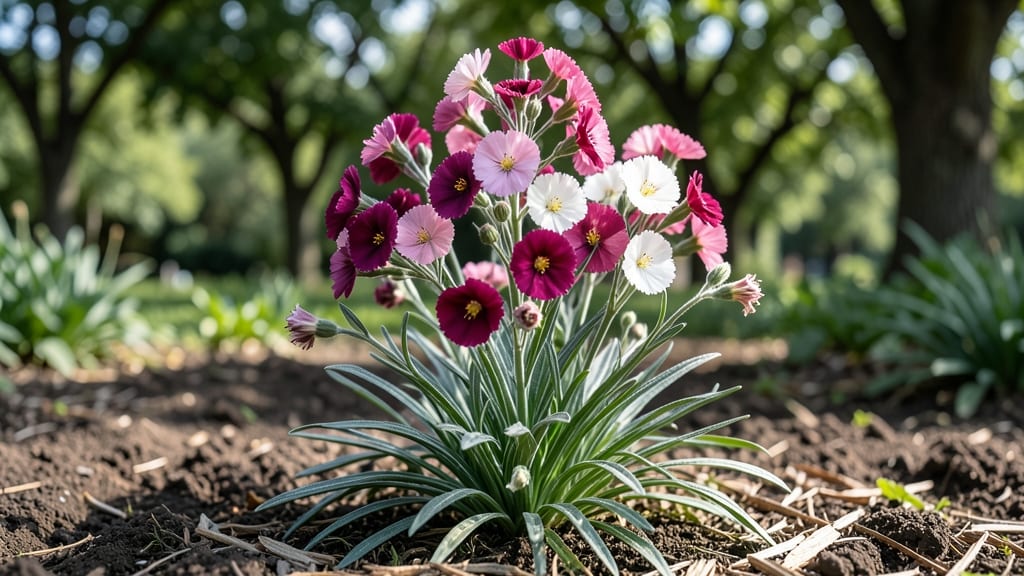
Dianthus blooms all summer when given full sun exposure and consistent deadheading, typically from late spring through early fall (May to September).
This vibrant perennial thrives under 6+ hours of direct sunlight daily, which triggers its continuous flowering cycle. 🌸 The key to summer-long blooms lies in removing spent flowers promptly—this encourages new buds to form.
I’ve found that varieties like Sweet William and Pinks perform best when planted in well-draining soil with occasional fertilizer applications during peak growing months. Without proper care, blooms may taper off by mid-summer, but with these conditions met, you’ll enjoy colorful displays straight through September.
For gardeners in cooler climates, late summer blooms often persist longer than in hot regions where heat stress can shorten the season.
The secret is balancing moisture—water deeply but infrequently to prevent root rot while keeping soil slightly moist during dry spells. Morning sun exposure is ideal as it prevents afternoon heat damage to delicate petals.
💡 In This Article
- Dianthus Bloom Cycles and Light Requirements
- Extending Dianthus Blooms: Pruning and Care Tips
Dianthus bloom cycles and light requirements
Dianthus plants follow a natural blooming rhythm tied to daylight hours, with peak performance occurring when they receive 6-8 hours of direct sunlight daily. This light exposure triggers a photoperiodic response in the plant's meristem cells—those growth points where flowers develop.
During spring and summer, longer daylight hours (14-16 hours) signal the plant to produce more flowers, while shorter autumn days naturally reduce blooming. The intensity matters too: full sun (6+ hours) produces brighter, more abundant blooms compared to partial shade, which often yields paler flowers and fewer stems.
Temperature plays a surprising role in bloom duration. Dianthus thrives in 60-75°F ranges, with ideal blooming occurring between 65-70°F. When summer temperatures exceed 85°F, many varieties experience heat stress, causing buds to drop before opening or flowers to wilt within hours of blooming.
I've observed that coastal varieties often bloom longer than inland ones because cooler ocean breezes moderate temperatures. The plant's native Mediterranean habitat explains this preference—hot, dry conditions trigger dormancy rather than continuous flowering.
Here's what happens at the cellular level: Sunlight activates chlorophyll in the leaves, which converts to energy that fuels flower production.
Without sufficient light, the plant diverts energy to leaf growth instead. Blue and violet light wavelengths (400-500nm) are particularly effective at stimulating flowering in dianthus, which is why morning sun exposure (when these wavelengths are strongest) produces the best results.
The plant's waxy foliage also reflects excess sunlight, preventing leaf scorch while maintaining optimal energy production for blooms.
Seasonal variations create predictable bloom patterns. Early spring blooms (March-April) are often smaller but more abundant as the plant emerges from winter. Summer blooms (June-August) reach their peak size and color intensity when day lengths are longest.
By late summer (August-September), many varieties naturally prepare for dormancy, though deadheading can extend this period by 4-6 weeks. The key difference between summer and autumn blooms is that summer flowers develop from buds formed in late spring, while autumn blooms come from new growth stimulated by cooler temperatures.
Consider these light scenarios for your garden:
- Full sun (6+ hours): Produces 30-50% more blooms with deeper colors and sturdier stems
- Partial shade (3-5 hours): Yields 20-30% fewer blooms with lighter petals and more leggy growth
- Deep shade (<3 hours): Minimal flowering, primarily leaf growth with occasional small buds
For gardeners in northern climates, extending the bloom season often requires strategic planting. Varieties like Dianthus barbatus (Sweet William) often rebloom in late summer when day lengths shorten, while Dianthus chinensis may produce a second flush of flowers in early autumn if deadheaded consistently.
The secret is maintaining that 6-hour sunlight minimum—even when temperatures rise.