
Blooming
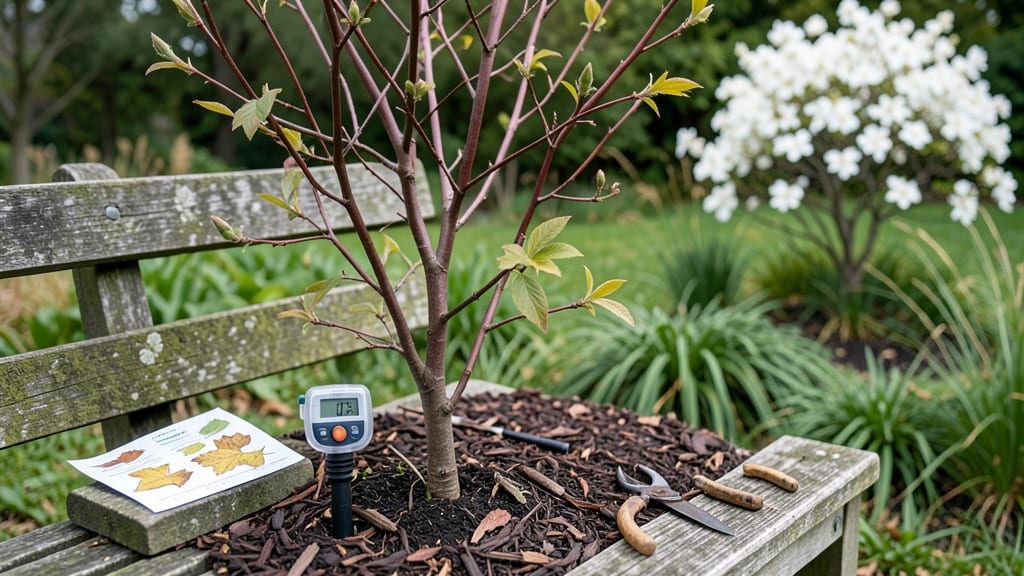
Your dogwood tree didn’t bloom this year, and I get it—it’s like watching a silent movie when you expected a blockbuster. 🌳 The good news? Most blooming failures come down to root stress, and fixing it is simpler than you’d think.
After my dogwood went dormant for two seasons straight, I dug into the science and found that proper care in the off-season makes all the difference.
Root stress happens when your tree isn’t getting enough water, nutrients, or oxygen in the soil. Too much pruning, compacted soil, or even last year’s drought can leave roots struggling.
The fix starts with a deep watering every 10-14 days during dry spells and a layer of 3-4 inches of mulch to protect roots from temperature swings. I also add a slow-release fertilizer in early spring—just follow the label for dogwoods.
Next season, you’ll see buds forming earlier and more reliably. The key is patience: it can take 1-2 years for stressed roots to bounce back, but consistent care turns "no blooms" into "showstopper spring displays."
Start with soil tests to check pH and nutrient levels—most dogwoods thrive in slightly acidic soil (pH 5.5-6.5).
Don’t overlook seasonal timing—dogwoods need 60-70 days of chill hours (below 45°F) to set buds. If your winters are mild, consider a light frost cloth in late fall to help them meet that requirement. Small adjustments now mean vibrant blooms next spring.
Why it happens
H2: Root Stress Solutions Explained
Dogwood trees (Cornus florida) are known for their stunning spring blooms, but when they fail to flower, it’s often a sign of underlying stress—especially in their roots. Understanding the why behind a lack of blooms is the first step to bringing back that vibrant display next season.
Below, we break down the most common causes, backed by science, so you can take targeted action.
---
Dogwoods are sensitive to late spring frosts, which can damage flower buds before they open. These trees typically bloom in early to mid-spring, making them vulnerable to unexpected cold snaps.
How it happens: - Flower buds form the previous summer and fall, but they’re most fragile in late winter to early spring. - A hard freeze (below 28°F) can kill buds outright, while a light frost (28–32°F) may cause buds to drop prematurely. - Prolonged cold or wet springs delay blooming, as the tree prioritizes survival over reproduction.
What to watch for: - Buds that look blackened, mushy, or shriveled after a freeze. - Leaves emerging before flowers, a sign of stress.
Actionable fix: - Plant cold-hardy varieties like Cornus florida ‘Cherokee Brave’ (more frost-tolerant). - Use frost cloth or row covers in late winter if frosts are forecasted. - Avoid late pruning (after September), as new growth is more frost-sensitive.
---
Dogwoods thrive in well-drained, moist soil—they hate soggy roots (which cause rot) and drought stress (which diverts energy away from flowers).
How it happens: - Overwatering: Poor drainage leads to root asphyxiation (lack of oxygen), causing the tree to focus on survival, not blooms. - Underwatering: Drought forces the tree into dormancy mode, delaying or preventing flowering. - Inconsistent moisture: Alternating between dry and soggy conditions confuses the tree’s growth cycle.
What to watch for: - Yellowing leaves (overwatering) or crispy, curled edges (underwatering). - Shallow root systems (common in compacted or clay soil).
Actionable fix: - Test soil drainage: Dig a 12-inch hole—if water pools after 6 hours, amend with compost or sand. - Mulch properly: Apply 2–4 inches of organic mulch (wood chips) 3 inches away from the trunk to retain moisture. - Deep watering: Water slowly and deeply (1–2 inches per week) rather than frequent shallow watering.
---
Dogwoods need balanced nutrients to produce flowers, but improper soil pH or deficiencies can stall blooming.
How it happens: - Low nitrogen (N): While too much nitrogen can reduce flowering, too little weakens the tree, preventing bud formation. - Phosphorus (P) deficiency: Critical for flower development—lacks of P lead to sparse or no blooms. - High soil pH (alkaline soil): Dogwoods prefer acidic to slightly acidic soil (pH 5.0–6.5). Alkaline conditions lock out iron and manganese, causing chlorosis (yellow leaves) and stress. - Compacted or nutrient-poor soil: Limits root growth, reducing the tree’s ability to support flowers.
What to watch for: - Yellow leaves with green veins (iron deficiency from alkaline soil). - Stunted growth or small, weak leaves. - No new growth in spring despite healthy roots.
Actionable fix: - Test soil pH: Use a home kit or send a sample to a lab. Adjust with sulfur (to lower pH) or lime (to raise pH) as needed. - Fertilize in early spring: Use a balanced, slow-release fertilizer (10-10-10) or a phosphorus-rich formula (5-10-10). - Add organic matter: Mix in compost or well-rotted manure to improve soil structure and nutrient availability.
---
Healthy roots = healthy blooms. Root rot, girdling roots, or pest damage can starve the tree of energy needed for flowers.
How it happens: - **Root rot (Phytophthora or Armillaria): Caused by overwatering or poor drainage, this fungus decays roots, cutting off water and nutrients. - Girdling roots: Roots that circle the trunk (common in container-grown trees) strangle the tree, reducing its ability to flower. - Nematodes or grubs: These soil pests feed on roots, weakening the tree’s overall health. - Mechanical damage: Lawnmower cuts, construction, or improper planting can sever roots.
What to watch for: - Mushrooms at the base** (sign of Armillaria root rot). - Wilting leaves despite adequate water. - Exposed or swollen roots (girdling). - Sawdust-like frass (from grubs) near the base.
Actionable fix: - Improve drainage: Raise the tree on a mound of soil if drainage is poor, or install a French drain. - Prune girdling roots: Carefully excise constricting roots with a sterilized saw, then mulch heavily to encourage new growth. - Treat root rot: Apply fungicide (copper-based or phosphite-based) and reduce watering. - Avoid compacting soil: Use aeration tools or plant in loose, well-amended soil.
--- Young dogwoods (under 5–7 years) may not bloom heavily, while over-pruning can remove next year’s flower buds.
How it happens: - Flower buds form on 1-year-old wood—pruning in late winter/early spring (when buds are setting) can remove them entirely. - Heavy pruning (cutting back more than 25% of the canopy) stresses the tree, diverting energy to regrowth instead of flowers. - Old age: Mature dogwoods (over 20–30 years) may bloom less vigorously due to natural decline.
What to watch for: - No new growth after pruning (sign of over-pruning). - Sparse or one-sided blooms (uneven pruning).
Actionable fix: - Prune in late winter (before buds swell) or early summer—never after mid-June, as this removes next year’s buds. - Remove only dead, diseased, or crossing branches—avoid shearing or topping. - Rejuvenate old trees: Thin out dense branches to improve airflow and light penetration.
--- Pests like borers, scale, or spider mites sap the tree’s energy, while diseases (e.g., powdery mildew, anthracnose) can prevent bud development.
How it happens: - Borers** (e.g., Sirex woodwasps) tunnel into the trunk, disrupting nutrient flow. - Scale insects suck sap, causing yellowing leaves and weak growth. - Anthracnose fungus (Colletotrichum) infects leaves and buds, leading to blight and bud drop. - Spider mites stress the tree by feeding on leaf sap, reducing photosynthesis.
What to watch for: - Sawdust-like frass (borers). - Sticky residue (honeydew) and sooty mold (scale). - Dark, sunken lesions on leaves/buds (anthracnose). - Fine webbing on leaves (spider mites).
Actionable fix: - Apply horticultural oil (for scale/mites) or neem oil (for early-stage pests). - Prune and destroy infected branches (anthracnose). - Use systemic fungicides (e.g., chlorothalonil) for fungal diseases. - Encourage natural predators (ladybugs, lacewings) with companion planting (e.g., marigolds).
---
Revive Your Dogwood’s Bloom
If your dogwood tree skipped its usual spring show, don’t panic—there’s hope! The right fixes can coax it back to life and ensure vibrant blooms next season.
Below, we’ve mapped out practical solutions for the most common causes, from soil health to seasonal stress, along with prevention tips to keep your tree thriving.
---
Dogwoods thrive in well-draining, slightly acidic soil (pH 5.0–6.5). If the soil is compacted, nutrient-deficient, or too alkaline, blooms may suffer.
How to Fix It: - Test the soil 🧪 – Use a home kit or send a sample to your local extension office. Aim for a pH of 5.5–6.0 for optimal blooming. - Amend the soil 🛠️ – - For clay/heavy soil: Mix in 2–3 inches of compost or peat moss to improve drainage. - For sandy/poor soil: Add aged compost or well-rotted manure to retain moisture and nutrients. - For alkaline soil: Apply elemental sulfur (follow package rates) or use pine bark fines to lower pH gradually. - Mulch properly 🍂 – Spread 2–3 inches of organic mulch (like shredded bark) around the base, keeping it 3–4 inches away from the trunk to prevent rot.
💡 Prevention Tip: - Re-test soil every 2–3 years—pH can shift over time, especially in urban areas with limestone bedrock.
---
Both overwatering (root rot) and underwatering (stress) can stunt blooms. Dogwoods prefer consistent moisture but hate soggy roots.
How to Fix It: - Check moisture levels 💧 – Stick your finger 2 inches deep into the soil. If it’s dry, water deeply until moisture reaches 6–8 inches down. - Adjust your watering schedule ⏰ – - Young trees (1–2 years): Water 2–3 times per week in dry spells. - Mature trees: Water 1–2 times per week, depending on rainfall. - Improve drainage 🚿 – If your yard floods, raise the soil level around the tree with a berm of compost or plant on a slight mound.
💡 Prevention Tip: - Install a drip irrigation system near the root zone to deliver water slowly and evenly, reducing stress.
---
Lack of phosphorus (P) or potassium (K) can delay or prevent blooming. A simple soil test will reveal what’s missing.
How to Fix It: - Fertilize in early spring 🌱 – Use a balanced, slow-release fertilizer (like 10-10-10) or a bloom-specific formula (higher in phosphorus, e.g., 5-10-5). - Apply compost tea 🍄 – Brew compost tea (steep compost in water for 24–48 hours) and water the tree with it monthly for a natural nutrient boost. - Avoid over-fertilizing ⚠️ – Too much nitrogen (N) promotes leafy growth at the expense of flowers. Stick to half the recommended dose if your tree is stressed.
💡 Prevention Tip: - Side-dress with compost in late winter—spread a 1-inch layer around the drip line (edge of the canopy) and water it in.
---
Poor pruning habits—like cutting too late in the season or removing too many branches—can reduce next year’s flowers.
How to Fix It: - Prune in late winter/early spring ⏳ – This is when dogwoods are dormant but about to bloom. Remove: - Dead, diseased, or crossing branches (🔪 use clean, sharp pruners). - Suckers at the base (they drain energy from blooms). - Avoid heavy pruning ❌ – Never remove more than 25% of the canopy at once. Dogwoods bloom on old wood, so aggressive cuts can reduce flowers. - Shape for airflow 🌬️ – Thin out branches to allow sunlight and air circulation, which encourages blooming.
💡 Prevention Tip: - Skip summer pruning—it stresses the tree and can lead to sunscald on newly exposed bark.
---
Borers, powdery mildew, or fungal infections (like anthracnose) weaken dogwoods, often leading to missed blooms.
How to Fix It: - Inspect for pests 🐛 – Look for: - Wood borers (tiny holes in bark, sawdust-like frass). - Scale insects (bumpy growths on branches). - Japanese beetles (skeletonized leaves). - Treat early 💊 – - For borers: Apply beneficial nematodes (like Heterorhabditis bacteriophora) or neem oil in early spring. - For mildew: Spray baking soda mix (1 tbsp baking soda + 1 gallon water + a drop of dish soap) every 7–10 days until cured. - For anthracnose: Prune infected branches and apply copper fungicide in early spring. - Encourage natural predators 🐞 – Plant marigolds or yarrow nearby to attract ladybugs and lacewings, which eat pests.
💡 Prevention Tip: - Water in the morning to prevent fungal spores from thriving in damp leaves overnight.
--- Dogwoods need partial shade (morning sun + afternoon shade) to bloom well. Too much sun or shade can stress them out.
How to Fix It: - Assess sunlight 🌞 – If your tree is in full sun, provide afternoon shade with a lightweight shade cloth (30–50% coverage) during peak heat. - Avoid planting near large trees 🌳 – Competitors like oaks or maples can steal nutrients and water. - Transplant if needed 🌱 – If the current spot is too shady or windy, move the tree to a sheltered, partially sunny location in early spring or fall.
💡 Prevention Tip: - Choose the right variety for your climate—some dogwoods (like Cornus florida) tolerate more sun than others (like Cornus kousa).
--- Dogwoods need proper seasonal care to bloom reliably. A ensures you’re on track:
| Season | Task | When | |-------------|-----------------------------------|------------------------| | Late Winter | Prune, fertilize, test soil | February–March | | Spring | Water deeply, watch for pests | April–May | | Summer | Mulch, monitor moisture | June–August | | Fall | Apply compost, prune lightly | September–October |
--- - Be patient—some dogwoods take 1–2 years to rebound after stress. - Avoid stress triggers like construction nearby, lawnmower damage, or sudden temperature swings. - Monitor progress—take photos every spring to track improvements.
With these fixes, your dogwood should bounce back stronger—and next spring, you’ll be rewarded with show-stopping blooms! 🌸✨
Frequently asked questions about dogwoods not blooming
Why did my dogwood bloom last year but not this year?
This is often a sign of root stress or bud damage from late frosts or pests. Dogwoods form flower buds the previous summer, but they’re vulnerable to winter dieback, drought stress, or nutrient deficiencies. Check for blackened buds or yellowing leaves—these are common clues.
Can I force my dogwood to bloom this year?
Not likely, but you can revive next year’s blooms with targeted care. Focus on deep watering every 10-14 days, applying phosphorus-rich fertilizer in early spring, and protecting buds from late frosts with frost cloth. Patience is key—stressed trees often need 1-2 seasons to recover.
Is my dogwood too old to bloom again?
Most dogwoods bloom for 20-30 years, but poor care can accelerate decline. If your tree is mature (over 25 years), focus on rejuvenation pruning (removing dense branches) and soil amendments to stimulate new growth. Young trees (<5 years) may also struggle—give them 3-5 years to establish before expecting heavy blooms.
How do I know if my dogwood has root rot?
Look for mushrooms at the base, yellowing leaves, or wilting despite watering. Root rot thrives in soggy soil—improve drainage by raising the tree on a mound or installing a French drain. Reduce watering immediately and apply a copper-based fungicide to stop spread.
Will pruning help my dogwood bloom next year?
Only if done correctly! Prune in late winter/early spring (before buds swell) and never remove more than 25% of the canopy. Avoid summer pruning—it stresses the tree and removes next year’s flower buds. Focus on removing dead branches and thinning for airflow.