
Blooming
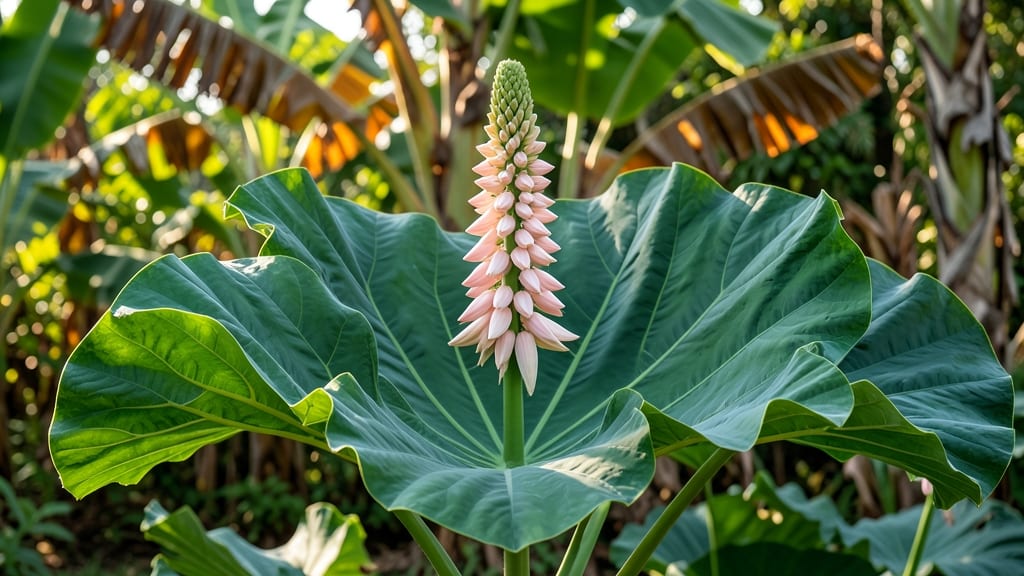
Elephant ears do bloom flowers in summer, showcasing striking, arrowhead-shaped spathes that emerge above their bold foliage—though flowering depends on the specific variety and growing conditions.
These tropical plants typically produce their first blooms in their second growing season, though some fast-growing varieties may surprise you earlier in warmer climates. 🌸 The vibrant spathes—ranging from deep pink to soft white—are actually modified leaves that protect the tiny flowers inside, creating a dramatic visual effect.
What many gardeners don't realize is that flowering often signals the plant is nearing the end of its active growth cycle, especially in colder regions where the foliage will eventually die back after blooming.
Interestingly, not all elephant ear varieties flower reliably. For example, Colocasia types often produce blooms more consistently than Alocasia species, which may focus more on foliage production.
The key factors that trigger flowering include 6+ hours of direct sunlight daily, well-draining soil rich in organic matter, and adequate phosphorus during the growing season. In my experience, plants grown in containers often bloom less frequently than those planted in garden beds, likely due to root restriction.
💡 In This Article
- Why Elephant Ears Produce Flowers (And When to Expect Them)
- Encouraging Elephant Ear Blooms: Care Tips for Flowering Success
Why elephant ears produce flowers (and when to expect them)
Elephant ears trigger their dramatic blooms through a combination of photoperiodism and thermal cues, where daylight length and temperature act as natural switches.
These plants enter their flowering phase when exposed to 12-14 hours of daylight—a threshold typically reached in late spring to early summer across most temperate zones.
The process begins when the plant's apical meristem (growth tip) shifts from producing foliage to developing floral buds, a transition controlled by the hormone florigen, which is synthesized in response to these light conditions. 🌿 In tropical climates where daylight remains consistent, flowering often occurs in response to temperature drops below 80°F during the evening, signaling the plant it's time to reproduce before cooler months.
The timing of blooms also depends on the specific variety. Colocasia species, like the popular 'Black Magic' or 'Pink Frost', tend to flower more reliably in their second year, producing their characteristic arrow-shaped spathes (the showy, leaf-like structures) that can reach 6-12 inches long.
These spathes aren't flowers themselves but modified leaves that enclose tiny, inconspicuous blooms inside. In contrast, Alocasia varieties, such as 'Polly' or 'Dragon Scale', often prioritize foliage growth and may take 3-5 years to flower—or never bloom at all in cooler climates.
The difference stems from their evolutionary origins: Colocasia evolved in swampy, seasonal wetlands where flowering was critical for survival, while Alocasia thrived in stable tropical conditions where foliage production was more advantageous.
Climate zones play a critical role in determining whether elephant ears will flower at all. In USDA Zones 8-11, where winters are mild or non-existent, these plants often bloom annually, with some varieties producing multiple flushes of flowers throughout the growing season.
However, in Zones 5-7, the plants may only flower once in their lifetime—typically in their second or third summer—before dying back in winter. The shock of frost or cold temperatures can also trigger dormant buds to open prematurely, sometimes resulting in early but less robust blooms.
This is why gardeners in colder regions often treat elephant ears as annuals, replanting tubers each spring to maximize flowering potential.
What most gardeners miss is how root development directly impacts flowering. A mature elephant ear plant needs a well-established root system—often 12-18 inches deep—to support the energy demands of producing blooms. In containers, roots become restricted, diverting the plant's energy toward foliage rather than flowers.
This is why potted elephant ears frequently skip flowering unless given large containers (15+ gallons) with ample drainage and regular feeding. The plant's natural strategy is to conserve resources for survival, especially in less-than-ideal conditions. 🌱
Another fascinating factor is the role of phosphorus in the flowering process. Elephant ears require phosphorus-rich fertilizers (with a higher middle number, like 5-10-5) to develop strong root systems and floral buds. Without adequate phosphorus, the plant may produce lush leaves but fail to initiate blooms.
This is why a mid-season application of bone meal or a balanced granular fertilizer can make the difference between a flowering plant and a leafy one.
The phosphorus helps activate enzymes that convert stored starches in the tubers into the sugars needed for flower development—a process that can take 6-8 weeks of consistent care.
Finally, the color and shape of the spathes aren't just for show—they serve as pollinator attractants. The vibrant pink, white, or purple hues are designed to catch the eye of insects like bees and flies, which then carry pollen between plants.
In cultivated settings, however, the blooms often go unnoticed because they're short-lived (lasting only 3-5 days) and quickly replaced by new growth. This rapid turnover is another clue that the plant is channeling its energy toward reproduction rather than foliage, a trade-off that becomes especially apparent in older plants.