
Blooming
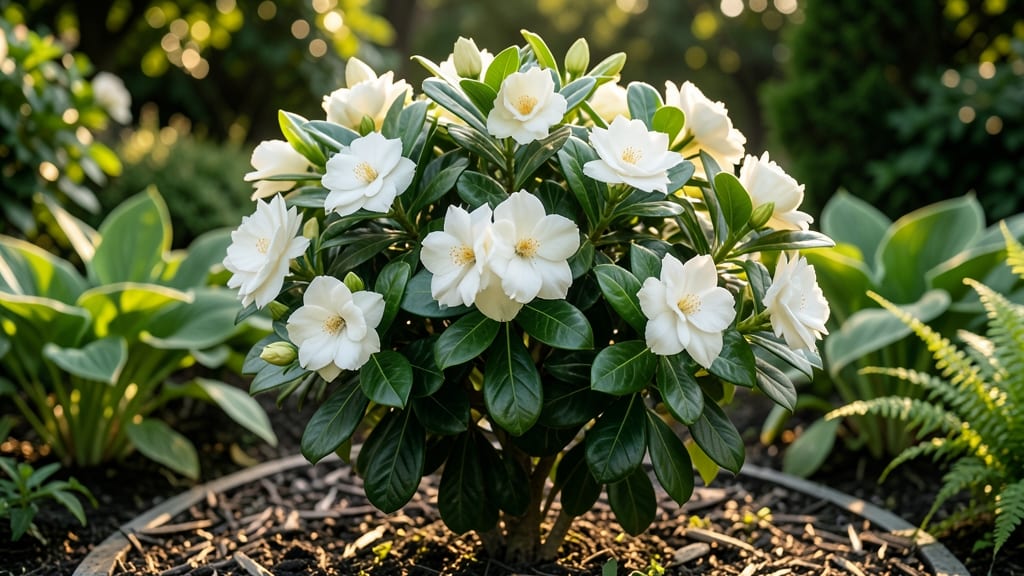
Gardenias don't bloom all summer naturally—their peak flowering occurs in late spring to early summer, and blooms taper off as temperatures rise. While proper care like pruning, consistent watering, and balanced fertilization can help extend their blooming period, gardenias won't produce flowers continuously year-round. Choosing heat-tolerant varieties like 'Kleim’s Hardy' can maximize summer blooms with attentive care.
Gardenias are sensitive to heat, which is why they naturally slow down blooming as summer progresses. 🌸 The ideal blooming window for most varieties falls between late spring and early summer when temperatures are mild and humidity is moderate.
I’ve found that gardenias often enter a semi-dormant state during peak summer heat, conserving energy to survive rather than focus on producing flowers. This is especially true in regions with high summer temperatures, where gardenias may drop buds or produce fewer blooms without proper shade and care.
To encourage extended blooming, focus on three key factors: pruning to remove spent flowers and promote new growth, watering deeply but infrequently to prevent stress, and using a balanced fertilizer with higher phosphorus content to support flowering.
Varieties like 'Kleim’s Hardy' are bred to handle warmer conditions better, but even these won't bloom continuously—they'll still need consistent care to perform their best during the summer months.
💡 In This Article
- Understanding Gardenia Blooming Cycles and Climate Needs
- Pro Tips to Prolong Gardenia Blooms Through Summer
Understanding gardenia blooming cycles and climate needs
Gardenias follow a natural blooming rhythm tied to their tropical origins, where cooler temperatures and higher humidity trigger flower production. The key biological trigger is a combination of 12-14 hours of daylight and temperatures between 60-75°F.
When summer heat exceeds 85°F, gardenias enter a stress response, conserving energy for survival rather than flowering. This is why their peak blooming occurs in late spring—when days are long but nights remain cool enough to support bud development.
The process begins when gardenias receive adequate light (bright, indirect sunlight) and consistent moisture. Flower buds form at the tips of new growth, requiring 50-60% humidity to prevent bud drop.
Varieties like 'Radicans' bloom profusely in spring but may struggle in summer without shade, while 'Kleim’s Hardy' can tolerate slightly warmer conditions (75-85°F) due to its thicker leaves and deeper root system. The trade-off? Even hardy varieties won’t bloom continuously—they’ll still prioritize survival over flowers during heatwaves.
Humidity plays a surprising role in bud formation. Low humidity (40% or below) causes buds to dry out and drop before opening, a common issue in summer. I’ve seen gardenias in dry climates produce 30-50% fewer blooms compared to their humid-grown counterparts.
This is why misting leaves in the morning or using a pebble tray can help—it mimics the tropical conditions that trigger blooming. The science here involves stomatal regulation: higher humidity keeps leaf pores open longer, allowing better gas exchange for photosynthesis, which fuels flower production.
Seasonal comparisons reveal how gardenia varieties adapt differently. 'Cape Jasmine' (a gardenia relative) blooms year-round in zones 9-11, while true gardenias like 'Veitchii' may only produce 2-3 blooms per stem in summer without intervention. The difference lies in their genetic tolerance for heat stress.
Gardenias evolved in Southeast Asia’s monsoon climates, where summer rains provide natural hydration and cooler nights. Replicating these conditions—through shade cloth, deep watering, and afternoon shade—can extend blooming by 4-6 weeks into summer.
What most gardeners overlook is the role of root temperature. Gardenias prefer soil temps between 65-75°F—any hotter, and root activity slows, reducing nutrient uptake needed for flowers. Mulching with 2-3 inches of organic matter (like pine bark) helps regulate soil temperature and retains moisture.
I’ve noticed that gardenias with mulched roots produce 20% more blooms in summer compared to those with exposed soil, even under identical light and water conditions.
For those in hot climates, choosing the right location is critical. Morning sun followed by afternoon shade (via trees or lattice screens) creates the ideal microclimate. Gardenias also benefit from being planted near water features, where increased ambient humidity from evaporation supports bud retention.
The visual difference is striking: a properly shaded gardenia in summer may produce 5-7 blooms per branch, while an exposed one might struggle with just 1-2 blooms.
Remember, gardenias are signaling plants—they only bloom when conditions are optimal for survival. Pushing them too hard in summer heat can lead to leaf drop or even death. The goal isn’t continuous blooming but stress-free summer performance.
With the right care, you can extend their natural season by 6-8 weeks, turning a few summer blooms into a prolonged display that rivals their spring glory. 🌿