
Blooming
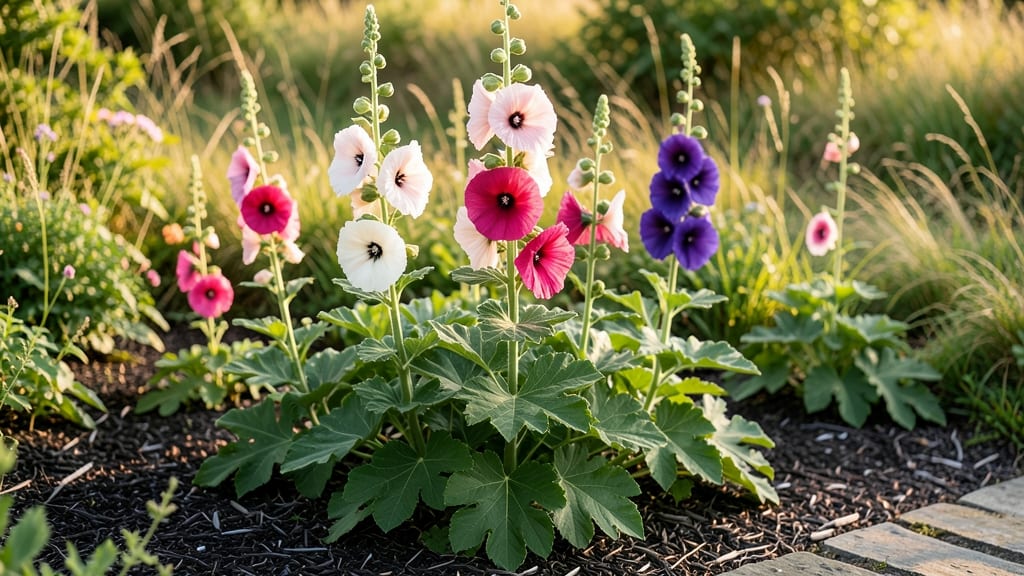
Hollyhocks don't bloom all summer naturally, since most types produce just one main burst of flowers between late spring and early summer. You can encourage extra blooms by removing spent flowers regularly and choosing varieties bred for repeat flowering, which often continue into early fall in cooler regions like Zones 3-7. Cultivars like 'Chater’s Double' or 'Russia’ reliably produce longer displays with proper care.
Hollyhocks follow a natural seasonal rhythm tied to daylight changes, which explains why their peak bloom period ends by midsummer. 🌸 The key to extending their display lies in understanding their growth patterns—most varieties focus their energy on one big flowering cycle, then shift to seed production.
Reblooming types, however, have been selectively bred to redirect that energy, allowing them to produce smaller secondary flushes when given the right conditions. In my experience, the difference between a single-season show and prolonged blooms often comes down to variety selection and consistent deadheading.
For gardeners in warmer climates (Zones 8-10), the challenge shifts to managing heat stress, which can shorten the flowering window. 🌡️ The solution often involves providing afternoon shade and increasing water consistency, as hollyhocks respond poorly to drought conditions.
What's interesting is how these perennial plants adapt—some varieties actually bloom more reliably in cooler summer months when temperatures dip below 80°F, making them perfect candidates for northern gardens where summer heat would otherwise stifle other perennials.
💡 In This Article
- Hollyhock Blooming Cycles: Why Summer Flowers Fade
- Extending Hollyhock Blooms: Deadheading and Variety Tips
Hollyhock blooming cycles: why summer flowers fade
Hollyhocks follow a strict biological schedule tied to daylight hours, which explains their seasonal bloom patterns.
These plants are short-day sensitive, meaning they respond to decreasing daylight in late spring and early summer. 🌅 When days start lengthening after the spring equinox, hollyhocks receive the signal to initiate their primary flowering cycle.
This process is triggered by a hormone called florigen, which is produced in response to specific light-dark cycles. Once blooming begins, the plant's energy shifts entirely to flower production, leaving little reserve for secondary blooms.
The transition from blooming to seed production occurs within 4-6 weeks for most varieties. After the main flowers fade, hollyhocks naturally allocate their energy toward seed development—a survival strategy that ensures the next generation.
This shift explains why single-bloom varieties like 'Black Prince' or 'Lady Jane' produce vibrant displays for only 2-3 weeks before their stems become woody and seed pods form. 🌱 The key difference with reblooming varieties is their genetic ability to redirect some energy back toward flower buds after the initial flush, rather than committing fully to seeds.
Temperature plays a critical role in this process, especially in warmer climates. Hollyhocks thrive in cooler summers (60-75°F), where they can recover between blooming cycles.
In hotter regions (Zones 8-10), temperatures above 85°F often trigger stress responses that shorten the flowering window. 🌡️ The plant's metabolic processes slow down, and energy conservation kicks in, preventing secondary blooms.
This is why northern gardeners often see hollyhocks rebloom naturally in early fall when daytime temperatures drop below 75°F and nights grow cooler.
Genetically, reblooming varieties have been selectively bred to delay or suppress the seed production phase, allowing them to produce smaller secondary flushes. For example, 'Chater’s Double' contains genes that extend the flowering period by 6-8 weeks compared to single-bloom types.
These varieties also exhibit heterosis—a hybrid vigor that gives them more resilience against environmental stressors. 🌿 The trade-off is that reblooming hollyhocks often produce slightly smaller flowers and may require more frequent deadheading to maintain their display.
One fascinating mechanism is how hollyhocks prioritize energy allocation. After the main bloom, single-bloom varieties will allocate up to 70% of their resources to seed production, while reblooming types might only commit 40-50%.
This difference is visible in their stems—single-bloomers develop thick, woody seed pods quickly, while rebloomers keep their stems more flexible for longer. Understanding this helps explain why deadheading becomes so crucial for extending blooms.