
Blooming
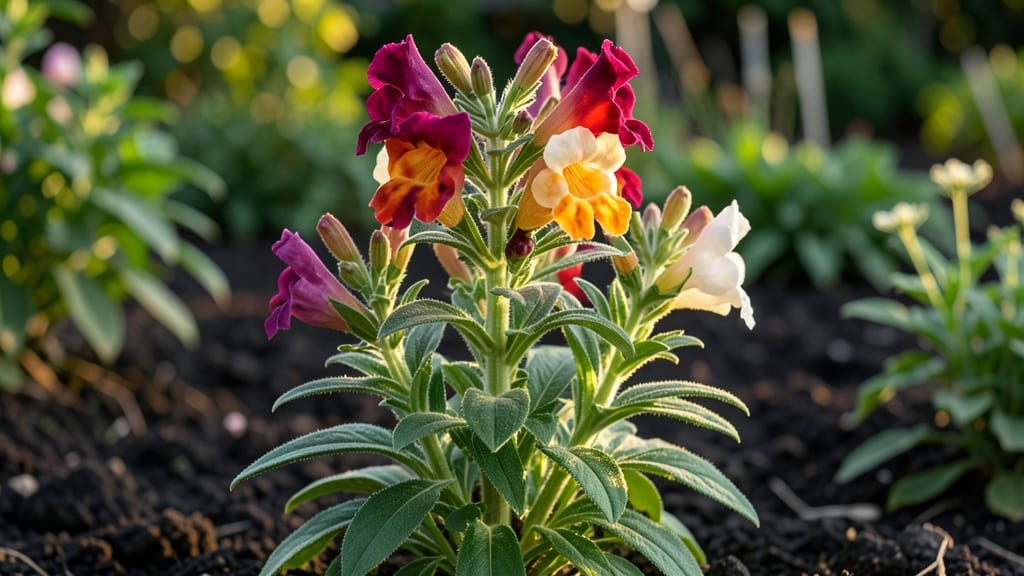
Snapdragons don't bloom all summer continuously—most varieties flower for just 6-8 weeks before resting, though proper deadheading and care can stretch their bloom time into early fall. Perennials may rebloom with seasonal adjustments.
This seasonal pattern happens because snapdragons are sensitive to daylight changes—longer summer days trigger blooming, but once they sense shortening daylight in late summer, they naturally shift into dormancy. 🌸 Annual varieties typically follow this cycle strictly, while perennial types might produce a second flush of flowers if given the right conditions.
The key is understanding your specific variety's natural rhythm and working with it rather than against it.
For example, early-season varieties like 'Butterfly' snapdragons often bloom from spring through early summer, while late-season types such as 'Black Prince' may extend their show until fall. The difference comes down to their genetic programming and how they respond to temperature shifts.
This is why gardeners in cooler climates sometimes see longer bloom times—milder temperatures help delay the dormancy trigger.
What's interesting about this is how simple care practices can make a big difference. Regular deadheading (removing spent blooms) signals the plant to redirect energy into new flowers rather than seed production.
I've seen snapdragons that would have faded by July still producing fresh blooms in September just from consistent deadheading and balanced fertilization. The right approach turns what seems like a limitation into an opportunity for extended enjoyment.
💡 In This Article
- Snapdragon Flowering Seasons by Variety
- Prolonging Snapdragon Blooms with Pruning and Fertilizer
Snapdragon flowering seasons by variety
Snapdragons follow distinct blooming cycles that vary dramatically between annual and perennial types. Annual snapdragons, like the popular 'Matrix' series, typically produce their first buds when daytime temperatures stabilize above 55°F and nighttime temperatures stay above 45°F.
These varieties bloom most prolifically for 6-8 weeks before entering dormancy, often triggered by shortening daylight hours in late summer. Perennial snapdragons, such as Antirrhinum majus, may have a more extended blooming window but still respond to seasonal cues.
The key difference lies in their genetic programming. Early-season varieties like 'Rocket' snapdragons begin flowering in late spring when average temperatures reach 60-65°F, while late-season types such as 'Black Prince' may not peak until mid-to-late summer when temperatures climb to 70-75°F.
This timing variation explains why gardeners in USDA Zone 5 might see shorter bloom periods compared to those in Zone 8, where milder autumn temperatures delay dormancy. The plant's internal clock—called photoperiodism—detects decreasing daylight hours, signaling the transition to seed production rather than flowering.
Climate plays a surprising role in extending bloom times. In coastal regions with cooler summers, snapdragons often bloom later into the season because the ocean's moderating effect keeps temperatures from spiking too high.
For example, snapdragons in San Francisco may continue flowering into October, while those in inland Arizona might fade by August due to intense heat. The ideal temperature range for continuous blooming is 65-75°F during the day and 50-60°F at night—any hotter, and the flowers may bolt (produce seeds prematurely).
Variety selection makes all the difference. Dwarf snapdragons like 'Tom Thumb' typically bloom for 4-6 weeks in early summer, while tall varieties such as 'Monarch' may extend their display for 8-10 weeks if given proper care.
The height difference isn't just aesthetic—taller varieties often have stronger root systems that better withstand heat stress. I've noticed that bi-color varieties (like 'Rocket Salmon') tend to have slightly shorter bloom cycles than single-color types, possibly due to the extra energy required to produce varied pigmentation.
What's fascinating is how snapdragons adapt to their environment. In regions with longer daylight hours (like Alaska), snapdragons may bloom continuously for 10-12 weeks before dormancy, while in shorter-day climates (like the southeastern US), they might only flower for 5-6 weeks.
This adaptability is why some gardeners in Zone 7 can coax a second bloom cycle from perennials by providing afternoon shade during peak summer heat. The plant's ability to "read" its environment makes understanding local climate patterns crucial for successful snapdragon cultivation.
For those wanting to maximize bloom time, choosing the right variety for your climate zone is half the battle. Early bloomers like 'Rocket' work well in cooler northern gardens, while heat-tolerant types such as 'Freedom' series perform better in southern heat.
The secret lies in matching the plant's natural rhythm with your local growing conditions—because when you do, you can turn what seems like a fleeting summer display into a prolonged seasonal spectacle. 🌿