
Blooming
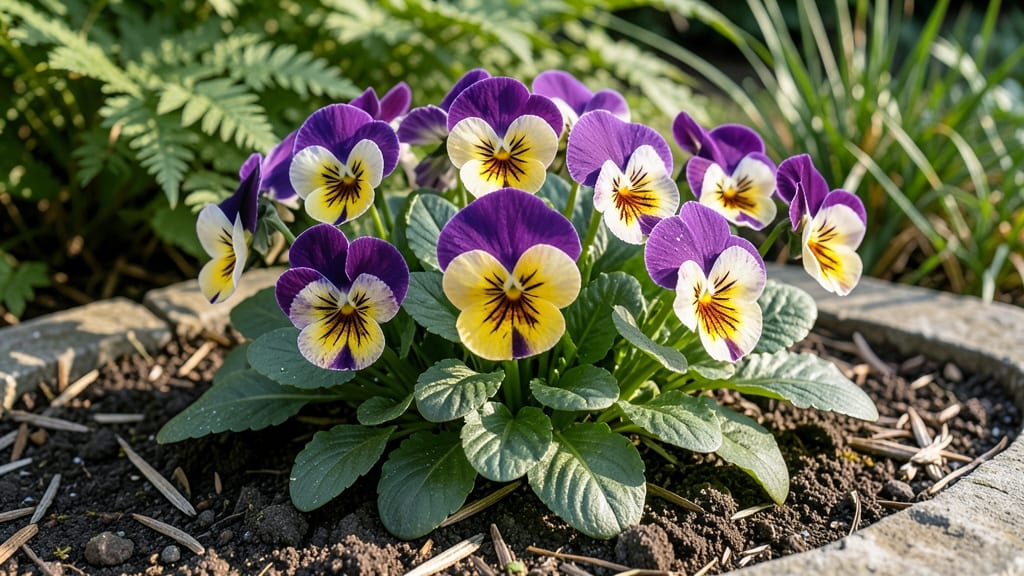
Pansies do not bloom all summer continuously, as they're cool-season flowers that often slow or stop flowering when temperatures rise above 75°F. With consistent care—deadheading spent blooms, providing afternoon shade, and maintaining even moisture—they may still produce occasional flowers through late summer before entering dormancy.
Pansies are actually biennials that evolved to thrive in spring and fall, making them sensitive to prolonged heat. 🌸 When summer temperatures climb, their metabolic processes shift from flowering to survival mode, which is why many gardeners notice fewer blooms in mid-summer.
The good news is that with proper summer care—like regular deadheading to encourage new growth and mulching to retain soil moisture—you can coax them into producing sporadic blooms well into late summer.
What's fascinating is how pansies adapt: they'll often go dormant during extreme heat but may rebound when temperatures drop again in fall. This makes them perfect for staggered planting—start with early spring varieties and follow with late summer/fall types to ensure continuous color.
I've seen gardeners in warm climates keep pansies blooming nearly year-round by providing afternoon shade and consistent watering during peak heat.
💡 In This Article
- Pansy Blooming Seasons: Why Heat Affects Flowering
- Extending Pansy Blooms: Summer Care Strategies
Pansy blooming seasons: why heat affects flowering
Pansies are cool-season annuals with a biological clock tuned to 50-75°F temperatures, which is why they bloom most vigorously in spring and fall. Their flowering mechanism involves a complex hormonal response triggered by cooler nights and shorter daylight hours—a process called vernalization.
When summer heat exceeds 80°F, the plant's energy shifts from producing flowers to conserving water and protecting its leaves, a survival strategy called heat stress dormancy. 🌡️
The science gets even more interesting when you look at their photoperiod sensitivity. Pansies detect day length through specialized proteins called phytochromes, which regulate flowering hormones.
Long summer days (>14 hours of light) signal the plant to prioritize leaf growth over blooms, similar to how poinsettias shift into their festive red phase during shorter winter days. This is why pansies in tropical climates often produce fewer flowers—they're biologically programmed to wait for cooler conditions.
What's often overlooked is how soil temperature affects root activity. When ground temps rise above 70°F, pansy roots struggle to absorb nutrients efficiently, further reducing flower production. The plant's entire metabolism slows down, much like how humans feel sluggish in extreme heat.
This is why you'll notice pansies in containers often bloom better than those in ground beds during summer—the cooler soil temperatures in pots help maintain root function.
There's also a fascinating chemical process at play: high temperatures accelerate the breakdown of anthocyanins, the pigments responsible for pansies' vibrant colors. This causes the flowers to fade more quickly, even if they do manage to open.
The same heat that stresses the plant also degrades these protective pigments faster, making the blooms appear dull and lifeless within days rather than weeks. 🌸
Regional variations show this clearly. In Zone 5 gardens, pansies may bloom continuously from spring until early summer, while in Zone 9 they might only produce a few blooms in fall and spring. This geographic difference isn't just about temperature—it's about the plant's evolutionary adaptation to its native climate patterns.
Pansies originated in Europe and parts of Asia where summers are cooler, so their biology hasn't adapted to prolonged tropical heat.
The good news is that this heat sensitivity isn't permanent damage. Many pansies will rebound when temperatures drop again, often producing a second flush of blooms in fall. This makes them excellent for succession planting—plant new varieties every 4-6 weeks to maintain continuous color throughout the growing season.
The key is understanding that pansies are playing by their own biological rules, not ours.