
Blooming
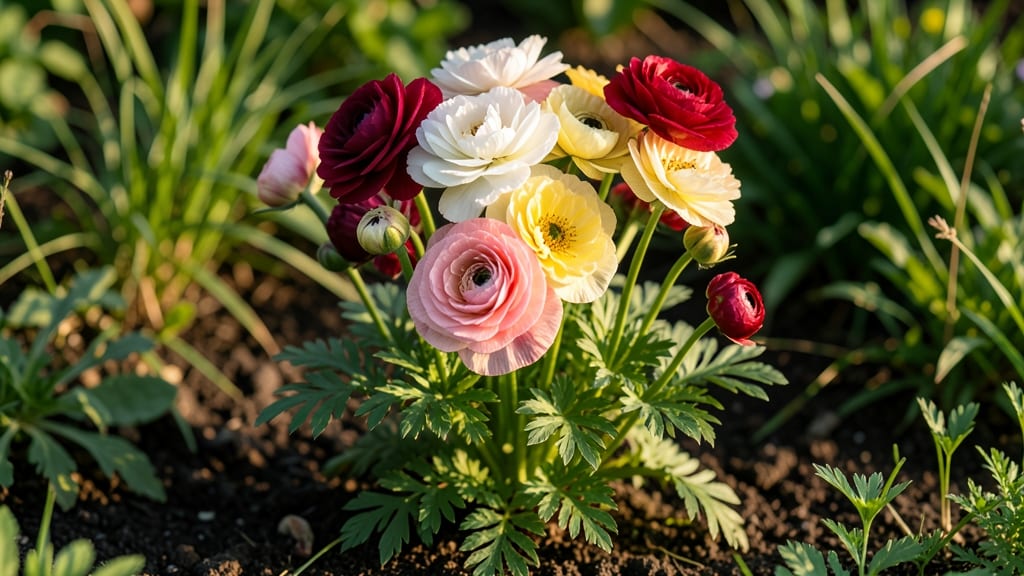
Ranunculus don't bloom all summer in most climates—they typically flower from early spring through summer as annuals. However, with careful deadheading and seasonal adjustments, some varieties can extend blooms into early fall.
These delicate flowers thrive best in cooler temperatures, which is why their peak blooming season aligns with spring and early summer. 🌸 Once summer heat sets in, many ranunculus varieties naturally decline unless you're in a cooler microclimate or take steps to manage stress.
The key to prolonging their season lies in consistent care—removing spent blooms encourages new growth, while proper watering and occasional fertilizing can help sustain them longer.
What's interesting about ranunculus is how their lifecycle responds to daylight changes. As days grow shorter in late summer, their energy shifts toward seed production rather than flowering. This is why gardeners in warmer zones often treat them as annuals, replanting each spring for continuous color.
If you're determined to extend their season, focus on deadheading regularly and providing afternoon shade during heatwaves.
💡 In This Article
- Understanding Ranunculus Bloom Seasons and Climate Factors
- Reblooming Ranunculus: Deadheading and Seasonal Care Tips
Understanding ranunculus bloom seasons and climate factors
Ranunculus flowers follow a natural lifecycle tied to temperature and daylight hours. These cool-season bloomers thrive when daytime temperatures hover between 50-75°F, which explains why they peak in spring and early summer.
As summer heat intensifies—especially when exceeding 85°F—their metabolism slows, causing buds to drop and existing blooms to wilt faster. The plant's energy shifts toward survival rather than reproduction, a survival mechanism common in many annual flowers facing stress.
The photoperiod (daylight length) plays a crucial role too. Ranunculus respond to increasing daylight in spring, triggering their flowering phase. However, as days shorten in late summer, they receive signals to prepare for dormancy or seed production.
This is why gardeners in Zone 7 and warmer often see their ranunculus decline by mid-to-late summer, even with ideal care. The exception occurs in cooler microclimates (like coastal areas) where temperatures remain moderate, allowing some varieties to persist into early fall.
What makes ranunculus unique is their sensitivity to heat stress. Unlike drought-tolerant perennials, these flowers wilt dramatically when exposed to afternoon sun during heatwaves. Their papery petals lose moisture rapidly, causing them to curl and brown within hours.
This is why many commercial growers harvest ranunculus in early summer before heat sets in—once temperatures climb above 80°F for extended periods, the plants become less responsive to deadheading and may refuse to rebloom.
Identifying seasonal cues is key to predicting their behavior. Look for these signs:
- New growth slows—leaves turn yellowish or growth stalls
- Bud drop increases—unopened buds fall before blooming
- Petals wilt quickly—even with morning watering
For gardeners in warmer climates, the solution often lies in creating artificial shade. Using 30-50% shade cloth during peak afternoon sun (typically 12-4 PM) can extend the blooming window by 2-4 weeks.
This mimics the cooler conditions they prefer while allowing sunlight for photosynthesis. The trade-off is slightly smaller blooms, but the extended season often justifies the effort.
One fascinating botanical detail is how ranunculus varieties differ in heat tolerance. Persian ranunculus (Ranunculus asiaticus) tends to handle 5°F warmer conditions than French ranunculus (Ranunculus repens), making it the better choice for late-summer reblooming attempts.
This genetic variation explains why some gardeners report success with one type but not another in the same climate.
Understanding these factors helps set realistic expectations. While ranunculus won't bloom continuously all summer, with strategic care—especially shade and deadheading—you can often coax them into producing 30-50% more blooms than their natural lifecycle would allow. The key is working with their biology rather than against it.