
Blooming
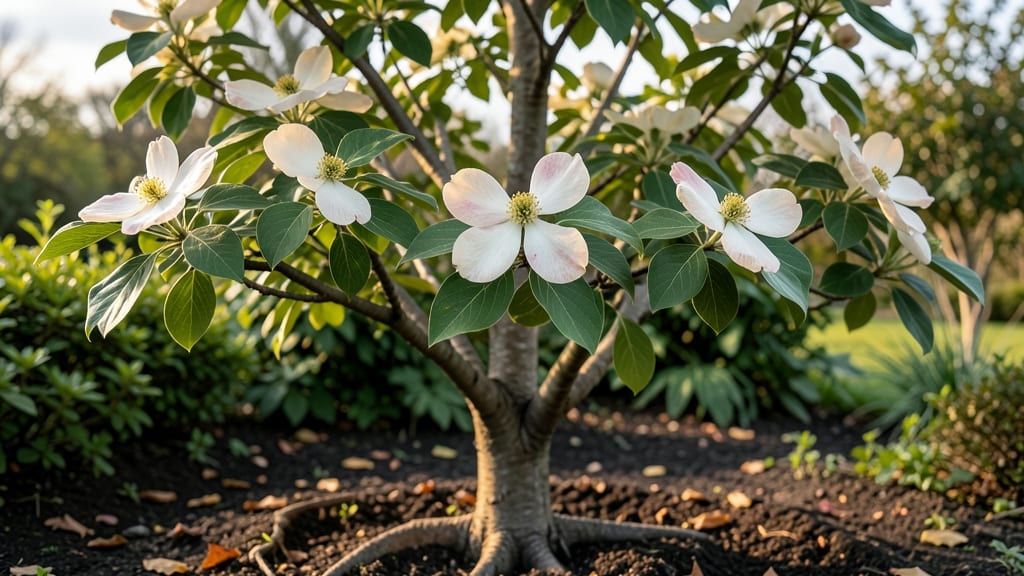
The meaning of dogwood blooms centers on enduring love, hope, and purity, deeply connected to spring's renewal and nature's resilience. Their delicate white or pink flowers embody innocence and divine protection in folklore and Christian traditions, while their seasonal appearance marks rebirth in gardens.
The dogwood's symbolic power stems from its unique botanical features and historical narratives. 🌸 In Christian lore, the four petals and four green sepals are said to represent the elements of Jesus' crucifixion, while the thorny branches symbolize the crown of thorns.
Native American tribes revered these blooms as omens of prosperity and protection, often using them in healing rituals. What's fascinating is how their late spring blooming period aligns with cultural transitions—marking both the end of winter's hardships and the promise of new beginnings.
These flowers also hold practical significance in garden design, where their delicate appearance creates serene focal points.
When planted alongside spring bulbs like daffodils or tulips, they enhance the season's symbolic narrative of renewal. 💫 The blooms' short-lived nature makes them especially meaningful—each flower becomes a fleeting yet powerful reminder of life's transient beauty and the importance of cherishing moments.
💡 In This Article
- Dogwood Flower Symbolism Across Cultures and History
- How to Use Dogwood Blooms in Garden Design for Symbolic Impact
Dogwood flower symbolism across cultures and history
The dogwood's spiritual significance begins with its botanical quirks. What many mistake for petals are actually bracts—modified leaves that protect the true flowers hidden beneath.
This unique structure led early Christians to associate the four bracts with the four elements of Jesus' crucifixion: the nail holes (one for each hand and foot) and the spear wound.
The thorny branches became symbolic of the crown of thorns worn by Christ during his passion, creating a powerful visual link between nature and sacred narrative.
Native American tribes, particularly the Cherokee and Iroquois, viewed dogwoods as sacred messengers. The white blooms represented purity and new beginnings, while their late spring emergence (typically April-May in temperate zones) aligned with planting seasons and spiritual renewal ceremonies.
Some tribes used the bark for medicinal purposes, believing it carried protective energies. In Japanese culture, dogwoods symbolize longevity and resilience, often planted near shrines or family graves as a connection between the living and ancestors.
The flower's delicate appearance—with petals often measuring just 1-2 inches wide—contrasts sharply with its hardy nature. This paradox amplifies its symbolic meaning: something seemingly fragile can endure through seasons.
The blooms' short-lived nature (typically 7-10 days) makes them powerful metaphors for cherishing fleeting moments, a concept echoed in both Christian and Eastern philosophies about the impermanence of life's beauties.
Color variations add another layer of meaning. Pure white dogwoods symbolize innocence and divine protection, while pink-hued varieties represent gratitude and hope. In Victorian flower language, gifting dogwood blooms conveyed messages of "I will never forget you," tying the flower's ephemeral beauty to enduring emotional connections.
This linguistic tradition explains why dogwoods appear frequently in 19th-century botanical illustrations and romantic poetry.
What makes these meanings particularly enduring is how they're reinforced by the tree's lifecycle. Dogwoods often bloom when other trees are already leafing out, creating a striking visual contrast that mirrors the spiritual transition from winter's darkness to spring's light.
Their red berries (which follow the flowers) were historically used by Native Americans as food and dye, further embedding the tree in practical and symbolic daily life.
Modern interpretations continue this legacy. Dogwoods remain popular in wedding bouquets and memorial gardens, where their symbolism of enduring love and peaceful transitions resonates deeply. The tree's ability to thrive in partial shade also mirrors its symbolic adaptability—capable of bringing meaning to both sunlit meadows and shaded forest floors.