
Blooming
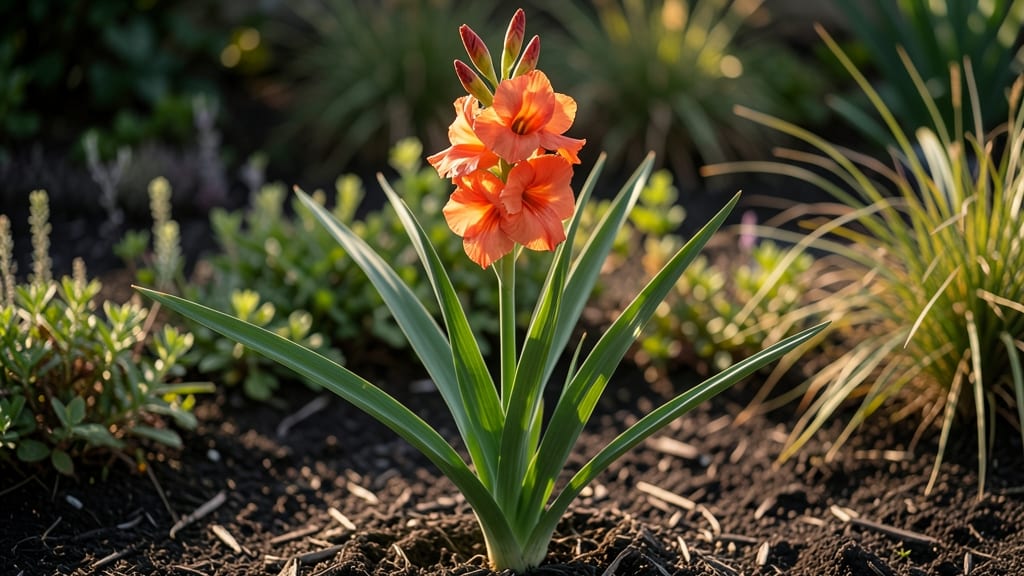
Your gladiolus bloom time hinges on one critical date: your average first frost—because these dramatic sword-leafed beauties refuse to play by summer’s rules. 🌿 I’ve learned that planting too early means heat-stressed blooms, while waiting too long risks frost-nipped buds.
The secret lies in timing corms 8-10 weeks before that frost date, so they burst into color just as summer peaks.
The right variety makes all the difference: early bloomers like ‘Picasso’ light up in late June, while late varieties like ‘Black Star’ hold court through September’s golden light.
In Zone 5, that means planting in mid-May for a July showstopper; in Zone 9, you’ve got until October to enjoy their vertical drama. The key? Match your corms to your climate’s 100-day heat window—they need consistent warmth to unfurl their signature spikes.
Once planted, water deeply but infrequently—glads hate soggy feet. A balanced fertilizer at planting and again when spikes hit 6 inches fuels those towering blooms. Mulch lightly to retain moisture, but leave the lower stems bare so they don’t rot.
You’ll know you’ve nailed it when your garden becomes a vertical rainbow of color, drawing hummingbirds like magnets. For extra-long seasons, stagger plantings every 2 weeks—this creates a continuous bloom parade from midsummer through fall.
And here’s the pro tip: cut spent blooms, but leave the foliage until it yellows. Those leaves are powerhouses, feeding next year’s corms for another round of drama. Now go make your neighbors jealous with those 6-foot-tall fireworks.
📚 In This Guide
- What you need
- Instructions
- Tips and common mistakes
- Wrapping up and next steps
What you need
- ● Gladiolus corms: High-quality, disease-free corms (1–2 inches in diameter, depending on desired bloom size). Quantity: 10–20 corms per planting area (adjust based on garden size).
- ● Well-draining soil: Sandy loam or amended soil with a pH of 6.0–6.8. Mix in 2–3 inches of compost per planting area.
- ● Fertilizer: Balanced fertilizer (10-10-10): 1–2 tablespoons per corm at planting.
- ● High-phosphorus fertilizer (e.g., 5-10-10): Apply mid-season for robust blooms.
- ● Planting container or garden bed: Minimum depth of 12 inches (deeper for taller varieties).
- ● Watering can or hose with a gentle nozzle: Avoid displacing corms during watering.
- ● Thermometer: Soil or air thermometer to monitor temperatures (ideal planting temp: 60–65°F).
- ● Planting stakes or trellis: 18–24 inches tall (for support, especially for varieties over 3 feet).
- ● Mulch: Straw or shredded leaves (2–3 inches) to retain moisture and regulate soil temp.
- ● Slow-release fertilizer: Granular or spike form for convenience.
- ● Frost cloth or row covers: Lightweight fabric to protect young shoots if late frosts threaten.
- ● Bloom-time calculator app: Tools like Gardenate or Frost Date Finder to refine your frost-date timing.
- ● Pruning shears: For deadheading spent blooms to encourage reblooming.
Instructions: timing gladiolus planting for perfect summer blooms
Here's how I time gladiolus planting to guarantee vibrant summer color—no guesswork, just science.
☀️ Step 1: Calculate Your Last Frost Date
Find your local last frost date using the USDA Plant Hardiness Zone Map. Gladiolus corms need 60 days of warm soil to develop blooms, so count 60 days backward from your first frost date. For example, if frost hits November 15, plant corms by September 15.
This timing ensures blooms appear just as summer peaks. Too early? You'll get early-season flowers that wilt before the heat. Too late? Flowers may appear after frost, cutting the season short. I mark my calendar with red flags for these dates every year—it's non-negotiable.
🌱 Step 2: Prepare Corms for Planting
Soak corms in lukewarm water for 1 hour before planting to rehydrate them. This jumpstarts root growth and prevents rot. Handle them gently—they're more delicate than onions, with tender growth points that bruise easily.
Inspect each corm for soft spots or mold. Discard any damaged ones immediately. Healthy corms have firm, papery skins and a single eye (growth point) on top. Plant with the eye facing upward—this is where your 6-foot-tall spikes will emerge. I like to organize them by color for visual impact in the garden.
🪴 Step 3: Plant in Well-Drained Soil
Choose a site with full sun (6+ hours daily) and dig a trench 4-6 inches deep. Space corms 6 inches apart in rows 12 inches apart to allow airflow and prevent fungal diseases. Gladiolus hate soggy roots—amend heavy soil with 2 inches of compost to improve drainage.
Plant corms with the pointed end up, covering them with 3-4 inches of soil. Water lightly after planting to settle the soil. Mulch with 2 inches of straw to retain moisture and suppress weeds. This is where most gardeners fail—skipping mulch leads to dry soil and stunted blooms.
💧 Step 4: Maintain Consistent Moisture
Water 1-2 inches per week once shoots emerge, keeping soil evenly moist but not waterlogged. Gladiolus need steady hydration to develop strong stems. I check soil moisture by pushing my finger 1 inch deep—if it feels dry, it's time to water. Overwatering causes rot, while underwatering produces weak stems that flop.
Fertilize with balanced 10-10-10 fertilizer at planting, then again when spikes reach 12 inches tall. Avoid high-nitrogen fertilizers—they produce lush foliage but fewer blooms. I swear by a slow-release formula to prevent nutrient spikes that burn roots.
✂️ Step 5: Stake and Support Flower Spikes
Once spikes reach 18 inches tall, insert 3-foot stakes beside each plant and tie stems loosely with soft twine. Gladiolus flowers are heavy, and unsupported spikes will flop over in wind or rain. I use floral wire wrapped with raffia for a cleaner look that won't cut into stems.
Deadhead spent blooms by cutting stems 2 inches above the next bud to encourage additional flowers. This extends the bloom season by 2-3 weeks. Stop watering 4 weeks before frost to allow corms to mature. Dig them up in fall, dry thoroughly, and store in a cool, dark place for next year's planting.
Tips & tricks for perfect gladiolus bloom timing
Precision planting is everything when it comes to summer gladiolus—these small details make all the difference between wilted blooms and showstopping color.
Frost Date Accuracy: Don't rely on memory for your last frost date—use the USDA Plant Hardiness Zone Map and verify with your local cooperative extension office. I've seen gardeners plant too early because they misremembered their frost date by 2 weeks, resulting in flowers that opened just as summer heat peaked. The 60-day warm soil window is non-negotiable for full bloom development, so mark your calendar with physical reminders if needed.
Corm Condition Check: That 1-hour lukewarm soak isn't just about hydration—it's your quality control step. Run your finger over each corm before planting: healthy ones should feel firm like a small potato, never mushy. I've thrown out entire bags of corms that arrived soft from poor storage, and it saved me from a disappointing garden. Discard any corms with cracks or mold, even if they're just a small percentage—one infected corm can spread disease to your entire planting.
Sun and Soil Strategy: The full sun (6+ hours daily) requirement is critical, but not all sun is created equal. Morning sun with afternoon shade works best in hot climates to prevent leaf scorch. For soil prep, I recommend mixing in 2 inches of compost at planting time and adding another 1 inch when spikes reach 12 inches tall. This gradual nutrient release prevents sudden growth spurts that weaken stems. The 3-4 inches of soil coverage also helps regulate temperature—too little exposes corms to temperature swings that stress plants.
Watering Wisdom: The 1-2 inches per week guideline assumes average rainfall—track your local precipitation and adjust accordingly. I use a rain gauge to monitor weekly totals, and during dry spells, I water deeply in the morning to prevent fungal diseases that thrive in damp evening conditions. The 1-inch deep soil check is your best indicator: if it feels dry at that depth, water until moisture reaches 6 inches down to encourage deep root growth.
Pro Tips for Gladiolus Bloom Time
- Precision planting is everything when it comes to summer gladiolus—these small details make all the difference betwee...
- Frost Date Accuracy: Don't rely on memory for your last frost date—use the USDA Plant Hardiness Zone Map and verify w...
- Corm Condition Check: That 1-hour lukewarm soak isn't just about hydration—it's your quality control step. Run your f...
Frequently asked questions
Got questions about timing, care, or troubleshooting your gladiolus blooms?
Here are the most common ones—plus the answers you need to keep your garden bursting with color!
When is the best time to plant gladiolus for summer blooms?
Plant gladiolus corms 6–8 weeks before your last expected frost in spring (typically March–April in most U.S. zones). For fall blooms, plant in late summer (August–September) so they mature before winter. Pro tip: Use a frost-date calculator to pinpoint your exact timing!
How long does it take for gladiolus to bloom after planting?
With ideal conditions (sun, water, and soil), gladiolus typically bloom 80–120 days after planting. Shorter varieties (like ‘Attraction’ series) may flower in as little as 60 days, while taller types (e.g., ‘Green Star’) take closer to 100–120 days. Track your plant date to predict blooms!
Why aren’t my gladiolus blooming? Troubleshooting tips.
Gladiolus may skip blooms due to overcrowded corms, poor sunlight, or nutrient deficiencies. Fix it by:
- Thinning corms: Space them 4–6 inches apart.
- Ensure 6+ hours of sun daily.
- Fertilize: Use a balanced 10-10-10 formula at planting and again when spikes emerge.
If blooms form but flop, stake them early to prevent bending!
Can I extend the gladiolus bloom season?
Yes! Plant successive batches every 2–3 weeks in spring for a staggered bloom. For fall color, try late-summer plantings (August) in warm climates. Bonus: Deadhead spent blooms to encourage more flowers and prolong the show!
What’s the ideal climate for gladiolus blooms?
Gladiolus thrive in USDA zones 7–10 with hot summers (they need warmth to bloom!). In cooler zones (5–6), plant corms in late spring and dig them up before frost. Avoid planting in soggy soil—they hate waterlogged roots!
Wrapping up and next steps
Mastering the gladiolus bloom time is all about timing—calculating frost dates, selecting the right varieties, and giving your flowers the care they deserve. With the right preparation, you’ll enjoy a stunning display of color that brightens up your garden from mid-summer to early fall. 🌸
Ready to bloom with confidence? Start by marking your calendar with your local frost dates, then pick your gladiolus varieties and get planting! Whether you’re a seasoned gardener or just starting, every step brings you closer to a garden bursting with vibrant blooms.