
Blooming
Brighten your shade garden before summer blooms arrive with these seven perennials that thrive in cool weather and deliver vibrant color with minimal care. Perfect for gardeners who want early seasonal interest without high-maintenance demands.
Bleeding Heart Plant for Delicate Pink and White Flowers

If you crave early spring color without fighting for sunlight, the bleeding heart plant (Dicentra spectabilis) is your perfect partner. Its delicate pink and white heart-shaped blooms emerge in late spring, cascading like a waterfall over time, and it thrives where most plants refuse to grow—deep shade under trees.
This woodland native loves moist, well-draining soil and multiplies slowly to form lush clumps. Deadhead spent blooms to encourage more flowers, but leave the foliage until late fall for winter interest. The real magic? Hummingbirds adore its nectar, making it a pollinator magnet when few other flowers are in bloom. Plant it near ferns or hostas for a dreamy, layered effect.
Perfect for beginner gardeners and shade enthusiasts, bleeding heart adds romantic charm with almost no effort. Just remember: it’s not drought-tolerant, so keep the soil consistently moist. 🌷
Hepatica Flower with Unique Three-Petaled Blooms

When the garden feels dormant in early spring, hepatica bursts onto the scene like a tiny purple or pink firework—its delicate three-petaled blooms appear before leaves even emerge. This woodland native is one of nature’s first signals that winter’s grip is loosening, making it a must-have for gardeners eager to add color to shady corners.
Plant hepatica in well-draining soil under deciduous trees or along woodland edges, where it thrives in partial to full shade. The flowers—ranging from deep purple to soft pink or white—last just 2-3 weeks but create a stunning contrast against emerging foliage. Mulch lightly to retain moisture, as these plants prefer consistently damp (but not soggy) conditions. They’re also deer-resistant, a bonus for rural gardeners!
Perfect for rock gardens, woodland borders, or even container plantings, hepatica rewards patience with its early show. Urban gardeners with shady patios will love how it brightens small spaces without demanding much attention. 🌷
Lungwort Perennial with Spotted Foliage and Blue Flowers

If you love plants that offer both beauty and practical benefits, lungwort (Pulmonaria) is a hidden gem for your early spring garden. This versatile perennial delivers cheerful blue flowers that appear before many other shade plants, while its silver-spotted foliage adds texture year-round—even after blooms fade.
Historically used for its medicinal properties (particularly for lung ailments, hence the name), lungwort thrives in moist, shady spots where other plants struggle. Plant it in well-draining soil with afternoon shade, and enjoy blooms from late winter to early spring. Its foliage remains attractive until frost, making it a low-maintenance workhorse for woodland gardens or under trees.
Perfect for gardeners who want season-long interest with minimal effort, lungwort pairs beautifully with bleeding hearts or hepatica for a layered spring display. 💚
Dutchman's Breeches with White Heart-Shaped Flowers

Imagine a wildflower so charming it looks like it stepped out of a fairy tale—Dutchman's breeches (Dicentra cucullaria) dangles its white heart-shaped blooms like tiny pantaloons, creating a whimsical display in early spring. This native woodland gem is one of the first perennials to emerge, offering pollinators their first meal of the season.
Thriving in partial shade with moist, well-draining soil, Dutchman's breeches naturalizes effortlessly in woodland gardens or under deciduous trees. Its delicate foliage adds texture even after blooms fade, and it multiplies over time to form charming colonies. For best results, plant in fall or early spring and avoid heavy mulch, which can smother its low-growing habit.
Perfect for gardeners seeking low-maintenance charm and early pollinator support, this plant is especially rewarding in Appalachian and Eastern U.S. regions. Let it remind you that spring’s magic starts small—and with a dash of humor. 🌷
Solomon's Seal with Arching Stems and White Flowers

If you love plants that add textural drama without demanding full sun, Solomon's Seal (Polygonatum) is your answer. This graceful perennial features arching stems that cascade like a natural curtain, producing delicate white bell-shaped flowers in early spring followed by clusters of striking blue berries that persist into fall.
Thriving in partial to full shade, Solomon's Seal adapts to most soil types but prefers well-drained conditions. Its low-maintenance nature makes it ideal for borders, woodland gardens, or even containers—simply water during dry spells and enjoy its year-round interest. The berries add a pop of color when flowers fade, extending your garden's seasonal appeal.
Perfect for gardeners who want structure and color with minimal fuss, this plant pairs beautifully with ferns and hostas. Its arching habit softens sharp garden edges while providing vertical interest in shady spots. 🌿
Sweet Woodruff with Fragrant White Flower Clusters

Want a fragrant pathway that requires almost no effort? Sweet woodruff delivers a sensory experience with its delicate white flower clusters and foliage that releases a vanilla-like scent when brushed or crushed—ideal for gardeners who love low-maintenance shade plants.
This drought-tolerant ground cover thrives in dry shade, making it perfect for under trees or along north-facing walls. It spreads gently (12–18 inches wide) without becoming invasive, and its spring blooms appear in April–May, just as other perennials wake up. A bonus: the foliage stays green and fragrant all season.
Perfect for urban gardeners with limited space or those seeking a scented alternative to traditional mulch, sweet woodruff adds a whimsical touch to pathways while keeping maintenance to a minimum. 🌿
Virginia Bluebells with Nodding Blue-Purple Flowers

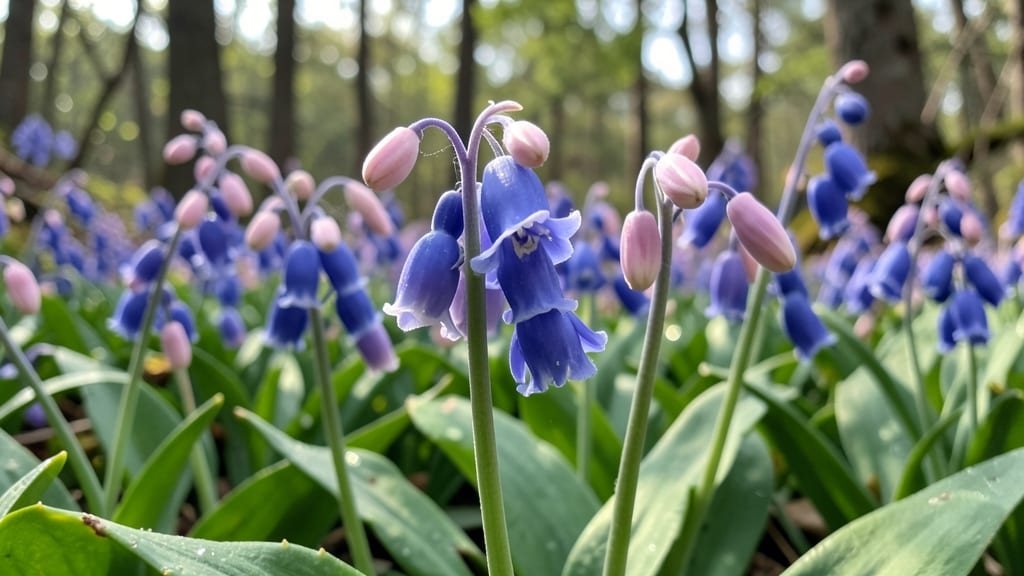
If you’ve ever wandered through a woodland in early spring, you’ve likely spotted Virginia bluebells (Mertensia virginica)—their delicate, nodding clusters of pink buds that magically transform into stunning blue-purple blooms as they open. This native woodland stunner is one of the most enchanting ways to bring early color to shady garden corners while supporting local pollinators.
Thriving in moist, well-draining soil under trees or along stream banks, Virginia bluebells prefer partial to full shade and consistently damp conditions—ideal for gardeners with naturally shady spots. Plant bulbs in fall or early spring at a depth of 3 inches, spacing them 6 inches apart. Their blooms appear in March or April, lasting 3-4 weeks, and they’ll naturalize over time, creating lush colonies. The nodding flowers also attract hummingbirds and bees, making them a pollinator magnet.
Perfect for woodland gardens, rain gardens, or even container plantings with adequate moisture, Virginia bluebells are a low-maintenance choice that rewards patience with their striking color shift. Pair them with hepatica or lungwort for a layered spring display that feels straight out of a fairy tale. 🌷