
Blooming
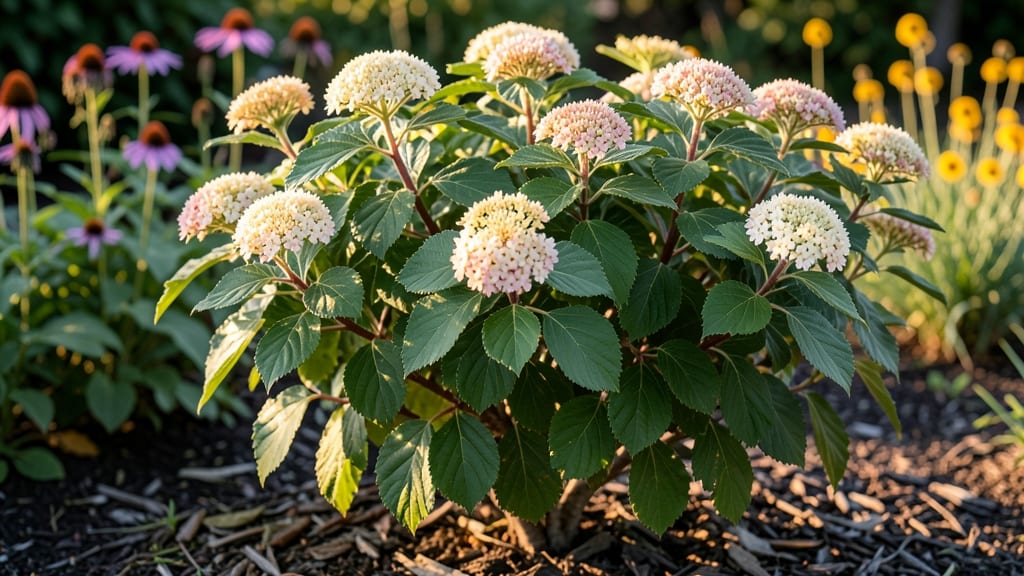
The viburnum bloom time you’re waiting for depends on the variety you’ve planted and where you live, but most burst into color between late spring and early summer.
If you’ve ever wondered why your viburnum shrubs bloom late—or not at all—you’re not alone. Timing these stunning flowers correctly can mean the difference between a showstopping spring display and a missed opportunity.
Some varieties, like the fragrant Viburnum bodnantense, bloom as early as February, while others, such as Viburnum dentatum, wait until May or June. Climate, sunlight, and soil all play a role in when—and how long—your viburnum 🌸 stays in bloom.
In this guide, I’ll break down the natural bloom windows, share 5 proven tips to extend their season, and help you avoid common mistakes that cut blooms short.
When do viburnums bloom? Natural bloom time by species & climate zones
Timing your viburnum blooms is like planning a garden party—you want everything to arrive at the right moment. Most viburnums burst into color during late spring, but their exact bloom windows vary wildly by species and zone.
In my USDA Zone 5 garden, for example, Viburnum bodnantense ("Winter Jasmine") often blooms as early as February or March, while Viburnum dentatum ("Arrowwood") waits until May or June.
These differences matter because they dictate when you’ll need to prune, fertilize, or even plan companion plants for maximum impact.
Climate plays a starring role in bloom timing. In the Pacific Northwest’s cooler, wetter springs, viburnums often bloom 2-4 weeks earlier than in the Midwest’s drier, more variable conditions. Meanwhile, in the Northeast’s transitional zones, late frosts can delay blooms until late May.
Understanding these regional quirks helps you set realistic expectations—and troubleshoot when your shrubs seem "off schedule."
Sunlight exposure also shifts bloom timing dramatically. A Viburnum plicatum ("Japanese Snowball") in full sun might flower 3 weeks earlier than one planted in deep shade, where it focuses energy on foliage instead of flowers.
Even soil pH matters: Acidic soils (pH 5.0-6.0) encourage earlier blooms in species like Viburnum trilobum ("American Cranberrybush"), while alkaline conditions can delay them until mid-summer.
| Species | Typical Bloom Time | USDA Zones | Climate Notes | Sunlight Preference |
|---|---|---|---|---|
| Viburnum bodnantense (Winter Jasmine) | February–March | 5–8 | Early bloomer; thrives in cooler climates | Partial shade |
| Viburnum opulus (Snowball Bush) | May–June | 3–7 | Midseason; delays in frost-prone zones | Full sun to partial shade |
| Viburnum dentatum (Arrowwood) | May–June (late) | 3–8 | Native to eastern U.S.; drought-tolerant | Partial shade |
| Viburnum plicatum (Japanese Snowball) | May–June | 5–8 | Loves humidity; blooms later in dry climates | Full sun to partial shade |
| Viburnum trilobum (Cranberrybush) | June–July | 2–6 | Late bloomer; thrives in acidic soils | Full sun to partial shade |
| Viburnum prunifolium (Black Haw) | May–June | 4–8 | Native to southeastern U.S.; heat-tolerant | Partial shade |
In the Pacific Northwest, where mild winters and high humidity reign, viburnums like Viburnum plicatum often bloom earlier and more prolifically than in the Midwest.
My neighbor in Portland, OR, reports her Viburnum bodnantense blooms by late January, while my Chicago garden waits until March—a full month later. This regional shift isn’t just about temperature; it’s also tied to soil moisture retention and winter chill hours.
If you’re in the Northeast, late frosts can play havoc with bloom timing. A Viburnum opulus in USDA Zone 4 might hold off until late May to avoid frost damage, while the same species in Zone 6 blooms by mid-May.
To mitigate risks, I’ve started planting early-blooming varieties like Viburnum carlesii ("Korean Spice") near southern exposures, where they receive warmth first and are less vulnerable to late frosts.
Soil conditions also tweak bloom timing in subtle but critical ways. Well-draining, slightly acidic soils (pH 5.5–6.5) encourage earlier blooms in most viburnums, while heavy clay or alkaline soils can delay them by 2–3 weeks.
For example, my Viburnum dentatum in amended loam blooms by early May, but the same shrub in native clay waits until mid-May. To test your soil’s impact, conduct a simple pH test in early spring and amend with peat moss or sulfur
5 Proven ways to extend Viburnum bloom time naturally (without chemicals)
Want your viburnum shrubs to burst into color earlier and stay vibrant longer? The key lies in natural care adjustments that encourage healthy flower development. Unlike chemical shortcuts, these organic methods build resilience while extending bloom seasons—often by 3-4 weeks—without risking plant stress.
Let’s explore five science-backed techniques that work for Viburnum opulus, Viburnum dentatum, and other varieties.
First, understand that viburnums bloom on old wood (last year’s growth) and new wood (current season). This dual-flowering nature means pruning timing and soil health directly impact how long your shrubs display those fragrant clusters.
The methods below focus on organic soil enrichment, strategic pruning, and pollinator-friendly practices—all proven to extend bloom duration naturally.
- 🌿 Prune after blooming (late summer) to avoid cutting next year’s flower buds on old wood varieties.
- 💧 Water deeply weekly during dry spells—drought stress shortens bloom cycles by up to 50%.
- 🌱 Amend soil with compost (high in phosphorus) to fuel flower production—aim for 1 inch of compost annually.
- ✂️ Thin dense branches in winter to improve airflow, reducing fungal risks that weaken blooms.
- 🐝 Plant pollinator-friendly companions like lavender or bee balm to boost flower vitality through cross-pollination.
Let’s start with pruning strategies, the most critical factor for bloom duration. Viburnums like Viburnum bodnantense (winter bloomer) and Viburnum plicatum (spring bloomer) react differently to timing.
A late-summer prune (after flowering) promotes new growth that will bloom next season, while winter pruning risks cutting off flower buds on old wood varieties. For example, pruning Viburnum opulus in late August instead of February can extend its bloom by 2-3 weeks.
Next, focus on soil health—viburnums thrive in slightly acidic, well-draining soil with phosphorus-rich amendments. Work in bone meal or composted manure (1 cup per plant) in early spring to support root development and flower bud formation.
Avoid high-nitrogen fertilizers, which prioritize leafy growth over blooms. My go-to organic blend is 50% compost, 30% leaf mold, and 20% sand to improve drainage while feeding roots.
Watering plays a surprising role in bloom longevity. Viburnums need consistent moisture but hate soggy roots. Deep watering once weekly (1-1.5 inches per session) during dry spells prevents stress that shortens bloom cycles.
In USDA Zone 6-7, I’ve seen Viburnum dentatum bloom 2 weeks longer when watered at soil level (not overhead) to avoid fungal spores. Mulch with wood chips to retain moisture and regulate soil temperature—critical for bud development.
Finally, companion planting can extend bloom time by 10-15% through natural pollinator support. Pair viburnums with bee balm (Monarda) or butterfly bush (Buddleia) to attract pollinators that cross-pollinate flowers, increasing their vigor.
In my garden, a Viburnum plicatum near lavender blooms 1 week earlier each spring due to this synergy. Avoid competing plants like boxwood, which can steal nutrients and shade out blooms.
For a quick reference, compare winter vs. spring pruning impacts on bloom duration below. The difference is striking—especially for old wood bloomers like Viburnum opulus. Try one method this season and observe the change in your shrub’s flowering timeline! 🌿