
Blooming
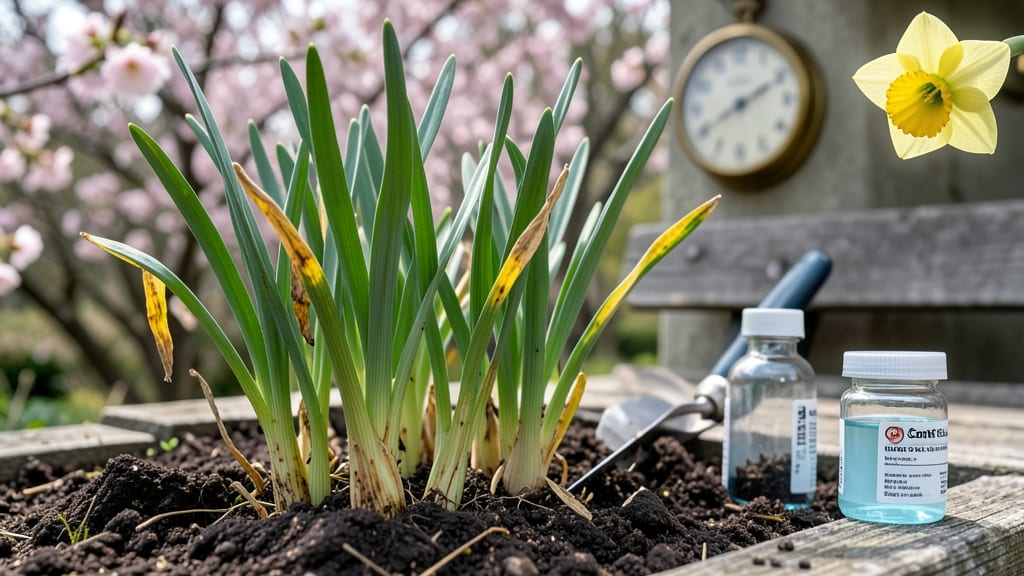
Why didn’t my daffodils bloom this year? Your daffodils need sunlight, nutrients, and patience to bloom—yet this year, they’re playing hide-and-seek. 🌱 The good news? Most blooming failures come down to three fixable issues: not enough light, poor soil, or timing mistakes. I’ve helped neighbors revive stubborn clumps by tweaking just one of these, and you can too.
First, check the sunlight: daffodils need 6+ hours of direct light daily. If your spot’s shady, move them to a sunnier location next fall. Then, test your soil—daffodils thrive in well-draining, slightly acidic soil (pH 6.0–7.0). Amend heavy clay with compost or sand, and avoid over-fertilizing with nitrogen-heavy mixes.
Timing matters too. Daffodils need 6–8 weeks of cool weather to set flower buds. If your spring was unusually warm, they might’ve skipped blooming to focus on foliage.
For next year, plant bulbs in fall (6–8 weeks before first frost) and resist the urge to fertilize after blooming—let the leaves feed the bulb underground.
Overcrowding is another culprit. Dig up and divide clumps every 3–5 years to improve airflow and nutrient access. Even a simple soil test and a fall transplant can turn next year’s daffodils into a bold, cheerful showstopper—no mystery involved.
Hidden Reasons Your Daffodils Skipped Bloom
Daffodils are hardy, cheerful plants that should reward you with vibrant blooms year after year—but when they don’t, it’s often due to sneaky factors lurking beneath the surface. 🌱🤔 From overlooked soil secrets to timing traps, here’s why your daffodils might have thrown a "no-show" this spring, along with the science-backed fixes to bring them back to life.
🌱 Insufficient Light Exposure
Daffodils thrive in full sun to partial shade (6–8 hours of sunlight daily), but too little light can stunt flower production. Here’s why:
- Photosynthesis slowdown: With limited light, plants prioritize leaf growth over energy-intensive blooms. Daffodils need sunlight to convert glucose into florigen, a hormone that triggers flowering.
- Weakened bulbs: Shady spots lead to smaller, weaker bulbs over time, reducing next year’s bloom potential.
- Check your spot: If nearby trees or structures cast deep shade, daffodils may struggle. Solution: Move bulbs to a sunnier location or prune encroaching foliage.
🌡️ Temperature & Timing Mismatches
Daffodils follow a chilling requirement—they need 4–8 weeks of temperatures below 40°F (4°C) to break dormancy and signal blooming. Without this, they’ll sit dormant or produce only leaves.
- Too-warm winters: Mild climates (or mulched beds) can prevent bulbs from "resetting." Fix: Avoid heavy winter mulch; let soil temps drop naturally.
- Early spring warmth: If temps spike above 60°F (15°C) before blooming, buds may abort. Pro tip: Plant in late summer/early fall (6–8 weeks before frost) to align with natural cycles.
- Late planting: Bulbs need 6–8 weeks to establish roots before winter. Planting too late (after October) delays growth.
💧 Water Woes: Too Much or Too Little
Daffodils are drought-tolerant but not flood-tolerant. Water stress—either way—can halt blooming:
- Overwatering: Soggy soil suffocates roots, preventing nutrient uptake. Sign: Yellowing leaves or mushy bulbs.
- Underwatering: Bulbs need 1–1.5 inches of water weekly (more in bloom). Drought stress diverts energy to survival, not flowers.
- Solution: Use well-draining soil (sandy loam ideal) and water at the base—not the leaves—to avoid fungal issues.
🌿 Nutrient Deficiencies or Overfeeding
Daffodils are light feeders—too much fertilizer (especially high-nitrogen) promotes leaves over blooms. But deficiencies can also sabotage flowers:
| Deficiency | Symptoms | Fix |
|---|---|---|
| Phosphorus (P) | Pale leaves, weak stems, no buds | Apply bone meal (5–10–10 fertilizer) in early fall. |
| Potassium (K) | Brown leaf edges, stunted growth | Use wood ash or a balanced 10–10–10 fertilizer. |
| Too much nitrogen (N) | Lush leaves, no flowers | Skip spring fertilizer; use a low-N formula (like 5–10–10) in fall. |
Pro tip: Test your soil! A DIY kit ($10–$20) reveals pH and nutrient gaps.
🐛 Pests & Diseases Stealing the Show
Hidden culprits like squirrels, voles, or fungal infections can damage bulbs or divert energy away from blooms:
- Rodent damage: Squirrels/voles eat bulbs or chew roots. Prevent: Plant bulbs 8–10 inches deep or use wire mesh cages.
- Fungal rot (e.g., Fusarium): Overwatering or poor drainage causes bulb rot. Fix: Space bulbs 4–6 inches apart for airflow; avoid wet mulch.
- Nematodes: Microscopic pests attack roots, weakening plants. Solution: Rotate planting areas every 3–4 years.
🔄 Overcrowded or Old Bulbs
Daffodils multiply via offsets, but overcrowding (more than 5–6 bulbs per square foot) starves them of nutrients and light. Older bulbs (5+ years) also bloom less vigorously.
- Signs: Small, sparse flowers or no blooms at all.
- Fix:
- ✂️ Divide bulbs every 3–4 years in late spring after foliage yellows.
- 🌱 Replant offsets 6 inches deep in fresh soil.
Quick fixes for stubborn daffodils
---
Don’t let a season without blooms dampen your spring spirits! With the right adjustments, you can coax your daffodils back into action—and even prevent future disappointments. Below, we’ve matched common causes to practical fixes, so you can troubleshoot like a pro. 🌱💡
---
If your daffodils are buried in shade, they’ll skip blooming. These bulbs thrive in full sun to partial shade (4–6 hours of direct light daily). Here’s how to help:
- 🔥 Relocate them: Move bulbs to a sunnier spot in your garden or containers. If space is tight, opt for a raised bed or window box with southern exposure.
- 🍳 Prune nearby plants: Trim overgrown shrubs, trees, or weeds blocking sunlight. Even a few inches of clearance can make a difference.
- 🌡️ Use reflective surfaces: Place a mirror or light-colored wall behind them to bounce extra light onto the bulbs.
💡 Prevention tip: When planting new daffodils, choose locations with at least 6 hours of sun. If your yard is shady, select early-blooming varieties like ‘Tête-à-Tête’ or ‘Ice Follies’, which tolerate lower light better.
---
Daffodils are picky about soil—too rich, too wet, or too compacted, and they’ll hold back blooms. Fix these issues:
| Problem | Solution |
|---|---|
| Heavy or clay soil (drains poorly) | Amend with compost or sand to improve drainage. Mix in 1–2 inches of organic matter (like peat moss or coconut coir) into the top 6 inches of soil. |
| Overly fertile soil (too much nitrogen) | Reduce high-nitrogen fertilizers. Instead, use a balanced bulb fertilizer (5-10-10) or bone meal in early spring. Never use fresh manure. |
| Acidic soil (pH < 6.5) | Raise pH with lime or wood ash. Test soil first with a kit to avoid over-correcting. |
✨ Pro tip: Daffodils hate soggy roots. If your garden floods, plant them on a mound or slope to encourage runoff. Add a 1-inch layer of gravel beneath bulbs in containers for extra drainage.
---
Daffodils need a cold period (chilling) followed by warm weather to bloom. If your bulbs didn’t get enough winter chill or sprouted too early, they may have skipped flowering. Try these fixes:
- 👨🍳 Simulate chilling: If planted in mild-winter zones (USDA 7–10), dig up bulbs after foliage dies back, store them in a cool (35–45°F), dark place (like a garage) for 12–16 weeks, then replant in fall.
- 🥘 Delay planting: If you planted too early (before soil temps drop below 60°F), hold off until 6–8 weeks before your first hard frost.
- ⏰ Adjust watering: Once shoots appear in spring, reduce watering until buds form. Overwatering early can signal bulbs to focus on leaves instead of flowers.
🎯 Prevention tip: For reliable blooms, plant daffodils in fall (October–November) when soil temps are below 60°F. In warm climates, choose chill-tolerant varieties like ‘Canary Bird’ or ‘Carlton’.
---
If squirrels, deer, or pests like squirrel midge or narcissus fly are draining your bulbs, blooms won’t appear. Act fast:
- 🔪 Physical barriers:
- Wrap bulbs in chicken wire before planting.
- Use repellent sprays (like garlic or hot pepper spray) on foliage.
- 🌡️ Fungal issues? Remove and destroy infected leaves. Treat with neem oil or copper fungicide if you spot basal rot or gray mold.
- 💪 Boost bulb health: Plant daffodil companions like alliums or fritillaries to deter pests naturally.
🔥 Warning: If bulbs are soft, mushy, or ooze liquid, they’re likely rotten—discard them to prevent spreading disease.
---
With these fixes, your daffodils should bounce back stronger next year. Patience is key—some varieties take 2–3 seasons to fully recover. Happy gardening! 🌷🌿
Frequently asked questions
Will my daffodils bloom next year if they didn’t this year?
Yes! Most daffodils are perennials and will bloom again next year if the issue was temporary (like light or nutrients). Focus on fixing the root cause—whether it’s moving them to sunnier soil or adjusting your fall planting time—and they’ll often rebound beautifully. Some varieties may need 2-3 seasons to recover from stress like overcrowding.
Can I fertilize my daffodils to make them bloom?
Use caution—too much fertilizer (especially high-nitrogen) actually prevents blooming by encouraging leaf growth. Instead, apply a low-nitrogen, phosphorus-rich fertilizer (like 5-10-10 or bone meal) in early fall when planting or in late winter before buds form. Avoid fertilizing after blooming, as this weakens the bulb.
How do I know if my daffodils are overcrowded?
Check for small, sparse blooms or no flowers at all despite healthy foliage. Dig up a clump—if you see more than 5-6 bulbs crowded in one spot (within 4-6 inches), they’re overcrowded. Divide them in late spring after leaves yellow, replanting offsets 6 inches deep with space between. This improves airflow and nutrient access.
Will pruning daffodil leaves affect next year’s blooms?
Never prune leaves until they fully yellow (about 6-8 weeks after blooming). The leaves feed the bulb underground for next year’s flowers! Cut them at the base only when they’re completely brown. If you prune too early, you’ll starve the bulb and reduce—or eliminate—next year’s blooms.
Can I plant daffodils in containers for better control?
Containers give you total control over soil and drainage, which is perfect for troubleshooting blooming issues. Use a well-draining potting mix with added sand or perlite, and ensure pots have drainage holes. Plant bulbs 6 inches deep and move containers to sunnier spots in winter for extra light.