
Shrubs
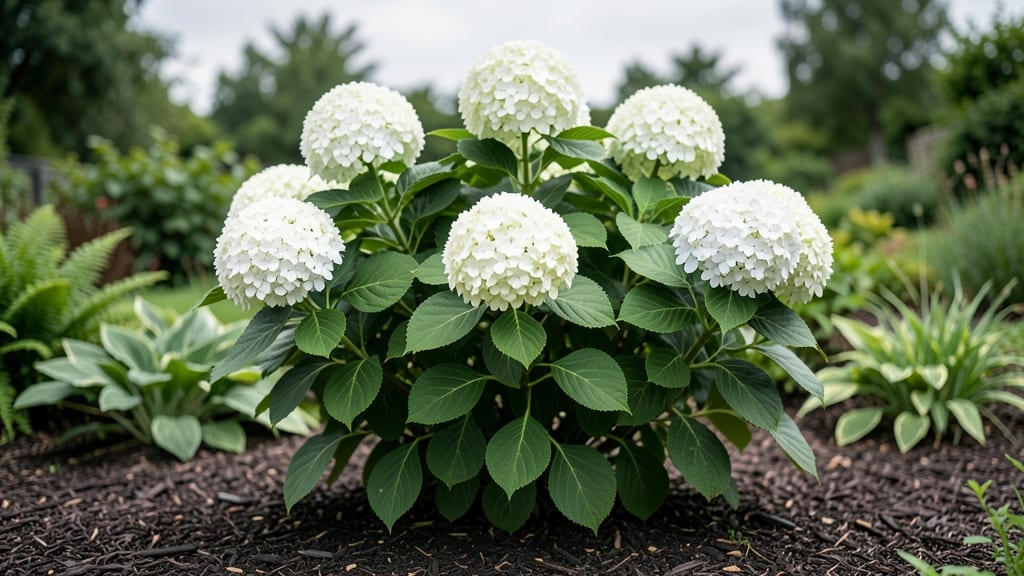
Annabelle hydrangeas thrive where others falter—bold white blooms even in deep shade. 🌿 I’ve grown them under towering oaks, and they’ve rewarded me with football-sized blooms that last all summer. The secret isn’t forcing light on them; it’s working with their natural shade tolerance.
These hydrangeas prefer dappled or partial shade (3–6 hours of morning sun), but they’ll even handle full shade if the soil stays moist. My plants under a dense canopy still produce 3-foot-tall stems loaded with blooms—though you’ll need to adjust watering and pruning for the lower light.
The key is rich, well-draining soil and consistent moisture. By mid-July, your shade garden will be a showstopper with clusters so dense they’ll hide the foliage. The blooms stay fresh until frost, and the plant’s tough, glossy leaves resist pests better than sun-loving varieties.
Even in full shade, they’ll outperform most shrubs. Here’s the catch: stunted growth or yellowing leaves usually means poor drainage or underwatering. Amend heavy clay with compost, and water deeply once a week—more in extreme heat.
Prune in late winter to shape, but never cut back old wood unless you want fewer blooms next year.
📚 In This Guide
- What you need
- Instructions
- Tips and common mistakes
- Wrapping up and next steps
What you need
- ● Annabelle Hydrangea plants (1-3 per desired cluster; choose Hydrangea arborescens 'Annabelle' for the classic white blooms).
- ● Well-draining potting mix (5-10 gallons, depending on pot size) or native soil amended with compost (2-3 cubic feet per plant).
- ● Organic mulch (2-3 inches of shredded bark or pine straw to retain moisture and suppress weeds).
- ● Balanced fertilizer (10-10-10 or 20-20-20, 1-2 tablespoons per plant at planting time).
- ● Watering can or hose with gentle spray nozzle (for deep, consistent watering).
- ● Gloves and pruning shears (sterilized with rubbing alcohol for clean cuts).
- ○ Staking supports (optional but helpful) (3-4 bamboo stakes or metal cages per plant for windy areas).
- ● Shade assessment tool (a light meter or your phone’s brightness app to confirm partial shade (2-6 hours of light)).
- ● Garden trowel or spade (for digging holes 2x wider and as deep as the root ball).
- ● pH test kit (ideal soil pH: 5.5–6.5; amend with sulfur or lime if needed).
- ● Protective eyewear (for handling soil or mulch).
- ● Slow-release fertilizer tablets (for low-maintenance feeding).
- ● Epsom salt (1 tablespoon per plant monthly for vibrant blooms).
- ● Decorative garden flags or stakes (to mark plant locations).
- ● Rain gauge (to monitor watering consistency).
Step-by-step guide for planting and caring for Annabelle hydrangeas in shade
Here's how to coax those signature white blooms to thrive where sunlight is scarce.
🌱 Step 1: Select the Perfect Shade Spot and Prepare the Soil
Annabelle hydrangeas tolerate shade but need at least 4-6 hours of filtered light daily—think dappled sun through trees rather than deep, dark corners. I always scout the site first, checking for afternoon shade patterns. The ideal spot receives morning sun and afternoon shade, which prevents leaf scorch while still fueling blooms.
Dig a hole twice as wide as the root ball but only as deep. Amend the native soil with 3-4 inches of compost mixed into the bottom and sides of the hole. Annabelle hydrangeas prefer slightly acidic soil (pH 5.2-6.0), so test your soil first. If it's alkaline, add sulfur or peat moss to lower the pH before planting. The goal is loose, well-draining soil that holds moisture without becoming soggy.
🪴 Step 2: Plant with Careful Root and Stake Placement
Remove the hydrangea from its container and gently loosen the roots if they're circling. Position the plant so the top of the root ball sits 1 inch below the surrounding soil line—this prevents stem rot while ensuring stability. I always check the root flare (where roots meet the stem) to confirm it's not buried too deep.
Backfill with native soil mixed with compost, tamping lightly every 2 inches to eliminate air pockets. Water deeply to settle the soil, then install a 6-foot stake on the side opposite the plant's main stem. Secure the hydrangea to the stake with soft garden ties, leaving room for growth. Mulch with 2-3 inches of organic mulch (like shredded bark) around the base, keeping it 3 inches away from the stem to prevent rot.
💧 Step 3: Water Deeply and Establish a Consistent Routine
The first 2-3 weeks after planting are critical—water deeply 2-3 times per week until the soil is 6-8 inches deep and evenly moist. Stick your finger in the soil: if it feels dry past your first knuckle, it's time to water. Annabelle hydrangeas hate soggy roots but also despise drought stress, which causes buds to drop.
Once established, water 1-2 times per week, adjusting for rainfall. I always water at the base in the morning to reduce evaporation and fungal risks. Avoid overhead watering, which can promote powdery mildew—a common issue in shaded hydrangeas. If you notice leaves wilting or yellowing, increase watering frequency slightly but never let the plant sit in standing water.
✂️ Step 4: Prune for Shape and Bloom Health
Annabelle hydrangeas bloom on new wood, so prune in late winter or early spring before new growth begins. Cut back the previous year's stems to 6-8 inches above the ground—this encourages bushier growth and larger blooms. I always sterilize my pruners with rubbing alcohol between cuts to prevent disease spread.
Remove any dead, diseased, or crossing branches during the growing season to improve airflow. If your hydrangea looks leggy, prune back 1/3 of the oldest stems to stimulate new growth. Deadhead spent blooms in late summer to redirect energy into next year's flowers, but leave a few seed heads for winter interest if you prefer a natural look.
☀️ Step 5: Fertilize and Monitor for Shade-Specific Issues
Feed Annabelle hydrangeas with a balanced, slow-release fertilizer (10-10-10 or 20-20-20) in early spring and again in mid-summer. I avoid high-nitrogen fertilizers, which promote leafy growth at the expense of blooms. Instead, I use a low-nitrogen, high-phosphorus formula to encourage flowering. Follow package instructions for application rates—over-fertilizing in shade can burn roots.
Watch for powdery mildew or aphids, common in shaded hydrangeas. If you spot white powder on leaves, spray with a neem oil solution or baking soda mix (1 tsp baking soda + 1 quart water + a drop of dish soap). For aphids, blast them off with a strong stream of water or introduce ladybugs as natural predators. Annabelle hydrangeas are generally low-maintenance, but shade can stress them, so stay vigilant for signs of trouble.
Tips & tricks for thriving Annabelle hydrangeas in shade
Here's what nobody tells you about getting those showstopping blooms in low-light conditions.
Lighting Strategy: The 4-6 hours of filtered light Annabelle hydrangeas need doesn't have to be direct sun—think of it as "sunlight through a screen." I've had success placing them near east-facing windows where they get gentle morning light but are shielded from harsh afternoon rays. If your spot gets less than 4 hours, supplement with a grow light for 2-3 hours daily during the growing season. The key is consistent, indirect light rather than intense bursts.
Soil Science: That 3-4 inches of compost isn't just filler—it's the secret to happy roots. I recommend mixing in worm castings (1 cup per hole) for extra microbial activity, which helps break down nutrients in the shade. And here's a trick: if your soil tests above pH 6.0, add cottonseed meal instead of sulfur—it lowers pH more gradually and adds nitrogen too. The goal is that perfect 5.2-6.0 range where hydrangeas thrive.
Watering Wisdom: The finger-in-the-soil test is your best friend during those critical first 2-3 weeks. I've learned the hard way that 6-8 inches deep matters—superficial watering only encourages shallow roots. For established plants, I set a rain gauge nearby to track weekly totals. If we get less than 1 inch of rain in a week, I water deeply at the base. The morning watering rule is non-negotiable—it prevents fungal spores from settling overnight.
Pruning Precision: Those 6-8 inches you're cutting back to in late winter might seem drastic, but trust me—it's what creates those massive blooms. I mark the cuts with a piece of chalk on the stake before pruning to ensure consistency. For leggy plants, I prune back the oldest stems first, which are usually on the outside. And here's a pro move: after pruning, give the plant a balanced fertilizer feed to kickstart new growth.
Pro Tips for Annabelle Hydrangea Shade
- Here's what nobody tells you about getting those showstopping blooms in low-light conditions.
- Lighting Strategy: The 4-6 hours of filtered light Annabelle hydrangeas need doesn't have to be direct sun—think of it as "sunlight through a screen."
- Soil Science: That 3-4 inches of compost isn't just filler—it's the secret to happy roots.
Frequently asked questions
Got questions about growing Annabelle hydrangeas in shade? You’re not alone!
Here are some of the most common concerns—and their solutions—to help you cultivate stunning blooms even in deep shadows.
Can Annabelle hydrangeas survive in full shade?
Annabelle hydrangeas thrive in partial shade (morning sun + afternoon shade) but can tolerate full shade—though blooms may be smaller or less vibrant. For best results, plant them in a spot with at least 4–6 hours of dappled light. If full shade is unavoidable, prioritize rich, moist soil and fertilize lightly in spring to encourage growth.
How long does it take for Annabelle hydrangeas to bloom in shade?
In optimal shade conditions, Annabelle hydrangeas typically bloom 60–90 days after planting (late spring to early summer). However, in deep shade, blooming may be delayed by 2–4 weeks. Patience is key—young plants focus on root establishment first! Prune spent blooms in late winter to encourage stronger growth for next year.
Do Annabelle hydrangeas need extra care in shaded areas?
Yes! Shade can mean slower soil drying, so:
- Water deeply but less frequently (1–2 times per week, depending on rainfall).
- Avoid soggy soil—ensure containers or beds have good drainage.
- Mulch heavily (2–3 inches) with organic matter (like shredded bark) to retain moisture and regulate temperature.
Will Annabelle hydrangeas lose their white blooms in shade?
Not necessarily! While shade may reduce bloom size or intensity, Annabelle hydrangeas retain their classic white color (though they might appear slightly paler). For brighter blooms, supplement with a balanced liquid fertilizer in spring. If blooms seem sparse, check for:
- Overcrowded roots (prune if needed).
- Nutrient deficiencies (yellow leaves? Try a chelated iron spray).
- Too much shade (gradually acclimate to more light if possible).
What’s a good shade-loving alternative if Annabelle hydrangeas struggle?
If you’re dealing with very dense shade (e.g., under tall trees), consider these low-light companions:
Plant
Why It Works
Oakleaf hydrangea (Hydrangea quercifolia)
Tolerates shade better than Annabelle; showy fall foliage adds seasonal interest.
Japanese forest grass (Hakonechloa macra)
Adds texture and movement without competing for light.
Heuchera (Coral Bells)
Stunning foliage in shades of purple, silver, or lime—great for deep shade gardens.
Ferns (e.g., Matteuccia struthiopteris)
Thrives in low light and complements hydrangea’s structure.
Wrapping up and next steps
Transforming your shady garden into a showstopper with Annabelle hydrangeas is totally doable—and what a rewarding sight! 🌿 These bold blooms thrive where others falter, proving that shade doesn’t mean sacrificing beauty.
With the right soil, watering routine, and a little patience, you’ll soon enjoy lush, drama-filled foliage that turns heads.
Ready to take the next step? Grab your gloves, pick a spot, and plant your first Annabelle hydrangea this weekend! Your garden’s star moment is waiting. 🌸