
Blooming
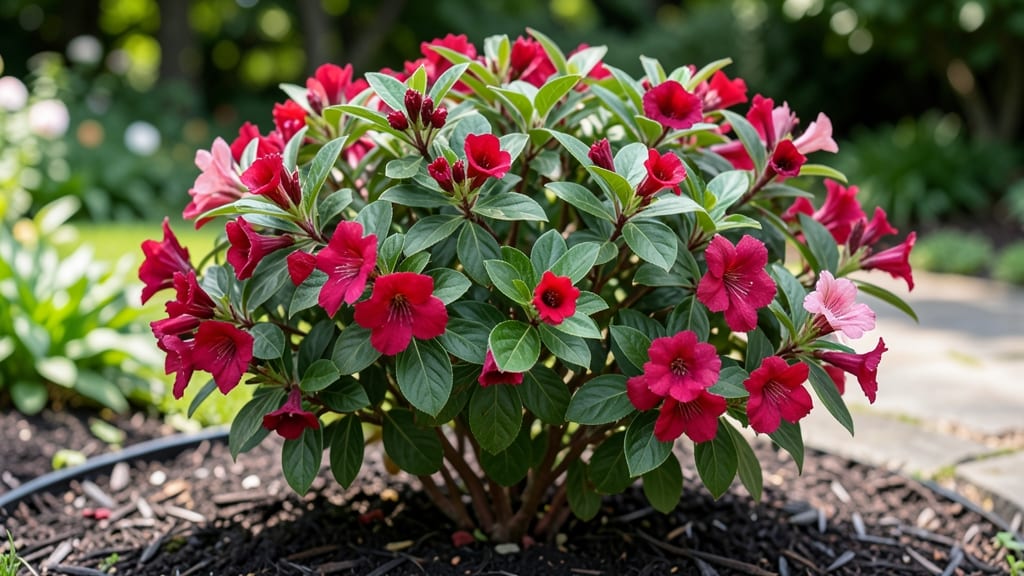
Your garden just got a fragrant purple showstopper that blooms from spring to frost. 🌸 Weigela 'Sonic Bloom Wine' isn't just another shrub—it's a reliable rebloomer with wine-colored flowers that attract butterflies while filling your yard with sweet fragrance.
The secret to its nonstop performance? A few simple growing habits that keep it happy year after year.
This weigela thrives in full sun to partial shade and tolerates most well-drained soils, though it rewards you best with 6+ hours of sunlight daily. Plant it where you'll see it often—those 3-inch flower spikes appear in waves from May through October.
Water deeply once established, but don't drown it; soggy roots are its only real enemy. Mulch around the base to keep moisture consistent and roots cool.
Pruning is where the magic happens. After flowering, trim back about one-third of the oldest stems to encourage fresh growth and more blooms. Remove any dead or crossing branches in late winter.
With proper pruning, you'll get denser foliage and even more flowers next season—plus, the plant stays compact enough for small gardens. The fragrance alone makes it worth the effort.
Watch for spider mites in hot, dry summers—they love weigela's lush leaves. A strong spray of water usually clears them up before they cause damage. Otherwise, this plant is disease-resistant and low-maintenance, making it perfect for busy gardeners who still want drama.
Once established, it handles drought surprisingly well too. Plant one this spring and enjoy the show all season long.
📚 In This Guide
- What you need
- Instructions
- Tips and common mistakes
- Wrapping up and next steps
What you need
- ● Weigela Sonic Bloom Wine plant – 1 mature plant (or seeds/cuttings if propagating).
- ● Well-draining potting mix – 2–3 bags (1 cubic foot each) for planting.
- ● Garden soil amendment – 1 bag of compost or organic matter (to enrich soil).
- ● Organic fertilizer – Balanced 10-10-10 or slow-release granular (1 lb).
- ● Mulch – 1 bag of shredded bark or wood chips (for moisture retention).
- ● Garden trowel or shovel – For digging holes (6–8 inches deep).
- ● Pruning shears – Sharp, sterilized pair (for shaping and deadheading).
- ● Watering can or hose with nozzle – For gentle watering (avoid oversaturating).
- ● Gloves – 1 pair (to protect hands from thorns).
- ○ Measuring tape – Optional, for spacing plants 3–5 feet apart.
- ● Slow-release fertilizer spikes (for convenience).
- ● Plant supports (if growing in windy areas).
- ● Epsom salt (1 tbsp/month in water for magnesium boost).
- ● Pest control spray (neem oil or insecticidal soap, if needed).
How to plant and care for Weigela 'Sonic Bloom Wine'
This stunning cultivar delivers vibrant purple blooms and reblooming vigor—here's how to set it up for maximum impact.
🪴 Step 1: Choose the Perfect Planting Location
Weigela 'Sonic Bloom Wine' thrives in full sun to partial shade with at least 4-6 hours of direct sunlight daily. I always plant mine where it gets morning sun and afternoon shade—this prevents leaf scorch while keeping blooms vibrant. The plant's fragrant purple spikes will be most prolific when positioned against a south- or west-facing wall.
Check your site's moisture drainage first. Weigela roots despise soggy soil, so avoid low spots where water pools. Amend heavy clay soil with 2-3 inches of compost before planting to improve aeration. The ideal spot balances sunlight with well-draining soil—you'll know you've got it right when new growth emerges within 4-6 weeks.
🌱 Step 2: Plant at the Correct Depth and Spacing
Dig a hole twice as wide as the root ball but no deeper—this prevents stem burial that invites rot. Gently loosen the roots if they're circling tightly in the container. Position the plant so the top of the root ball sits 1 inch above ground level; this ensures proper air circulation around the base.
Space plants 4-6 feet apart to allow mature growth and airflow. I like to plant mine in groups of three for a dramatic floral display—this mimics their natural woodland edge habitat. Backfill with native soil mixed with composted organic matter and water deeply to eliminate air pockets. The first flush of new leaves should appear within 2-3 weeks.
☀️ Step 3: Water Deeply and Maintain Consistent Moisture
Water immediately after planting to settle the soil and encourage root expansion. Weigela needs 1-1.5 inches of water weekly, but the key is deep, infrequent watering rather than light daily sprinkles. I water at the base in the morning so foliage dries quickly—this prevents fungal issues that can discolor the purple blooms.
Check soil moisture by pushing your finger 2 inches deep—if it feels dry, it's time to water. Mulch with 2-3 inches of shredded bark to retain moisture and suppress weeds. Once established, Weigela becomes quite drought-tolerant, but you'll see the most robust reblooming when moisture stays consistent during the growing season.
✂️ Step 4: Prune Strategically for Continuous Blooms
Prune immediately after flowering to encourage reblooming all season. Cut back one-third of the oldest stems to the ground—this removes spent blooms and stimulates new growth from the base. I always use clean, sharp pruners to make 45-degree cuts just above a leaf node.
Avoid heavy pruning in late summer or fall, as this removes next year's flower buds. Shape the plant lightly in early spring to remove dead or crossing branches. You'll notice new growth emerging from the base within 3-4 weeks—this is your signal that the plant is responding well to pruning.
🌿 Step 5: Fertilize for Vibrant Purple Spikes
Apply a balanced 10-10-10 fertilizer in early spring just as new growth begins. I use ½ cup per plant worked into the soil around the drip line. Weigela responds well to light feeding, so avoid heavy applications that promote excessive foliage over flowers.
For even more dramatic blooms, switch to a low-nitrogen, high-phosphorus formula (5-10-10) in mid-summer. This encourages more flowering instead of leafy growth. You'll see the difference in 4-6 weeks with longer, more abundant purple spikes.
Tips & tricks for perfect Weigela 'Sonic Bloom Wine' planting
Here's what nobody tells you about maximizing those showstopping purple blooms—details that make all the difference between a pretty shrub and a showstopper.
Sunlight Strategy: That 4-6 hours of daily sunlight is non-negotiable, but timing matters just as much. I've found the sweet spot is morning sun with afternoon shade—this prevents leaf scorch while keeping the purple blooms vibrant. If you're in a hotter climate, consider a 50% shade cloth during peak afternoon hours to protect the foliage without sacrificing flower production. The key is watching your plant's response: if leaves start yellowing, you're getting too much direct sun.
Root Ball Revelation: When planting, don't just plop it in the hole—gently loosen those circling roots and position the root ball so the top sits 1 inch above ground level. This might seem like a small detail, but it prevents stem rot (a common killer) and ensures proper air circulation. I've seen plants with buried stems develop fungal issues within weeks—don't make that mistake. The 2-3 week window for new leaf flush is your confirmation that roots are establishing properly.
Pruning Precision: That one-third pruning of oldest stems after flowering isn't arbitrary—it's about stimulating new growth from the base where flower buds form. Use clean, sharp pruners and make those 45-degree cuts just above a leaf node. I've tried shearing with hedge clippers, and while it looks neat, it actually reduces next year's blooms. The 3-4 week response time for new growth is your reward for precise pruning—watch for those fresh green shoots emerging from the base.
Fertilizer Timing: The switch from 10-10-10 in spring to 5-10-10 in mid-summer isn't just about numbers—it's about flower power. That high-phosphorus formula in summer gives you those dramatic purple spikes you're after. I've noticed the difference in just 4-6 weeks: plants get taller stems with more abundant blooms. Pro tip: mix your fertilizer into the soil around the drip line, not right at the base—this encourages deeper root growth where you want it.
Pro Tips for Weigela Sonic Bloom Wine
- Here's what nobody tells you about maximizing those showstopping purple blooms—details that make all the difference b...
- Sunlight Strategy: That 4-6 hours of daily sunlight is non-negotiable, but timing matters just as much. I've found th...
- Root Ball Revelation: When planting, don't just plop it in the hole—gently loosen those circling roots and position t...
Frequently asked questions
Got questions about Weigela Sonic Bloom Wine? You're not alone! This stunning shrub is packed with charm, but it’s natural to wonder about care, blooms, and more. Here are some of the most common queries—plus quick answers to help you keep your plant thriving.
When does Weigela Sonic Bloom Wine flower, and how often?
Sonic Bloom Wine is a reblooming variety, meaning it produces two flushes of flowers per season—typically in early spring and again in mid-to-late summer. With proper care (like deadheading spent blooms), you’ll enjoy vibrant purple-pink spikes for months! Cold winters may delay spring blooms, but don’t worry—it’s still hardy to Zone 4.
How fast does this Weigela grow, and how big will it get?
This Weigela is a moderate grower, adding 12–18 inches per year under ideal conditions. At maturity, it typically reaches 5–6 feet tall and 4–5 feet wide. For compact growth, prune lightly after flowering to encourage bushiness. If you’re short on space, consider dwarf varieties or container planting!
Can Weigela Sonic Bloom Wine survive harsh winters?
This variety is highly cold-hardy (down to -30°F/-34°C) and thrives in Zones 4–8. However, in extreme winds or prolonged snow cover, young plants may need mulch or burlap wrapping to protect tender stems. Established shrubs usually bounce back with minimal fuss.
What should I do if my Weigela isn’t reblooming?
Reblooming can fizzle due to a few common issues:
- Over-pruning: Avoid heavy cuts in late summer/fall—this removes next year’s flower buds!
- Poor nutrition: Feed with balanced fertilizer (like 10-10-10) in early spring.
- Stress: Check for pests (aphids, spider mites) or disease (powdery mildew).
If all else fails, a light prune in early spring can stimulate new growth—and blooms!
Are there similar Weigela varieties with different colors?
Yes! If you love Sonic Bloom Wine but want a color change, check out:
- Weigela ‘Wine & Roses’: Deep magenta blooms.
- Weigela ‘Red Prince’: Bright red flowers.
- Weigela ‘Alexandra’: Soft pink with a fragrant twist.
- Weigela ‘Midnight Wine’: Darker purple spikes (less reblooming).
All are low-maintenance and deer-resistant—perfect for pollinators!
Wrapping up and next steps
Weigela 'Sonic Bloom Wine' is a standout choice for gardeners seeking vibrant, low-maintenance color that blooms repeatedly from spring to fall. Its deep purple spikes and fragrant blooms add elegance to any landscape while thriving in partial shade or sun—perfect for both beginners and seasoned plant lovers. 🌸
Ready to transform your garden? Plant yours today and enjoy years of stunning, effortless beauty! For extra impact, pair it with complementary perennials like heuchera or hostas—your outdoor space will thank you.