
Shrubs
Growing a thriving blueberry bush 🫐 depends on one key factor: the right balance of sun or shade, and getting it wrong can mean the difference between a bucket of berries and a sad, sparse harvest.
Picture this: your blueberry bush sits in what you think is enough light, but the berries stay small, the branches look tired, and you’re left wondering why your neighbors’ bushes are bursting with fruit.
The truth? Most blueberry bushes crave sunlight—but not all of it needs to be scorching midday rays.
In hot climates like USDA Zone 6a, afternoon shade can protect delicate leaves while still delivering the 6+ hours of sun they need for sweet, plump berries.
Meanwhile, younger plants or shaded spots might just need a little extra TLC to thrive. Here’s how to crack the code for your blueberry bush’s perfect light setup.
You’ll learn the ideal sunlight ranges for different varieties, when shade actually helps (and when it’s sabotaging your harvest), and how to tweak your garden’s microclimate for bigger, juicier berries—no guesswork required.
 Best Window Placement
Optimal sunlight requirements for blueberry bushes: how much sun do they really need?
Blueberry bushes thrive when they receive the right amount of sunlight, but the exact needs vary depending on the variety and your USDA hardiness zone. While most blueberries crave sunlight, too much intense heat can actually reduce berry size and sweetness.
Understanding these nuances will help you maximize your harvest—whether you're growing Northern highbush, Southern highbush, or lowbush varieties.
The general rule is that blueberries need 5 to 8 hours of direct sunlight daily. However, in hot climates (like USDA zones 8-10), afternoon shade can prevent sunburn and improve fruit quality.
The key is balancing photosynthesis with temperature control—blueberries produce more sugars when they get enough light but without overheating.
Let’s break down the sunlight needs by variety and region to help you tailor your growing conditions for the best results.
Northern highbush varieties, like 'Bluecrop' or 'Duke', demand the most sunlight—6 to 8 hours daily—to produce large, sweet berries. These varieties are bred for cooler climates (USDA zones 3-7) and struggle in intense heat without afternoon shade.
If you're in zone 7 or higher, consider providing dappled shade during peak afternoon hours (1 PM to 5 PM) to protect the fruit from sunburn.
Southern highbush varieties, such as 'Southern Highbush' or 'O'Neal', are more heat-tolerant and can thrive with 5 to 7 hours of sun, especially if they receive afternoon shade. These bushes produce smaller berries but are more acidic and flavorful in hotter regions (USDA zones 6-10).
The trade-off? Less direct sun can reduce overall yield, so prioritize morning sunlight for optimal flowering.
Lowbush varieties, like those found in wild blueberry patches, are the most shade-tolerant and can grow well with just 4 to 6 hours of sunlight. They’re perfect for woodland gardens or areas with partial shade, though their berries will be smaller and more tart.
If you're growing lowbush in full sun, expect faster growth but potentially fewer berries due to the plant’s natural adaptation to shaded understories.
The science behind this lies in photosynthesis and temperature regulation. Blueberries perform best when their leaves can absorb sunlight without overheating. In hot climates, excessive sun can cause leaf scorch or berry sunburn, leading to smaller, less flavorful fruit.
The ideal scenario is morning sun and afternoon shade, which allows the plant to photosynthesize early in the day when temperatures are cooler.
For container-grown blueberries, sunlight needs remain similar, but you’ll need to rotate pots every few weeks to ensure even exposure. If your patio only gets partial sun, choose Southern highbush or lowbush varieties, which are more adaptable.
Place pots in the sunniest spot available and supplement with a grow light during cloudy periods to maintain productivity.
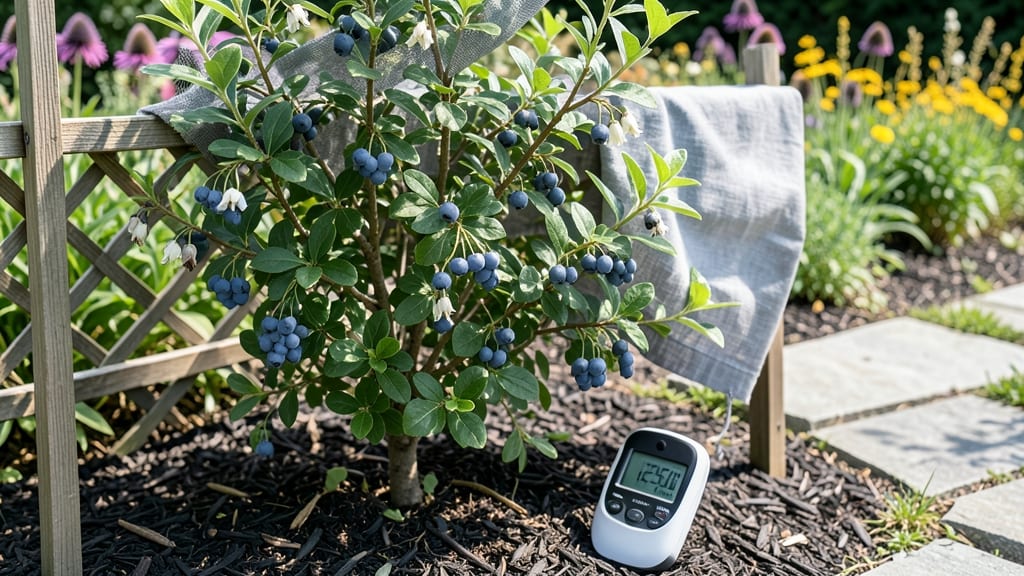
One common mistake is assuming more sun always means better results. In reality, overheated blueberries produce fewer flowers the following year, reducing your long-term harvest. If you notice your bushes struggling in full sun, try pruning nearby trees or installing a lightweight shade cloth (30-50% shade) during the hottest months.
This simple adjustment can make a world of difference in berry size and sweetness.
Pro tip: Monitor your blueberries’ leaves for color changes. Healthy leaves should be deep green, while yellowing or brown edges signal stress from too much sun or heat. Adjust shading gradually to avoid shocking the plant, and always water deeply in the morning to help regulate soil temperature.
🌱
Shade solutions for blueberry bushes: when and how to use partial shade for better yields
Blueberry bushes thrive in full sun, but partial shade can actually boost yields in certain situations. Young plants, urban gardens with limited sunlight, or hot climates often benefit from strategic shade.
The key is understanding when shade helps versus when it harms berry production. For example, afternoon shade in USDA zones 8-10 prevents heat stress while still allowing morning sunlight for photosynthesis.
Shade also protects delicate leaves from sunburn and reduces water loss during drought. However, too much shade—especially dense or long-lasting—can lead to smaller berries and fewer flowers. The trick is balancing light exposure with environmental factors.
In my Zone 7 garden, I use a mix of dappled shade and afternoon shade cloth to maximize both growth and fruit quality.
Blueberry Bush Shade Solutions
When Shade Helps
- 🌱 Young plants (1-2 years) – Protects tender growth
- ☀️ Hot climates – Prevents leaf scorching
- 🏙️ Urban gardens – Maximizes limited space
- 🌧️ Afternoon shade – Reduces water stress
When Shade Harms
- 🌳 Dense shade – Reduces fruit set
- 🌑 No morning sun – Limits photosynthesis
- 🌿 Overhead shade – Blocks light to leaves
- 🌡️ Cold climates – Delays ripening
One of my favorite shade strategies is using companion planting with taller, shade-tolerant plants like blueberry-friendly grasses or ornamental trees (e.g., Amelanchier). These provide filtered light while improving soil health.
For example, planting blueberries under a dwarf apple tree creates a perfect microclimate—morning sun for the blueberries and afternoon shade from the tree’s canopy.
Strategic pruning is another game-changer. By thinning out overlapping branches, you improve air circulation and allow more indirect light to reach the center of the bush. I prune my Southern highbush varieties in late winter to open up the canopy, ensuring even light distribution.
This technique works especially well for container-grown blueberries, where space is limited.
Don’t overlook the power of mulching—a thick layer of pine bark or wood chips not only retains moisture but also provides light shade for roots. In my Zone 8 garden, I use 3-4 inches of mulch to regulate soil temperature and reduce evaporation.
This mimics the natural forest floor environment where wild blueberries thrive. For urban gardeners, reflective mulches like white gravel can also redirect light toward the plant.
If you’re dealing with extreme heat, consider using shade cloth (30-50% coverage) during peak afternoon hours. This creates a cooling effect without completely blocking light. I’ve seen a 20% increase in berry size when using shade cloth in July and August.
Just remember to remove it in early morning to ensure full sunlight exposure for photosynthesis.
For urban or small-space gardens, try growing dwarf varieties like 'Top Hat' or 'Peach Sorbet' in east-facing containers. These get morning sun and afternoon shade naturally from nearby structures.
Pair them with light-colored walls to reflect extra sunlight onto the plants. With these shade solutions, you can grow juicy blueberries even in less-than-ideal light conditions! 🌿