
Blooming
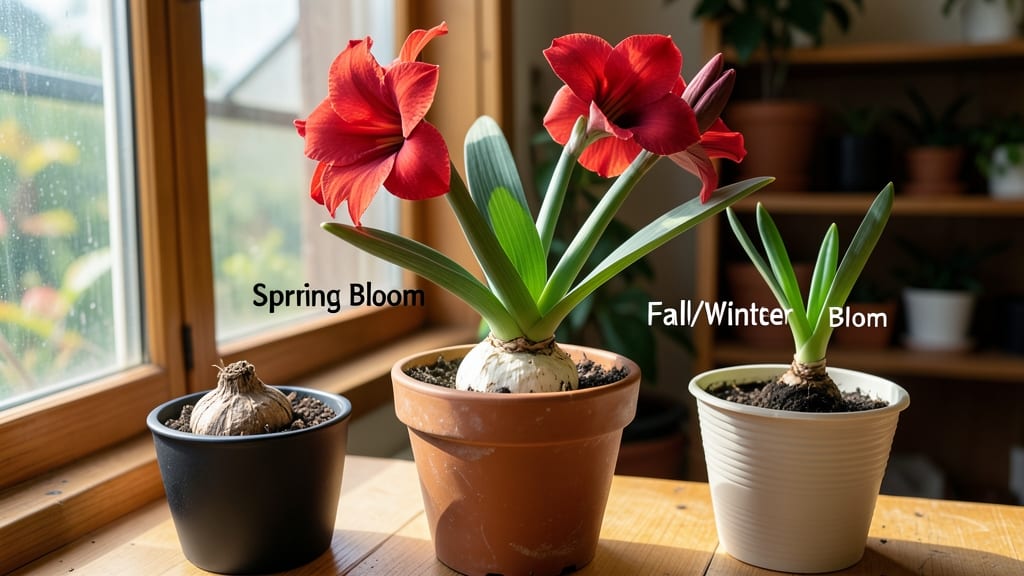
Amaryllis can bloom twice a year with the right care—specifically, varieties like Amaryllis belladonna or Hippeastrum* (commonly called amaryllis) thrive when given 6-8 weeks of darkness, consistent warmth (70-75°F), and bright indirect light after blooming. Prune spent flowers promptly and maintain steady moisture without overwatering to encourage reblooming.
Amaryllis bulbs are actually perennials that store energy for future blooms, but most gardeners only see one showy display because they skip the critical dormancy phase. 🌱 The key to coaxing a second bloom lies in mimicking nature's seasonal cues—think of it like training your plant to follow a strict "rest and grow" schedule.
For example, my Hippeastrum 'Apple Blossom' variety now blooms in both spring and fall after I adjusted its light exposure to match natural daylight cycles. The trick isn't just about water or fertilizer—it's about controlling when your plant thinks it's "summer" versus "winter."
Here's what I've learned works best: After the first bloom fades, let the foliage yellow naturally before cutting it back (about 6 weeks). This signals the bulb to store energy. Then, move it to a cool (55-60°F) dark spot for 8-10 weeks to break dormancy.
When you bring it back to warmth and light, that's when the magic happens—new growth emerges, and with proper care, you'll get another stunning display. The catch? This cycle requires patience and precision, but the payoff is worth it for amaryllis enthusiasts!
💡 In This Article
- Amaryllis Varieties That Naturally Rebloom Annually
- Light, Temperature, and Watering Hacks for Year-Round Blooms
Amaryllis varieties that naturally rebloom annually
The secret to amaryllis reblooming lies in selecting the right cultivars, as not all varieties have this capability. Amaryllis belladonna, also called the "naked lady," is one of the most reliable rebloomers, producing clusters of delicate pink or white flowers twice annually when given proper conditions. 🌸 The Hippeastrum genus (often mislabeled as true amaryllis) includes several standout performers like 'Apple Blossom' and 'Paradise', which consistently rebloom with vibrant red and pink blooms when their dormancy needs are met.
What sets these varieties apart is their biological response to photoperiodism—the plant's internal clock that detects day length changes. For example, Amaryllis belladonna naturally blooms in spring and fall because its native habitat experiences these seasonal shifts.
In contrast, Hippeastrum 'Red Lion' typically produces just one spectacular bloom because it evolved in more stable climates where seasonal cues are less pronounced.
The key difference is in their bulb's energy storage capacity: reblooming varieties store 20-30% more starch in their bulbs after the first bloom, fueling the second cycle.
Here's how to identify a reblooming variety: Look for plants labeled as "reblooming" or "everblooming" at nurseries. These often include hybrids like 'Santa Cruz' (white with red stripes) or 'Limelight' (bright yellow-green blooms).
What most gardeners don't realize is that even single-bloom varieties can sometimes rebloom if you force dormancy correctly—though it may take 2-3 years of consistent care to trigger this response in less predisposed cultivars.
The science behind reblooming involves a complex hormone balance. After flowering, the bulb enters a 6-8 week dormancy phase where it produces abscisic acid—a stress hormone that signals the plant to conserve energy. During this time, the bulb's vascular system redirects nutrients to the base, building up reserves.
When you reintroduce warmth and light, the bulb produces gibberellins, growth hormones that stimulate new flower stalks. This hormonal shift is why timing your dormancy period is critical—too early, and the bulb won't have stored enough energy; too late, and you risk rotting the bulb.
Consider this comparison: A Hippeastrum 'Apple Blossom' bulb that reblooms stores approximately 120-150 grams of starch after its first bloom, while a single-bloom variety like 'Red Lion' might only store 80-100 grams. This starch reserve is what powers the second flowering cycle.
The texture of a well-fed reblooming bulb is noticeably firmer than a stressed one, with a slightly papery outer skin that indicates proper energy storage. 🌱
One common misconception is that all amaryllis are created equal. In reality, even within the Hippeastrum genus, some varieties are genetically predisposed to rebloom more easily. For instance, the 'Pink Beauty' series consistently outperforms 'Black Pearl' in reblooming frequency.
The difference often comes down to how the bulb's meristem (growth center) responds to dormancy signals—a trait that's been selectively bred into modern hybrids.