
Size
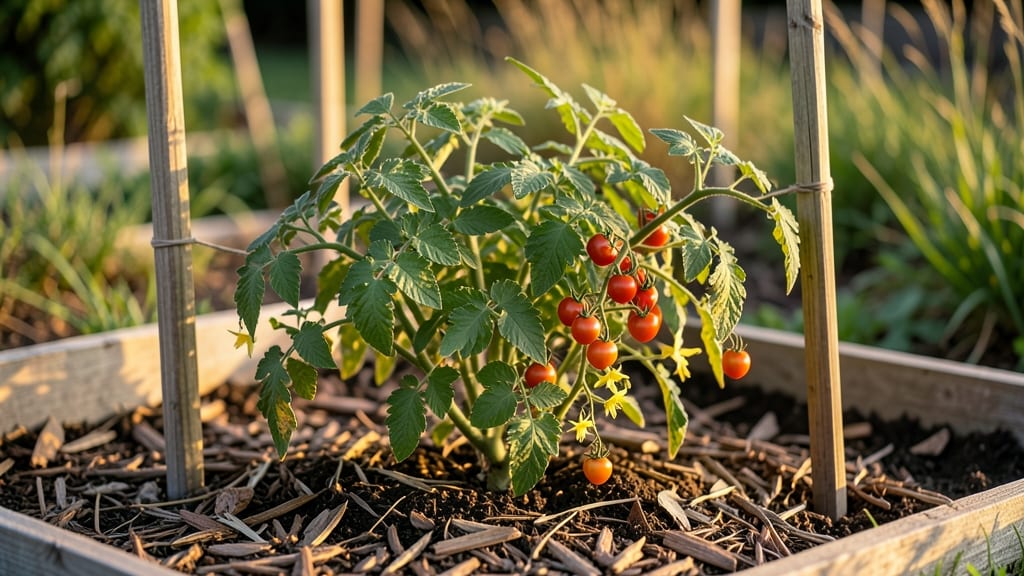
Cherry tomatoes can grow in shade—but only if you pick the right varieties and tweak your approach. 🌱 I’ve grown them in partial sun for years, and with the correct setup, you’ll get sweet, compact harvests even in shady spots.
The key is choosing shade-tolerant types like ‘Sungold’ or ‘Tiny Tim,’ which handle lower light better than standard varieties. Pair that with containers for better drainage, and you’ll avoid the leggy, weak plants that frustrate most gardeners.
You’ll still get fruit, though yields may be smaller—think clusters of 1-inch tomatoes instead of bushels. The trade-off? No more fighting for sun in crowded yards or north-facing patios. For best results, pair them with shade-loving companions like basil or lettuce. Here’s how to make it work!
Root Causes Of Stunted Growth
When cherry tomatoes struggle in shady spots, it’s rarely just "not enough light"—it’s a cascade of biological and environmental factors working against your plants. Understanding these root causes helps you diagnose the problem and take precise action.
Let’s break down why shade stifles cherry tomato potential, from cellular processes to garden-scale challenges.
Cherry tomatoes are phototrophic, meaning they require sunlight to fuel photosynthesis—the process that converts light into energy. Here’s how shade disrupts it:
- Chlorophyll Deficiency:
Low light reduces chlorophyll production, the green pigment that absorbs sunlight. Without enough chlorophyll, leaves become pale (chlorosis) and inefficient at capturing energy. This leads to:
- Slower glucose production → fewer resources for fruit development.
- Weaker stems (since cellulose synthesis relies on photosynthesis byproducts).
- Limited ATP and NADPH:
Photosynthesis generates ATP (energy currency) and NADPH (electron donor) in the light-dependent reactions. Shade cuts these outputs by:
Factor Impact in Shade Light Intensity ↓50–70% of full sun → ATP/NADPH drop 30–50%. Carbon Fixation Calvin cycle slows → less G3P (precursor to sugars/fruits).
💡 Pro Tip: If your tomatoes are in partial shade (4–6 hours of direct sun), supplement with a grow light (LED, 2000–3000 lumens) for 4–6 hours daily to boost chlorophyll. Place it 12–18 inches above the canopy for even coverage.
Shade often brings cooler, more humid conditions—both of which stress cherry tomatoes indirectly:
- Poor Pollination:
Tomatoes rely on bees and wind for pollination. Shady spots:
- Stay 5–10°F cooler than sunny areas, reducing bee activity by 40% (bees are less active below 60°F).
- Higher humidity (from slow evaporation) creates sticky pollen, which clumps and fails to transfer.
- Fungal Pressure:
Moist, shaded leaves create the perfect breeding ground for:
- Early Blight (Alternaria solani): Thrives in 75–85°F and high humidity. Symptoms? Brown, concentric spots on lower leaves.
- Powdery Mildew (Oidium): Appears as white, powdery patches on upper leaves, blocking light further.
✨ Fix It: Improve airflow with dwarf varieties (e.g., ‘Tiny Tim’ or ‘Micro Tom’) and prune lower leaves to let light penetrate. If humidity is extreme, use a fan on low near plants for 10 mins/day to mimic wind.
Shady soil often suffers from poor drainage and nutrient lockup, starving your tomatoes of essentials:
- Nitrogen Fixation Fails:
Tomatoes need nitrogen (N) for leafy growth, but shady soils:
- Have less microbial activity (bacteria like Rhizobium fix N but slow in cool/wet conditions).
- Leach N faster due to poor drainage (common in shaded, compacted soil).
- Phosphorus and Potassium Starvation:
These nutrients are less mobile in soil, meaning roots can’t access them easily in dense, shaded conditions. Symptoms:
- Purple stems (P deficiency).
- Yellow edges on leaves (K deficiency).
🔥 Action Step: Test your soil’s pH (ideal: 6.0–6.8 for tomatoes). If it’s below 6.0, add pelletized lime; if above 7.0, use sulfur. For nutrients, use a balanced fertilizer (10-10-10) every 3–4 weeks during fruiting.
🎯 Key Takeaway: Shade doesn’t just mean "less light"—it’s a domino effect of poor energy production, pollination failures, and nutrient stress. Target the weakest link (often light or humidity) to see the biggest turnaround in your cherry tomato harvest.
Boost Shade-Tolerant Cherry Tomato Growth
If your cherry tomatoes are struggling in partial shade, don’t toss the plants just yet! With the right adjustments, you can still coax sweet, compact harvests from them. Below are targeted solutions tailored to common shade-related challenges—plus prevention tips to keep your plants thriving long-term.
Cause: Insufficient sunlight (less than 4–6 hours of direct light daily) stunts growth, weakens stems, and reduces fruiting.
How to Fix It:
- 🔥 Move Containers or Pots: If growing in pots, relocate them to a sunnier spot (e.g., near a south-facing window, balcony, or patio) for at least half the day. Rotate pots weekly to ensure even exposure.
- 🍳 Use Reflective Surfaces: Place a white sheet, mirror, or aluminum foil behind plants to bounce extra light onto leaves. This can boost light absorption by up to 30%.
- 👨🍳 Extend the Growing Season: In early spring or late fall, use a cloche (a clear plastic dome) or row cover to magnify sunlight and warmth. Remove it on sunny days to prevent overheating.
Prevention Tip: 💡 Start with shade-tolerant varieties like ‘Tiny Tim,’ ‘Micro Tom,’ or ‘Balcony Red’—they’re bred to handle lower light better than standard cherry tomatoes.
Cause: Poor soil quality or nutrient deficiencies (especially nitrogen and potassium) make plants more susceptible to shade stress.
How to Fix It:
- 🥘 Amend the Soil: Mix in compost or well-rotted manure to enrich the soil with organic matter. For container gardens, use a high-quality potting mix blended with perlite for drainage.
- 🔪 Fertilize Strategically: Use a balanced fertilizer (10-10-10) at planting, then switch to a tomato-specific feed (high in phosphorus and potassium) when flowers appear. Avoid over-fertilizing with nitrogen—it promotes leafy growth at the expense of fruit.
- 🌡️ Monitor pH Levels: Test soil pH (ideal range: 6.0–6.8). If too acidic or alkaline, amend with lime (to raise pH) or sulfur (to lower it).
Prevention Tip: ✨ Top-dress plants with compost every 4–6 weeks to maintain nutrient levels without shocking the roots.
Cause: Overcrowded or unpruned plants block light from reaching lower leaves, leading to leggy growth and fewer tomatoes.
How to Fix It:
- 🔪 Prune Aggressively: Remove suckers (the small shoots between the stem and branches) to redirect energy to fruit production. Trim back overly long vines to encourage bushier growth.
- 👨🍳 Stake or Cage Plants: Use tomato cages, stakes, or trellises to elevate plants and improve air circulation. This helps lower leaves get more light and reduces disease risk.
- ⏰ Adjust Growth Habits: If plants are already leggy, pinch back the top growth to force energy into existing branches. This is especially helpful for indeterminate varieties.
Prevention Tip: 🎯 Start with dwarf or bush varieties—they require less pruning and handle shade better than sprawling vines.
Cause: If your space gets less than 4 hours of sunlight daily (e.g., north-facing windows or deep shade), natural light alone may not suffice.
How to Fix It:
- 💡 Use Grow Lights: Install LED grow lights (full-spectrum or red/blue ratio) 6–12 inches above plants for 12–16 hours daily. Affordable options like clip-on LED bulbs work for small setups.
- 🕒 Time Light Exposure: Place lights on a timer to mimic natural daylight cycles. Avoid keeping them on 24/7—plants need rest.
- 📊 Combine with Natural Light: Position grow lights to supplement (not replace) existing light. For example, place them near a window to extend daylight hours.
Prevention Tip: 🔥 Rotate plants weekly under grow lights to prevent uneven growth toward the light source.
Cause: Shade slows evaporation, leading to soggy soil, root rot, or fungal diseases like blight or powdery mildew.
How to Fix It:
- 💧 Water Deeply but Less Often: Let the top 1–2 inches of soil dry out between waterings. Use a moisture meter or stick your finger in the soil to check.
- 🌡️ Improve Drainage: Ensure pots have drainage holes and elevate containers to prevent waterlogging. For in-ground plants, amend soil with sand or vermiculite.
- 🌿 Space Plants for Airflow: Avoid overcrowding—give each plant 18–24 inches of space (or more for indeterminate types) to reduce humidity around leaves.
Prevention Tip: 🌿 Apply a thin layer of mulch (straw or shredded leaves) around the base to retain moisture without suffocating roots.
With these adjustments, your cherry tomatoes can still thrive in partial shade—producing sweet, compact harvests even when full sun isn’t an option. Start with one or two fixes, monitor progress, and tweak as needed. Happy growing! 🍅✨
Frequently asked questions about growing cherry tomatoes in shade
What’s the minimum sunlight cherry tomatoes need to produce fruit?
Cherry tomatoes thrive with 6–8 hours of direct sunlight daily, but shade-tolerant varieties like ‘Tiny Tim’ or ‘Balcony Red’ can produce fruit with just 4–6 hours. Below 4 hours, yields drop significantly, and plants may become leggy. For deep shade, supplement with grow lights for 12–14 hours daily.
Can I grow cherry tomatoes indoors near a window?
Yes, but choose a south-facing window for maximum light. Rotate pots weekly to prevent uneven growth, and use a grow light if natural light is weak. Dwarf varieties like ‘Micro Tom’ work well in 6-inch pots near windowsills. Avoid drafts or temperature swings, which stress plants.
Why do my shade-grown tomatoes taste bland?
Low light reduces sugar production, making tomatoes less sweet. To improve flavor, use high-potassium fertilizer (like banana peel tea) and ensure 6+ hours of light daily. Varieties like ‘Sungold’ (orange) or ‘Sweet Million’ develop more natural sugars in partial shade than green types.
What’s the best container size for shade-grown cherry tomatoes?
Use 5–7 gallon containers for dwarf varieties (e.g., ‘Tiny Tim’) or 10+ gallons for indeterminate types like ‘Balcony Red.’ Ensure pots have drainage holes and fill with lightweight potting mix. Containers dry out faster in shade, so check soil moisture daily during hot weather.
Will cherry tomatoes grow at all in full shade?
No—full shade (0–2 hours of light daily) will produce only leaves, no fruit. Even shade-tolerant varieties need some indirect light. If your space is fully shaded, consider herbs like basil or lettuce instead, which thrive in low light. For tomatoes, aim for at least partial shade (2–4 hours of filtered light).