Light Requirements
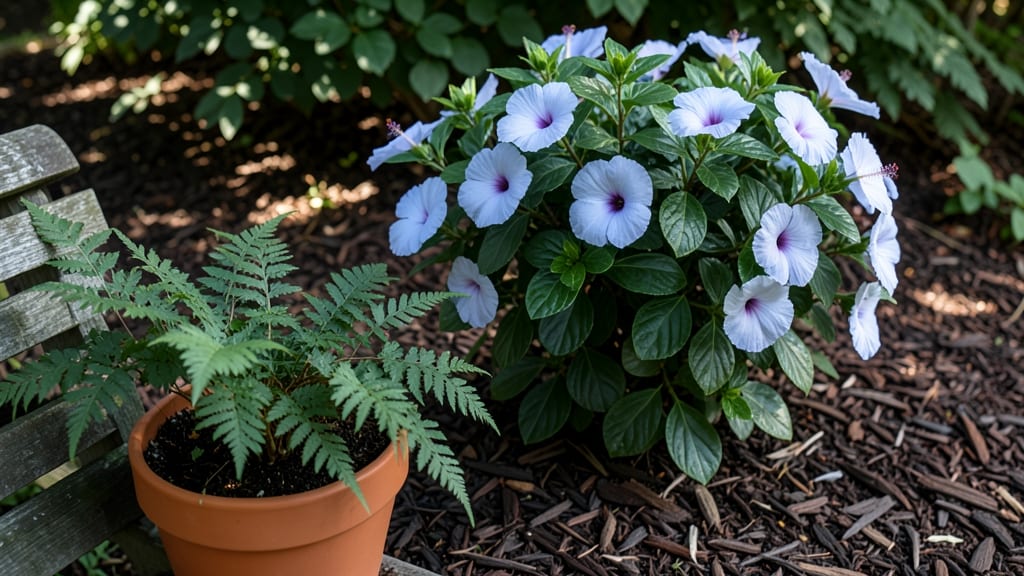
Growing hibiscus in shade is possible, but most varieties flourish with full sun—opt for shade-tolerant species like Hibiscus moscheutos or Hibiscus syriacus, which handle partial shade with 4-6 hours of indirect light daily. Use well-draining soil and keep moisture consistent for best results.
While hibiscus plants typically crave sunlight, some hardy varieties adapt surprisingly well to shadier spots. 🌿 The key is selecting the right species—Hibiscus moscheutos (swamp hibiscus) and Hibiscus syriacus (rose of Sharon) are your best bets for lower-light gardens.
These plants trade some vibrant blooms for lush foliage in dimmer conditions, but they still reward you with stunning flowers when given enough indirect light. For container growing, consider placing your hibiscus near a bright window or under a sheer curtain to filter harsh rays while maintaining adequate light exposure.
Proper care makes all the difference in shaded environments. 💧 Use a rich, organic soil mix to support root development, and water consistently—hibiscus roots need steady moisture but hate soggy conditions. A light layer of mulch helps retain moisture while preventing weeds.
If you notice leggy growth or sparse blooms, supplement with a grow light for 4-6 hours daily to mimic natural sunlight. With the right variety and attentive care, your hibiscus can thrive even in the shadiest corners of your garden.
💡 In This Article
- Shade-Tolerant Hibiscus Varieties and Their Light Needs
- Tips for Growing Hibiscus in Low-Light Conditions
Shade-tolerant hibiscus varieties and their light needs
Not all hibiscus plants are created equal when it comes to light tolerance. Tropical hibiscus (Hibiscus rosa-sinensis), for example, demands 6-8 hours of direct sunlight daily to produce its signature vibrant blooms.
These varieties grow best in warm climates with full sun exposure, where they can develop their characteristic glossy, deep green leaves and abundant flowers.
In contrast, hardy hibiscus species like Hibiscus moscheutos (swamp hibiscus) and Hibiscus syriacus (rose of Sharon) have evolved to handle partial shade—they can thrive with just 4-6 hours of indirect sunlight while still producing stunning flowers. 🌸
The difference lies in their natural habitats: tropical hibiscus grows in sunny coastal regions, while hardy varieties often thrive in woodland edges or near water, where sunlight filters through canopies.
When grown in shade, tropical hibiscus becomes leggy and produces fewer blooms, while hardy varieties maintain bushier growth with more compact foliage.
For instance, Hibiscus syriacus can tolerate as little as 3 hours of direct light daily in cooler climates, though its flowering may be less prolific compared to full-sun conditions.
Foliage color also shifts under different light conditions. Shade-tolerant hibiscus often develop lighter green or even variegated leaves as they adapt to lower light levels. This is because chlorophyll production slows in dimmer conditions, and the plant prioritizes energy toward survival rather than vibrant blooms.
However, the trade-off is worth it for gardeners with limited sunlight—these varieties still deliver large, showy flowers in shades of pink, white, or purple, just on a slightly smaller scale. 🌿
If you're growing hibiscus in containers, choose dwarf varieties like Hibiscus 'Dwarf Blue', which tolerates partial shade better than its taller counterparts. These compact plants are ideal for patios or balconies with filtered sunlight.
For optimal results, position containers near east-facing windows, where morning light is gentler and less likely to scorch leaves. In low-light conditions, supplement with a 12-inch fluorescent grow light placed 12-18 inches above the plant for 12-14 hours daily to mimic natural daylight cycles.
Another key factor is temperature. Hardy hibiscus varieties can handle cooler temperatures (down to 20°F for Hibiscus syriacus), making them ideal for northern gardens. In contrast, tropical hibiscus struggles below 50°F and requires winter protection.
This resilience in hardy varieties allows them to adapt better to shaded, cooler microclimates where tropical species would struggle. For example, a Hibiscus moscheutos planted under a large oak tree might produce fewer but larger blooms than one in full sun, but the overall plant health remains robust. ✨
For gardeners with deep shade (less than 3 hours of indirect light), consider Hibiscus 'Luna Red', a hardy variety that tolerates low-light conditions exceptionally well. Its deep red blooms contrast beautifully with the lush green foliage, even in dimmer settings.
The secret to success here is regular pruning to encourage bushier growth and prevent the plant from stretching toward any available light source. Trim back leggy stems in early spring to redirect energy toward compact, healthy growth. 🌱