
Blooming
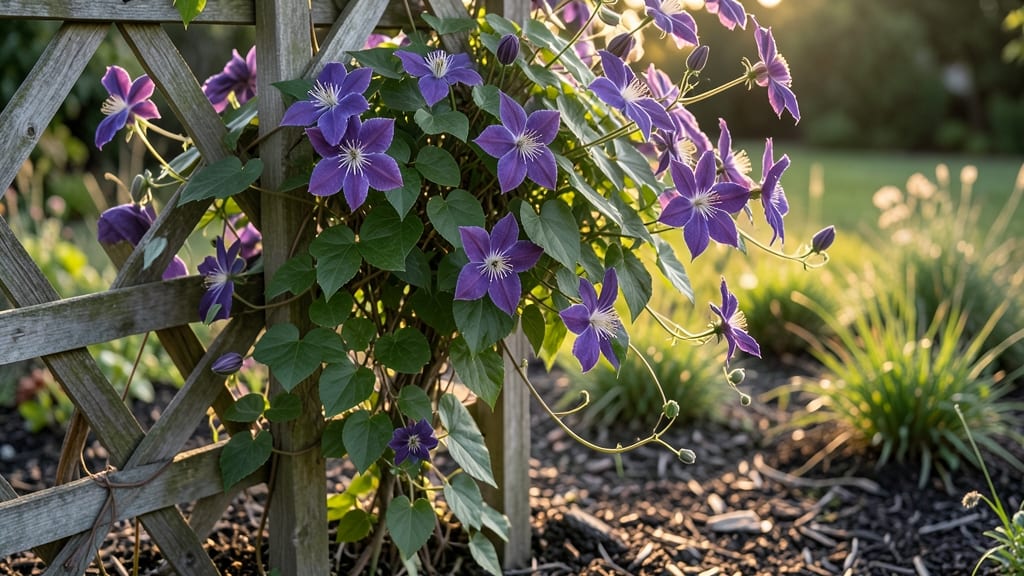
Understanding your clematis bloom time 🌸 is the key to unlocking those showstopping flowers year after year—and missing it by even a few weeks can mean skipping the whole season.
Picture this: You’ve spent months tending to your clematis, only to wake up in late spring with no buds in sight. That’s not just bad luck—it’s likely a pruning or timing mistake tied to your specific variety and zone.
The good news? With the right schedule, you can turn that frustration into a reliable bloom calendar that works for your climate and pruning group.
Not all clematis flower at the same time. Early bloomers (Group 1) need one pruning style, while late-season varieties (Group 3) demand a completely different approach. Throw in regional frost dates, and suddenly, what worked for your neighbor might leave your plant confused—and blooming at the wrong time.
In this guide, I’ll break down exactly when your clematis should bloom based on its type, how to adjust your pruning for your USDA zone, and the three critical care steps that keep flowers coming back bigger and longer. Let’s get those vines in sync with their natural rhythm.
Clematis bloom time by variety: when and how long they flower
Clematis are famous for their stunning blooms, but their flowering windows vary dramatically by variety group. Understanding these differences is key to timing your pruning and support correctly.
Group 1 clematis bloom on old wood (last year's growth), while Groups 2 and 3 rely on new wood (current season's growth). This means a late-spring prune could mean missed blooms for some varieties!
Most clematis bloom for 4-8 weeks, but repeat-flowering varieties can extend their show into fall with proper care. Early bloomers like 'Jackmanii' (Group 3) start in May-June, while late bloomers like 'Nelly Moser' (Group 1) peak in July-August.
The trick is matching your pruning schedule to these natural rhythms.
Here’s a quick reference for tracking bloom times by variety group, including seasonal cues to watch for:
| Variety Group | Bloom Time | Duration | Key Visual Cues | Pruning Timing |
|---|---|---|---|---|
| Group 1 (Early) | Late spring to early summer | 4-6 weeks | Bud formation in winter | After blooming (late summer) |
| Group 2 (Mid-season) | Summer | 6-8 weeks | New shoots emerge in spring | Early spring (March) |
| Group 3 (Late) | Summer to fall | 8+ weeks (repeat blooms) | Multiple flushes of buds | Early spring (March) |
Group 1 clematis, like 'Montana' or 'Niobe', are the early bloomers of the bunch. They produce buds on last year’s stems, so pruning too early can remove next year’s flowers.
Look for buds forming in late winter—this is your signal to hold off on pruning until after they’ve finished blooming in late spring or early summer.
Group 2 varieties, such as 'Comtesse de Bouchard' or 'The President', bloom in mid-summer and thrive on new growth. These can be pruned in early spring (March) to encourage vigorous new shoots.
Their blooms typically last 6-8 weeks, but deadheading spent flowers can sometimes coax a second flush.
Group 3 clematis, including 'Jackmanii' and 'Flamingo', are the repeat performers. They bloom on new wood and often produce multiple flushes from summer through fall. Prune these in early spring to remove dead stems and encourage strong new growth.
Watch for buds forming along current season’s stems—these will become your next set of flowers!
For repeat-flowering varieties, deadheading spent blooms (removing faded flowers) can extend the bloom season by 4-6 weeks. Use clean, sharp pruning shears and cut just above a leaf node to encourage new growth. This works best for Groups 2 and 3, which are more forgiving with pruning.
Climate plays a role too. In cooler zones (3-5), clematis may bloom 2-3 weeks later than in warmer zones (7-9). Pay attention to your last frost date—most clematis need consistent warmth to trigger blooming.
If your area has unpredictable springs, opt for Group 3 varieties, which are more adaptable.
Track your clematis’ progress by marking bloom dates on a calendar. Note when buds form, when flowers open, and how long they last. Over time, you’ll spot patterns in your garden’s microclimate.
For example, 'Hagley Hybrid' (Group 1) might bloom 3 weeks earlier in your yard than in a neighbor’s due to differences in sun exposure or soil drainage.
Pro tip: Use garden twine or flags to mark stems with buds or new growth. This helps you avoid accidental pruning of future blooms. For Group 1 varieties, never prune before August—you risk cutting off next year’s flowers!
For Groups 2 and 3, a light prune in early spring keeps them tidy without sacrificing blooms.
With the right variety and care, your clematis can transform your garden into a season-long floral display. Start by identifying your clematis group, then follow its natural bloom cycle. Soon, you’ll have flowers from late spring to frost—and the secret will be in your pruning timing! 🌸
Pruning calendar for clematis by USDA zone and bloom Group
Your clematis blooms depend entirely on when and how you prune. Different varieties have unique bloom times—some flower on last year's growth, while others rely on new spring shoots.
Missing these deadlines means fewer (or no!) flowers. Let’s break down the pruning calendar by your USDA zone (3-9) and bloom group to keep your clematis thriving.
First, identify your clematis’ bloom group (1, 2, or 3). Group 1 blooms on old wood in early spring, Group 2 blooms twice (early on old wood, late on new), and Group 3 blooms only on new wood in summer.
Your zone also shifts timing—warmer climates (zones 8-9) can prune later, while colder zones (3-5) must act sooner to avoid frost damage.
| Bloom Group | USDA Zone 3-5 | USDA Zone 6-7 | USDA Zone 8-9 |
|---|---|---|---|
| Group 1 (Old Wood) | Prune immediately after blooming (June-July). Never cut back in fall/winter. | Prune late June to early August to avoid cutting off next year’s blooms. | Prune July-August; blooms earlier in warmer zones. |
| Group 2 (Early + Late) | Prune dead/weak stems in late winter (Feb-Mar), then lightly after late blooms (Sept-Oct). | Prune March-April for early blooms, then August-Sept for late blooms. | Prune April-May and Sept-Oct; warmer zones extend late blooms. |
| Group 3 (New Wood) | Prune hard in late winter (Feb-Mar) to 2-3 buds from base. | Prune March-April aggressively; new growth blooms summer-fall. | Prune April-May; blooms later in warm zones. |
✂️ Pro Tip: Use sterilized shears and clean cuts at 45° to prevent disease.
For USDA zones 3-5, act fast—prune Group 1 clematis immediately after blooming (June-July) to avoid cutting off next year’s flowers. In colder zones, wait until late spring (after last frost) to prune Group 3 varieties, as new growth is frost-sensitive.
Mark your calendar for March-April to prune Group 2 stems that bloomed early.
In zones 6-7, you’ve got more flexibility. Group 1 can wait until late June or early August, while Group 3 thrives with a March-April prune. Group 2 needs two pruning sessions: once in spring (for early blooms) and again in late summer (for late blooms).
Always step back and admire your clematis before pruning—never remove more than 1/3 of the plant.
Warmer zones 8-9 can prune later, but don’t delay Group 1 past August—late pruning risks cutting off next year’s blooms. Group 3 varieties in these zones often bloom later into fall, so prune in April-May and enjoy extended color. Group 2 may produce two distinct bloom waves; prune lightly after the first flush (spring) and again in September.
After pruning, feed your clematis with a high-phosphorus fertilizer (like 5-10-10) to encourage robust new growth. Mulch around the base to retain moisture, and water deeply once a week—clematis roots run deep! With this schedule, your clematis will reward you with vibrant blooms all season long. 🌸