
Blooming
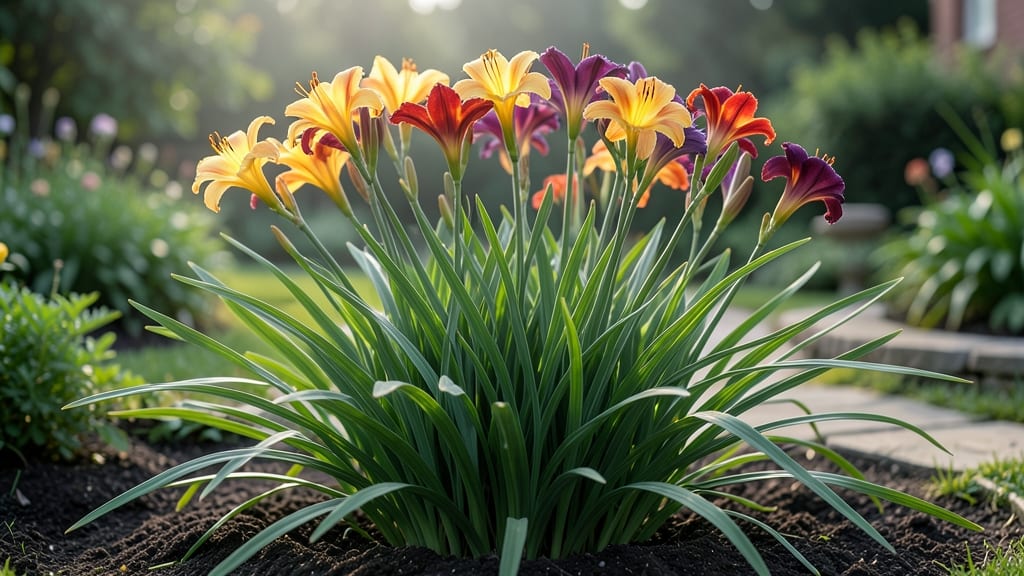
Continuous bloom daylilies keep gardens vibrant all season by reblooming repeatedly, thanks to selective breeding for heat tolerance and disease resistance. Varieties like 'Stella de Oro' and 'Happy Returns' deliver months of colorful blooms with minimal effort.
These reblooming daylilies aren't just lucky—they're the result of decades of plant breeding focused on extending flowering cycles. 🌸 What sets them apart is their ability to push through summer heat and still produce fresh blooms, often from late spring until frost.
I've found that the key lies in their hybrid roots, where breeders combined traits from different species to create hardier, more resilient plants.
The right growing conditions—like full sun exposure and consistent moisture—help trigger those second and third blooms, turning what could be a single-summer display into a months-long garden showstopper.
For gardeners looking to maximize impact, these varieties also play well with others. Their compact growth habits mean you can mix them with perennials or shrubs without worrying about overcrowding. Plus, their low-maintenance nature makes them perfect for busy gardeners who still want that "wow" factor.
The secret? Deadheading spent blooms consistently and feeding them with a balanced fertilizer every 6-8 weeks to keep their energy up.
💡 In This Article
- How Hybridization Creates Longer Blooming Daylilies
- Best Continuous Bloom Daylily Varieties for Your Garden
How hybridization creates longer blooming daylilies
Daylilies naturally bloom in a single flush, but continuous bloom varieties owe their extended flowering to targeted crossbreeding. Breeders focused on Hemerocallis fulva (the original daylily) and its relatives, selecting for traits like heat tolerance and disease resistance.
The result? Plants that can push through summer's 80-90°F temperatures while still producing fresh buds. 🌞 What's fascinating is how these hybrids developed secondary and tertiary blooming cycles—something rare in their wild counterparts.
The science behind this lies in their photosynthetic efficiency. Continuous bloom daylilies store more energy in their rhizomes (underground stems) during spring growth, allowing them to rebound after heat stress.
For example, 'Stella de Oro' can produce 12-15 blooms per stem over a 3-month period, compared to traditional varieties that might only bloom once. This resilience comes from their ability to regulate water uptake during droughts—a trait honed through generations of selective breeding.
Climate adaptation plays a crucial role too. Varieties like 'Happy Returns' thrive in USDA zones 3-9, thanks to their hybrid vigor. The key mechanism? Their roots develop deeper and more extensive networks, accessing moisture and nutrients even when surface soil dries out.
This is why these daylilies often outperform their single-bloom cousins in hot, dry regions. 🌡️ The trade-off? They require well-draining soil to prevent rhizome rot—a common issue in heavy clay.
What most gardeners don't realize is how light exposure triggers reblooming. Continuous bloom varieties need 6-8 hours of direct sunlight daily to maintain their flowering cycles. When planted in partial shade, they'll still grow but may produce fewer blooms.
The reason? Sunlight drives photosynthesis, which fuels both leaf and flower production. Without enough light, the plant diverts energy to survival rather than blooming.
Another hidden factor is day length sensitivity. Unlike short-day plants that bloom in response to shorter autumn days, these hybrids are day-neutral, meaning they flower regardless of daylight hours.
This genetic trait explains why they can rebloom in late summer when temperatures start to drop. 🌅 The combination of heat tolerance, efficient energy storage, and day-neutral flowering creates the perfect storm for extended blooms.
For those curious about the breeding process, it often involves crossing tetraploid (four sets of chromosomes) daylilies with diploid (two sets) varieties. This creates plants with hybrid vigor, or "heterosis," where offspring outperform their parents in traits like disease resistance and bloom quantity.
The result? Daylilies that not only flower longer but also stand up better to pests and environmental stress.