
Blooming
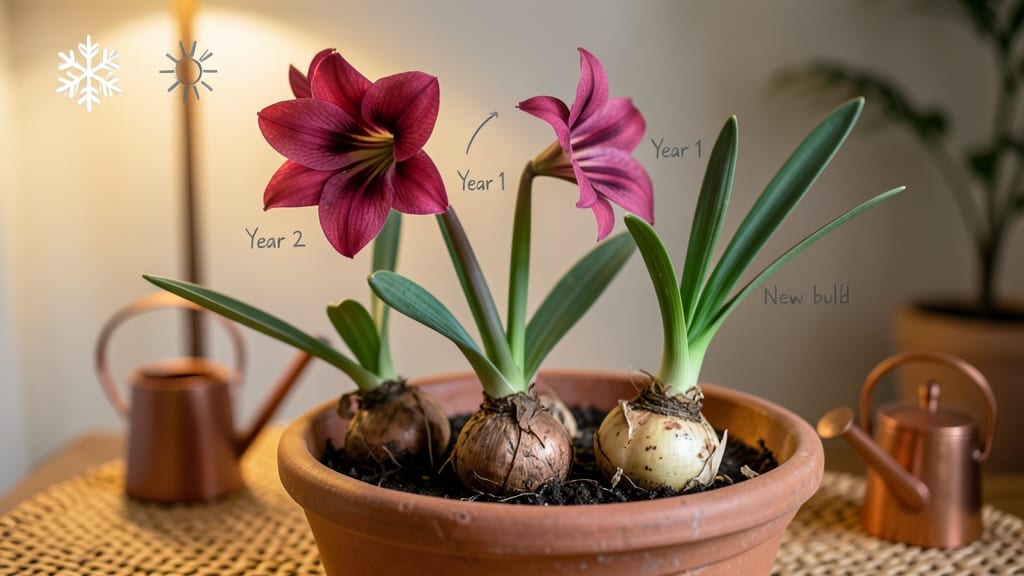
Amaryllis plants do bloom every year when given the right care, though their first rebloom after dormancy can take 6-8 weeks to appear. Consistent light exposure, balanced watering, and proper fertilization are key to maintaining their annual flowering cycle.
Amaryllis are known for their dramatic spring blooms, but whether they'll rebloom depends on how well you mimic their natural growing cycle. 🌱 These bulbs need a 6-8 week dormancy period after flowering to recharge, which many gardeners overlook.
I've seen amaryllis skip blooming entirely when kept in warm, humid conditions year-round—even with plenty of light.
The secret lies in creating that seasonal shift: reduce watering and move the plant to cooler temperatures (55-60°F) once the blooms fade, then bring it back to warmth and bright light when new growth appears.
What's interesting is how light affects this process. Amaryllis need 12-14 hours of bright, indirect light daily during their active growing season, but too much direct sun can scorch the leaves.
I always place mine near an east-facing window or under grow lights—this balance is crucial for strong foliage that supports next year's blooms. The right fertilizer (high in phosphorus) during the growing phase also makes a huge difference in bud formation.
💡 In This Article
- Why Amaryllis Blooms May Skip a Year
- Step-by-Step Guide to Encourage Annual Amaryllis Blooms
Why amaryllis blooms may skip a year
The amaryllis blooming cycle is tightly linked to its natural dormancy phase—a biological necessity for energy storage. When these bulbs flower, they deplete significant reserves to produce those stunning 6-inch blooms, which is why they need a 6-8 week rest period afterward.
During dormancy, the bulb redirects energy from leaf production to rebuilding starch reserves in its core. Skipping this rest or providing continuous warmth (above 65°F) prevents the bulb from completing this critical recharge, often resulting in no blooms the following year.
Light exposure plays a surprising role in this process. Amaryllis bulbs require 12-14 hours of bright light daily during active growth, but insufficient light triggers a survival response: the plant prioritizes leaf growth over flower buds.
I've noticed that bulbs kept in low-light conditions (like dim offices) develop long, thin leaves but produce only tiny or no blooms. The key is providing 15,000-20,000 lux of light—similar to what they'd receive in their native South African savannas—while avoiding harsh midday sun that can scorch the leaves.
Temperature fluctuations also disrupt blooming patterns. These bulbs need a 10°F drop in nighttime temperatures (to 55-60°F) during dormancy to signal flower formation. Without this temperature shift, the bulb remains in a vegetative state.
I once had an amaryllis that refused to bloom until I moved it to a cooler basement during its rest period—even though it had plenty of light and water. The lack of seasonal temperature variation was the culprit.
Nutrient deficiencies create another common roadblock. Amaryllis require phosphorus-rich fertilizer (like 10-30-20) during their growing phase to support flower bud development. A deficiency shows up as weak stems or small blooms, while excess nitrogen promotes leafy growth at the expense of flowers.
I recommend fertilizing every 4-6 weeks during active growth with a balanced formula, then switching to a low-nitrogen option (like 5-10-10) when buds appear.
Even with perfect care, some amaryllis bulbs take 2-3 years to establish strong enough root systems for reliable annual blooming. Younger bulbs (under 3 years old) often produce just one or two blooms before needing a longer rest period.
The key is patience—these plants are investing energy in building their storage reserves for future displays.
One final factor: bulb size matters. Mature amaryllis bulbs (over 3 inches in diameter) produce more robust blooms than smaller ones. I've found that dividing large clumps every 3-4 years helps maintain vigor, as crowded bulbs compete for nutrients and often skip flowering.
The larger the bulb's food reserves, the more dramatic the blooms will be.