
Blooming
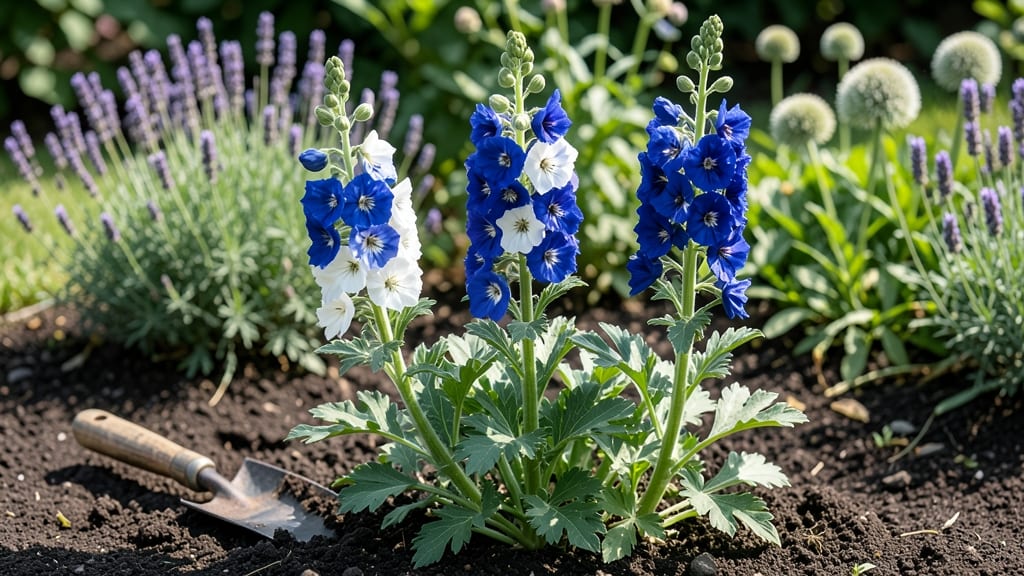
Delphiniums do not bloom all summer naturally; most varieties produce vibrant flowers in spring and early summer, with some reblooming in late summer if deadheaded properly. Cool-season types may decline in heat, while perennial hybrids can extend blooming with consistent care.
Most delphiniums are cool-season plants that naturally produce their showiest blooms in spring and early summer, then enter a dormant phase during hot weather. 🌸 The key to extending their summer display lies in proper deadheading—removing spent flowers encourages new growth, especially in perennial varieties like Pacific Giant or Black Night.
However, annual types (like those in seed mixes) typically bloom once and fade without intervention. Climate plays a huge role too: delphiniums grown in cooler northern regions may handle summer heat better than those in southern climates where temperatures consistently exceed 80°F.
For gardeners in hotter zones, I recommend choosing heat-tolerant hybrids or providing afternoon shade to preserve blooms. Regular watering and well-draining soil also help maintain vigor during peak summer months. The trade-off? Even with care, you'll likely see reduced flowering intensity compared to their spring performance.
💡 In This Article
- Delphinium Bloom Cycles by Variety and Climate
- Deadheading Delphiniums for Extended Summer Blooms
Delphinium bloom cycles by variety and climate
The bloom cycle of delphiniums is primarily governed by their biological classification and environmental cues. Most delphiniums are cool-season perennials, meaning they naturally produce their most vibrant flowers when daytime temperatures hover between 50-75°F.
This is why spring and early summer blooms are so prolific—these conditions align perfectly with their native growing patterns in mountainous regions of Europe and Asia. When temperatures rise above 80°F, many varieties enter a semi-dormant state, conserving energy for cooler seasons ahead.
Variety plays a crucial role in bloom duration. Annual delphiniums (like those in seed mixes) typically bloom once in spring and fade by early summer, while perennial hybrids such as 'Pacific Giant' or 'Black Knight' can rebloom in late summer if properly cared for.
Biennials like 'Blue Bird' follow a two-year cycle: they produce foliage in their first year, then bloom and set seed in the second year.
The key difference lies in their root systems—perennials develop deeper, more resilient roots that store energy for multiple blooming cycles, whereas annuals focus all their energy on a single, dramatic display.
Climate is equally important. Delphiniums grown in USDA Zones 3-7 (cool to temperate regions) often perform best, with extended blooming periods when summer temperatures don't exceed 85°F for prolonged periods. In hotter zones like the Southern U.S., delphiniums may struggle to rebloom unless provided with afternoon shade or consistent moisture.
The soil's organic matter content also matters—well-draining soil with 30-50% organic material helps roots access nutrients during heat stress, while heavy clay soils can lead to root rot and reduced flowering.
Here's what's happening biologically: Delphiniums produce flowers in response to day length and temperature cues. As days lengthen in spring, the plant's photoperiod receptors trigger bud formation. When summer heat arrives, the plant's survival instincts kick in—it prioritizes root and foliage growth over flowering to conserve energy.
This is why deadheading becomes essential: by removing spent blooms, you signal the plant to redirect energy toward new flower production rather than seed development.
Consider these regional examples: In Pacific Northwest gardens, delphiniums often bloom from May through July, with some reblooming in September when temperatures dip. In contrast, Southern California gardens may see only a 4-6 week bloom window in spring before heat causes flowers to wilt.
The difference? The Pacific Northwest's cooler summers and frequent rainfall create ideal conditions for extended flowering, while Southern California's dry heat accelerates the plant's stress response.
For gardeners in transitional zones (like the Midwest), the secret to summer blooms lies in microclimate management. Plant delphiniums near deciduous trees that provide afternoon shade in July and August, or use shade cloth rated for 30-50% light reduction.
Mulching with 2-3 inches of organic material (like compost or straw) also helps regulate soil temperature and retain moisture, which are critical for maintaining bloom quality during heatwaves.