
Blooming
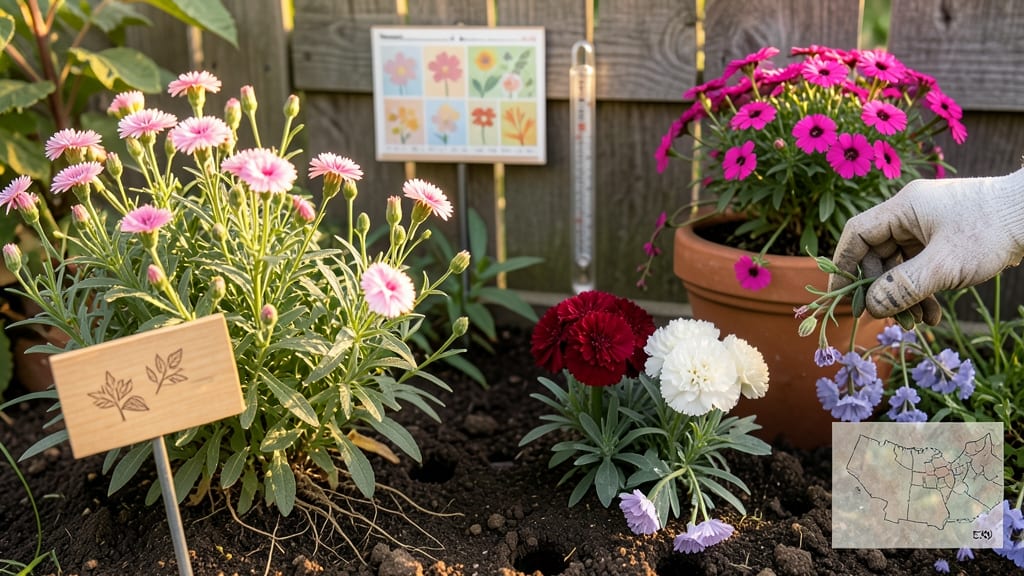
Dianthus don't bloom all year naturally because their flowering cycles are tied to seasonal changes, daylight exposure, and climate conditions. Most varieties produce vibrant blooms from spring through fall, with winter dormancy in cooler regions or continuous care needed in milder climates.
Dianthus plants follow nature's rhythm, responding to daylight length and temperature shifts. 🌸 In regions with cold winters, they enter dormancy to conserve energy, while tropical climates may allow for more extended blooming periods with consistent warmth.
The key to encouraging reblooming lies in providing the right balance of sunlight—typically 6-8 hours of direct sun daily—and strategic pruning after each flowering cycle to stimulate new growth.
What many gardeners don't realize is that some perennial dianthus varieties can be coaxed into blooming year-round with proper care. This includes protecting plants from harsh winter winds, maintaining well-draining soil, and adjusting watering schedules based on seasonal needs.
The secret sauce? A combination of regular deadheading and seasonal adjustments that mimic their natural growing conditions.
💡 In This Article
- Seasonal Bloom Patterns in Dianthus Varieties
- Optimizing Light and Care for Extended Dianthus Blooms
Seasonal bloom patterns in dianthus varieties
Dianthus flowering follows a biological rhythm called photoperiodism, where daylight length triggers blooming. Most varieties need 12-16 hours of daylight to initiate flower buds, which explains why they bloom abundantly in spring and summer when days are long.
In winter, shorter daylight periods (often 8-10 hours) signal dormancy, conserving energy until warmer months return. This natural cycle is why you'll see peak blooms from May through September in temperate zones.
The USDA hardiness zones play a critical role too. In zones 3-6 (where winters drop below 20°F), dianthus enter full dormancy, with foliage often dying back completely.
Varieties like Dianthus barbatus (sweet william) may bloom twice yearly, while Dianthus chinensis (Chinese pinks) often bloom continuously in zones 7-10 where winters stay above 30°F. Frost sensitivity varies—some varieties survive -15°F with mulch, while others need winter protection.
There's a key distinction between everblooming and seasonal types. Everblooming varieties (like Dianthus gratianopolitanus) produce flowers intermittently throughout the year in mild climates, while seasonal types focus their energy on one 3-4 month bloom period.
The trade-off? Seasonal bloomers often produce larger, showier flowers with more vibrant colors, while everbloomers offer continuous (though sometimes smaller) blossoms.
What's fascinating is how temperature interacts with daylight. Even in 12+ hour daylight, dianthus need 50-75°F daytime temps to bloom. Below 50°F, buds may form but fail to open, creating that "bloom but don't show" phenomenon gardeners notice.
This is why coastal areas often see extended blooming—milder winters maintain optimal temperatures year-round.
Consider this example: In Zone 5, a dianthus planted in spring will typically bloom from June to August, then go dormant through winter. But if you move it to Zone 9, it might bloom from March to November with only minor winter slowdowns.
The same plant responds differently based solely on climate conditions!
For gardeners in transitional zones (6-8), the solution often lies in seasonal layering. Planting both early and late blooming varieties creates a 3-4 month continuous bloom window by staggering their natural cycles. This is how professional displays achieve that "always in bloom" look without artificial intervention.