
Blooming
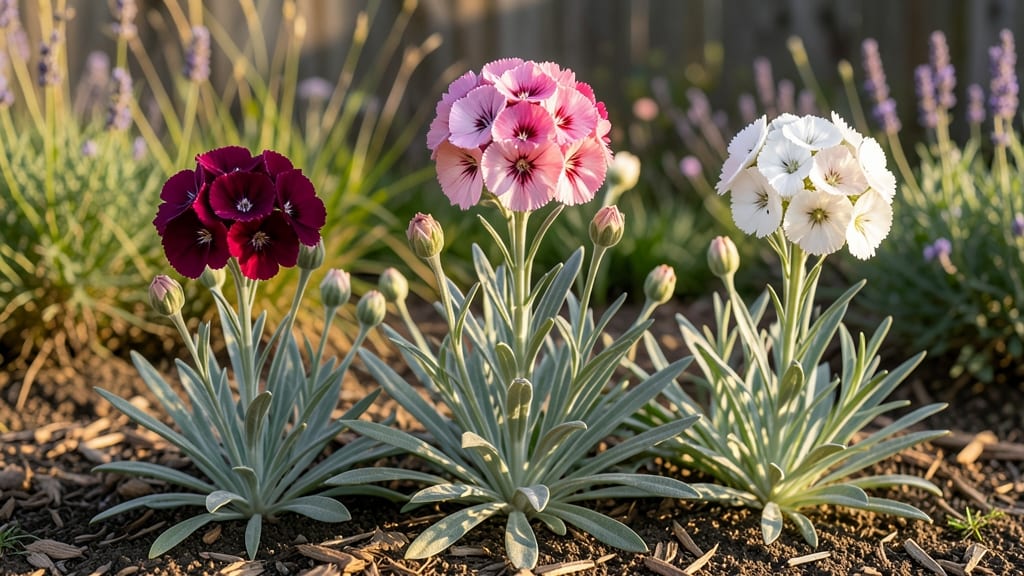
Dianthus flowers don't bloom all summer continuously—they peak in spring and early summer, with occasional late-summer reblooms if you deadhead regularly and maintain proper care. Hot, dry conditions can cut their flowering season short.
Dianthus plants are seasonal performers, not year-round showstoppers. 🌸 Their primary flowering window—typically April through June—is when they put on their most vibrant display, thanks to cooler spring temperatures and longer daylight hours.
While some varieties may produce a few scattered blooms in late summer, this second flush is usually less robust and depends heavily on consistent care. The key to encouraging even this sporadic reblooming lies in removing spent flowers promptly and keeping the soil consistently moist but well-drained.
What many gardeners don't realize is that dianthus actually conserves energy for their main blooming period. The plant's natural growth cycle prioritizes root development and foliage health over extended flowering, which is why you'll often see them looking lush but flower-sparse during peak summer heat.
This is particularly true for perennial varieties, which may go completely dormant in extreme conditions rather than struggling to produce blooms.
💡 In This Article
- Dianthus Blooming Seasons: Natural Growth Cycles Explained
- Extending Dianthus Blooms: Pruning, Watering, and Soil Tips
Dianthus blooming seasons: natural growth cycles explained
Dianthus flowering patterns are governed by photoperiodism—the plant's response to daylight length. These flowers naturally trigger their main blooming phase during 14-16 hours of daylight, which occurs in spring and early summer.
The cooler temperatures (50-75°F) during this period also stimulate bud formation through a process called vernalization, where the plant's genetic memory of winter cold primes it for spring growth. This is why you'll see peak blooms in April-June—the plant has evolved to capitalize on these optimal conditions.
The genetic makeup of dianthus plays a crucial role too. Most varieties are either biennial (completing their life cycle in two years) or short-lived perennials, meaning their energy is focused on producing vibrant blooms during their first growing season.
Perennial types like 'Firewitch' or 'Matrona' may attempt reblooming in late summer, but this second flush is often weaker because the plant has already allocated resources to root and foliage development during the heat of summer.
The flowering hormones (florigen) produced in spring get "used up" during the main bloom, leaving little energy for additional cycles.
Light quality matters just as much as quantity. Dianthus responds best to full sun with some afternoon shade in hot climates. When exposed to intense midday sun (above 85°F), the plants often go into a protective mode, reducing flower production to conserve moisture.
This is why you'll notice many garden dianthus plants looking healthy but flower-sparse during peak summer—it's not laziness, it's survival strategy. The plant prioritizes maintaining its foliage over producing energy-intensive blooms when water is scarce.
There's also a fascinating chemical process at work: ethylene gas production. As dianthus flowers age, they release ethylene which triggers senescence (the aging process). This is why deadheading—removing spent blooms—is so effective.
By cutting off the ethylene source, you're essentially telling the plant "keep going!" and encouraging it to produce new buds. The timing is critical though—wait too long, and the ethylene buildup will signal the plant it's time to conserve energy for seed production rather than more blooms.
Consider these key environmental triggers that affect blooming:
- Daylight hours: Needs 14+ hours of light for optimal blooming
- Temperature range: Ideal blooming occurs at 50-75°F; above 85°F reduces flowering
- Soil moisture: Consistent moisture (not soggy) during bud formation
- Humidity levels: Prefers 40-60% humidity; too dry causes buds to drop
The biennial varieties take this seasonal adaptation further. In their first year, they focus on leaf and root growth, storing energy for their spectacular spring display in year two. Even perennial types follow a similar pattern, though less dramatically.
This natural cycle explains why you'll rarely see dianthus in full bloom during the dog days of summer—it's simply not in their biological programming to perform year-round like tropical annuals.