
Blooming
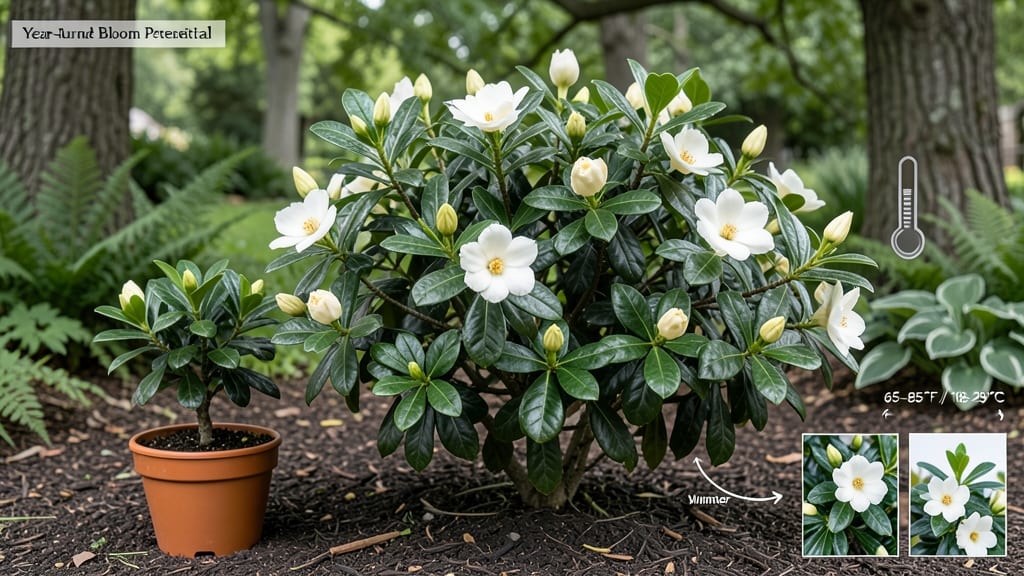
Gardenias do not bloom all year naturally—they flower seasonally, typically spring through summer, with variety-specific timing. Climate, sunlight, and care influence bloom duration, but most gardenias enter dormancy in cooler months.
Gardenias are tropical plants at heart, so their blooming cycles follow seasonal cues rather than a year-round schedule. 🌸 In warmer climates like Florida or Hawaii, you might see extended blooming periods, but even there, gardenias take brief breaks during the hottest or wettest months.
The key difference between varieties lies in their sensitivity to temperature shifts—some, like G. jasminoides, bloom heavily in spring but fade by early fall, while others may linger into late summer with proper care.
What many gardeners don't realize is that even with ideal growing conditions, gardenias need rest periods to recharge. This dormancy phase isn't true hibernation but rather a slowdown in growth, which actually helps them produce more abundant blooms when conditions are right.
I've found that providing bright indirect light and maintaining consistent moisture levels can push blooming seasons by 2-3 weeks, though it won't create a continuous display.
💡 In This Article
- Gardenia Bloom Seasons by Variety and Climate
- Extending Gardenia Blooms with Care and Pruning
Gardenia bloom seasons by variety and climate
The most common gardenia, G. jasminoides, follows a strict seasonal rhythm tied to temperature. In USDA zones 9-11, it typically blooms from late spring through early summer, with peak flowering around May-June when daytime temperatures hover between 70-85°F.
This variety's buds form in response to cooler winter nights (around 50-60°F) and warmer days, a process called vernalization that triggers flowering hormones. 🌿 In cooler zones (7-8), blooms may appear later, around June-July, but often fade by August as temperatures rise.
G. radicans, a climbing variety, has a slightly extended season, blooming from early summer through September in ideal conditions. Its vines produce flowers along the stems, creating a cascading display that lasts longer than bush varieties. However, both types require 6+ hours of bright, indirect light daily—direct sun can scorch leaves and reduce blooming. Frost sensitivity is critical: even a light freeze (30°F) can kill buds and damage foliage, forcing a complete dormancy period.
Climate plays a dramatic role in bloom timing. In tropical regions like Hawaii or Puerto Rico, gardenias may bloom year-round with minimal breaks, though even there, heavy rains or extreme heat (>95°F) can cause temporary bud drop.
The key difference is that tropical gardenias experience less dramatic seasonal shifts, allowing for more consistent—but not continuous—flowering. In temperate zones, gardeners often see a 6-8 week bloom window before dormancy sets in.
Variety-specific examples highlight these patterns. G. augusta (a dwarf type) blooms earlier than G. jasminoides, often starting in April, while G. fortuniana produces larger flowers but requires higher humidity (60%+) to maintain blooms.
The scent intensity also varies by season—flowers often smell strongest during peak bloom periods due to higher volatile oil production in the petals.
What's fascinating is how gardenias use photoperiodism (day length) to regulate blooming. As daylight hours shorten in late summer, most varieties begin preparing for dormancy, even if temperatures remain warm.
This biological clock explains why forcing continuous blooms through artificial light rarely works—it disrupts the plant's natural energy allocation between growth and reproduction.
For gardeners in colder climates, understanding these patterns is crucial. Planting frost-sensitive varieties like G. jasminoides in containers allows you to move them indoors before 40°F nights, potentially extending the bloom season by 2-3 weeks in a bright, cool room (60-65°F).
However, this is a temporary solution—the plant still needs its winter rest to rebloom effectively next season. 🌸