
Blooming
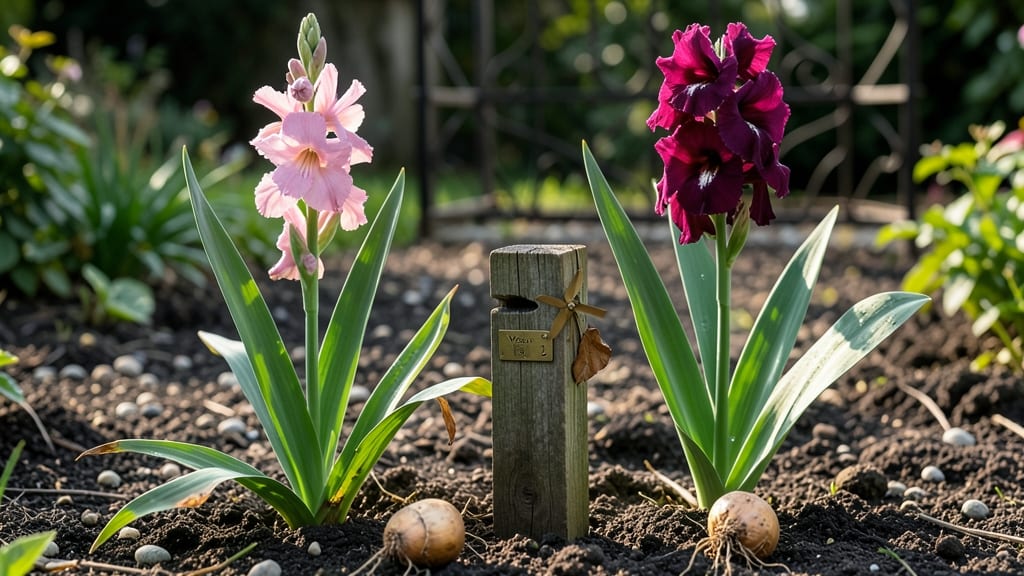
Gladiolus do not bloom every year—they typically die back after flowering because they are perennial corms that require dormancy. With proper care, including division every 2-3 years and winter protection, they can rebloom annually for multiple seasons.
Gladiolus follow a natural lifecycle where their above-ground foliage yellows and dies back after blooming, signaling their underground corms enter a required rest period. 🌱 This dormancy phase is essential for storing energy—without it, the corms weaken and produce fewer (or no) flowers the following year.
The key to encouraging reblooms lies in mimicking their native Mediterranean climate: providing well-draining soil, adequate winter mulch, and strategic spring feeding. Many gardeners mistakenly assume these plants are annuals when they're actually perennials with proper care needs.
What sets successful gladiolus growers apart is their attention to corm division timing—waiting until late summer after foliage dies back but before hard frost. This prevents overcrowding, which competes for nutrients and reduces bloom quality.
I've found that pairing division with a balanced fertilizer application (like 10-10-10) gives corms the jumpstart they need for next season's growth. The trade-off? It requires patience—you won't see blooms immediately after division, but the long-term payoff is worth it.
💡 In This Article
- Why Gladiolus Corms Go Dormant After Flowering
- Step-by-Step Guide to Encouraging Annual Gladiolus Reblooms
Why gladiolus corms go dormant after flowering
Gladiolus follow a two-phase energy cycle where their above-ground growth and flowering deplete stored nutrients in the corm. After blooming, the plant redirects all remaining energy back into the corm—this underground storage organ swells and hardens as it prepares for dormancy.
The process begins when day lengths shorten in late summer, triggering hormonal changes that cause foliage to yellow and die back. Without this dormancy, the corms would exhaust their reserves and fail to produce flowers the following season. 🌱
The corm's dormancy period typically lasts 3-5 months, requiring temperatures between 40-50°F to break dormancy effectively. In warmer climates (USDA zones 8-10), gladiolus may attempt to bloom again in mild winters, but this often weakens the plant.
The corms' natural lifecycle mirrors their native Mediterranean environment, where hot, dry summers force dormancy before cooler, wetter winters stimulate regrowth. This explains why gardeners in colder regions often see better reblooms—the seasonal temperature shifts act as a natural reset button.
Overcrowding plays a critical role in bloom failure. When corms aren't divided every 2-3 years, they compete aggressively for nutrients, water, and space. A single corm cluster can produce 5-10 new cormlets annually, but without division, the center corms weaken while outer ones dominate.
This creates a "ring of giants" effect where only the strongest corms bloom, while the inner ones wither. The result? Fewer, smaller flowers with less vibrant colors. I've seen gardens where undivided gladiolus produced only 20% of their potential blooms due to this overcrowding.
Seasonal temperature changes act as a biological switch. When corms experience consistent temperatures below 60°F for 6-8 weeks, they trigger dormancy-breaking hormones. This is why gardeners in cold climates often get better reblooms—the winter chill acts as a natural dormancy period.
In warmer areas, artificial chilling (placing corms in a refrigerator for 8-10 weeks at 40°F) can mimic this process. The key is balance: too little dormancy leads to weak growth, while excessive dormancy delays flowering.
What most gardeners miss is the corm's internal clock. Even with perfect growing conditions, gladiolus won't bloom if their dormancy requirements aren't met. For example, corms planted in spring without a proper winter dormancy period may produce foliage but no flowers.
This is why many commercial growers use controlled dormancy chambers to ensure consistent blooming schedules. The science shows that without this rest period, the plant's energy goes into vegetative growth rather than flower production.
Consider this lifecycle comparison: A well-cared-for gladiolus corm can produce 3-5 new corms annually when divided properly, while an undivided cluster may produce only 1-2 viable corms due to competition.
The difference comes down to giving each corm enough space (4-6 inches apart) and nutrients to store energy efficiently. This is why professional growers divide corms annually—they understand that each corm needs its own "energy budget" to perform optimally. 💫