
Blooming
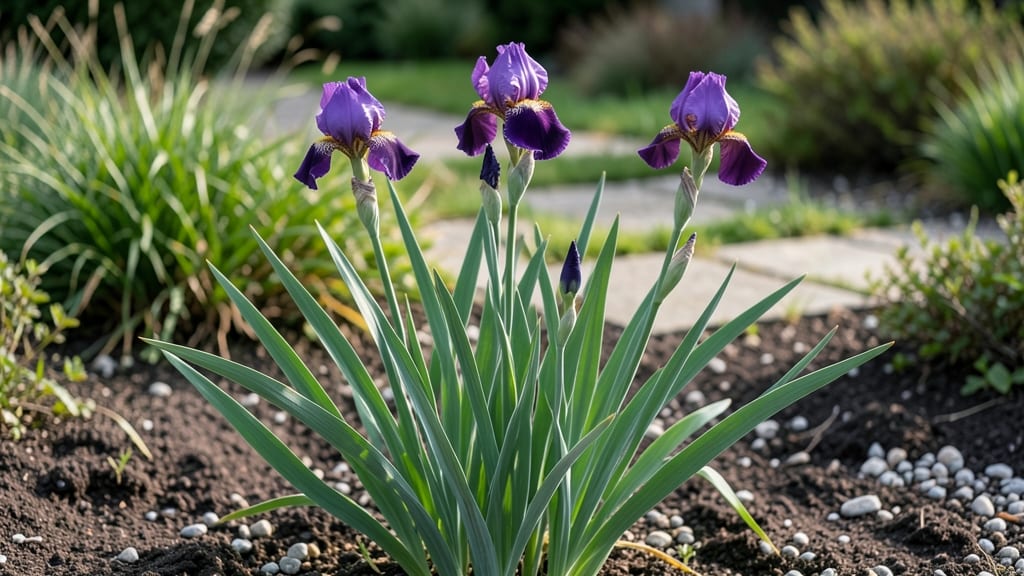
Irises bloom more than once only if they're reblooming varieties, which produce a second flush of flowers later in the season when you provide consistent watering, rich soil, and deadhead spent blooms.
Not all irises have this trait—only specific reblooming varieties (like 'Florence Sullivan' or 'Afternoon Delight') are genetically programmed to produce a second bloom cycle. 🌸 The key lies in their growth rhythm: after the first spring display, these varieties store energy in their rhizomes, then trigger a second flowering in late summer or fall when days shorten and temperatures moderate.
Without proper care, even rebloomers may skip their second show, so understanding their unique needs makes all the difference.
What sets reblooming irises apart is their ability to balance energy storage and flower production twice a year. I've found that the most reliable performers need well-draining soil with organic matter—think compost or aged manure—and regular feeding with a balanced fertilizer (10-10-10) applied in early spring and midsummer.
The deadheading step is often overlooked but critical: removing faded blooms redirects the plant's energy toward new growth rather than seed production.
💡 In This Article
- Reblooming Iris Varieties and Their Flowering Cycles
- Essential Care Tips to Encourage Second Iris Blooms
Reblooming iris varieties and their flowering cycles
The key difference between standard and reblooming irises lies in their genetic programming. Most irises follow a monocarpic pattern—producing one spectacular bloom cycle in spring, then focusing energy on seed production or rhizome growth.
Rebloomers, however, have evolved a polycarpic strategy, allowing them to flower twice: once in spring and again in late summer or fall. This second flush occurs because they've stored excess nutrients in their thick rhizomes during the first bloom cycle 🌿.
Seasonal triggers play a crucial role in this process. Rebloomers rely on photoperiodism—their second bloom is triggered when daylight hours shorten in late summer. For example, 'Florence Sullivan' typically blooms in May, then produces a second set of flowers in September when days drop below 14 hours of light.
Temperature also matters: consistent 65-75°F days with cool nights (below 60°F) help signal the plant to initiate new flower buds. Without these conditions, even rebloomers may skip their second display.
The botanical mechanism involves a complex interplay of hormones. After the first bloom, rebloomers increase cytokinin production in their rhizomes, which stimulates lateral bud growth. Meanwhile, they reduce abscisic acid levels that would normally signal dormancy.
This hormonal balance allows them to maintain active growth while preparing for a second flowering cycle. 🌸 What's fascinating is that this process requires the rhizomes to reach a minimum size—typically 2-3 inches in diameter—before they can support a second bloom.
Not all reblooming varieties perform equally. Some, like 'Afternoon Delight', produce larger, more abundant second blooms than others like 'Blue Flag', which may only produce a few scattered flowers. The difference often comes down to how aggressively they store and allocate nutrients.
For instance, 'Florence Sullivan' can produce 50-70 flowers in its second bloom if given optimal care, while 'Blue Flag' might only manage 10-15—a stark contrast that highlights how genetics interact with environmental conditions.
One common misconception is that reblooming irises will automatically produce second flowers. In reality, they require consistent moisture during the summer months to maintain rhizome health. Without adequate water (about 1 inch per week), the rhizomes can't store enough energy for a second bloom.
This is why gardeners in arid climates often see fewer reblooms—water stress triggers early dormancy signals that prevent the second flowering cycle from initiating.
The timing of the second bloom also varies by variety. Some, like 'Pink Passion', bloom in early September, while others like 'White Swan' wait until October**. This variation occurs because different varieties have evolved to take advantage of different seasonal windows in their native habitats.
Understanding these patterns helps gardeners choose varieties that will perform well in their specific climate zones.