
Blooming
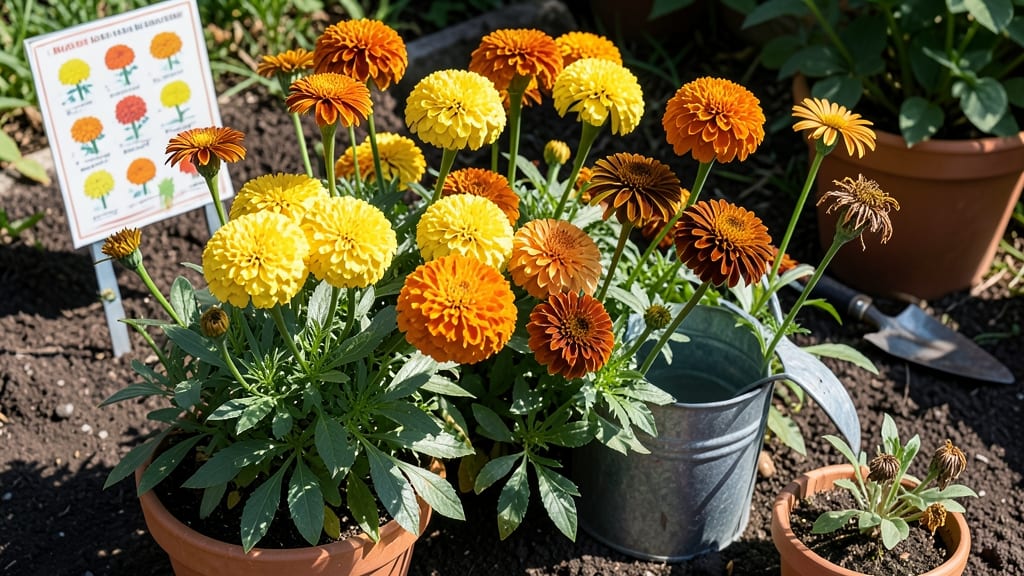
Marigolds do not bloom all year naturally, as they are seasonal plants with peak flowering in summer and fall, though some varieties like French marigolds may extend blooms into early winter in warm climates with proper care and deadheading.
Marigolds thrive on seasonal cues, primarily blooming when days grow longer and temperatures rise.
In most regions, their natural cycle peaks between late spring and early fall, with some varieties like French marigolds pushing blooms into winter only in frost-free zones. 🌸 The key to extending their season lies in deadheading spent blooms consistently—this encourages new growth and can add 4-6 weeks to their flowering period.
I've found that mulching around the base in cooler months helps preserve root health, while container-grown marigolds in sunny patios can sometimes bloom year-round with proper winter protection.
What many gardeners overlook is how daylight hours trigger blooming—marigolds need at least 6-8 hours of sunlight daily to produce flowers. In northern climates, their dormancy period is essential for survival, while tropical varieties may continue blooming if protected from wind and frost.
The right variety and location can make a big difference in your marigold's performance throughout the year.
💡 In This Article
- Marigold Blooming Seasons by Climate Zone
- Year-Round Marigold Care Tips for Extended Blooms
Marigold blooming seasons by climate zone
Marigolds are short-day plants, meaning their blooming cycles are triggered by decreasing daylight hours and warming temperatures. In USDA zones 3-7, where winters bring frost, marigolds typically bloom from late spring through fall, with peak flowering between June and September.
The first frost signals dormancy, as temperatures below 25°F damage their tender foliage. 🌿 In contrast, zones 8-11 experience milder winters, allowing some varieties like French marigolds to continue blooming into November or even December if protected.
The length of daylight plays a critical role: marigolds need 12-14 hours of daylight to trigger flowering. In northern climates, this means blooms start when days lengthen in spring and continue until daylight shortens in fall.
For example, in zone 5, marigolds may bloom from May to October, while in zone 10, they can flower year-round with minimal dormancy. The key difference is temperature—frost halts growth, while consistent warmth in subtropical zones sustains blooming.
Scientifically, marigolds enter dormancy due to a process called vernalization, where cold temperatures reset their biological clock.
In colder zones, this dormancy is essential for survival, while tropical varieties skip this phase entirely. 🌡️ For instance, African marigolds (Tagetes erecta) are more cold-hardy and may survive light frosts, while French marigolds (Tagetes patula) are frost-sensitive but thrive in containers moved indoors during winter in cooler climates.
Daylight hours also influence flower color intensity. In regions with long summer days, marigolds produce more vibrant blooms because their photosynthesis rates increase.
For example, in zone 9, marigolds exposed to 14+ hours of sunlight develop deeper orange and yellow hues compared to those in zone 6, where shorter summer days result in slightly paler blooms. This is why gardeners in sunnier climates often achieve more prolonged and vivid flowering.
Another critical factor is soil temperature. Marigolds prefer soil that stays above 60°F to initiate blooming. In cooler zones, gardeners often use black plastic mulch to raise soil temperatures by 5-10°F, extending the growing season.
This technique is particularly useful in zone 4, where marigolds might only bloom for 3-4 months without it. 🌱
Finally, wind exposure affects blooming duration. Strong winds can stress marigolds, leading to fewer blooms. In coastal or open-field gardens, marigolds may bloom 2-3 weeks shorter than those in sheltered locations.
This is why many gardeners plant marigolds near fences or walls to protect them from harsh winds, especially in transitional zones like zone 7.