
Blooming
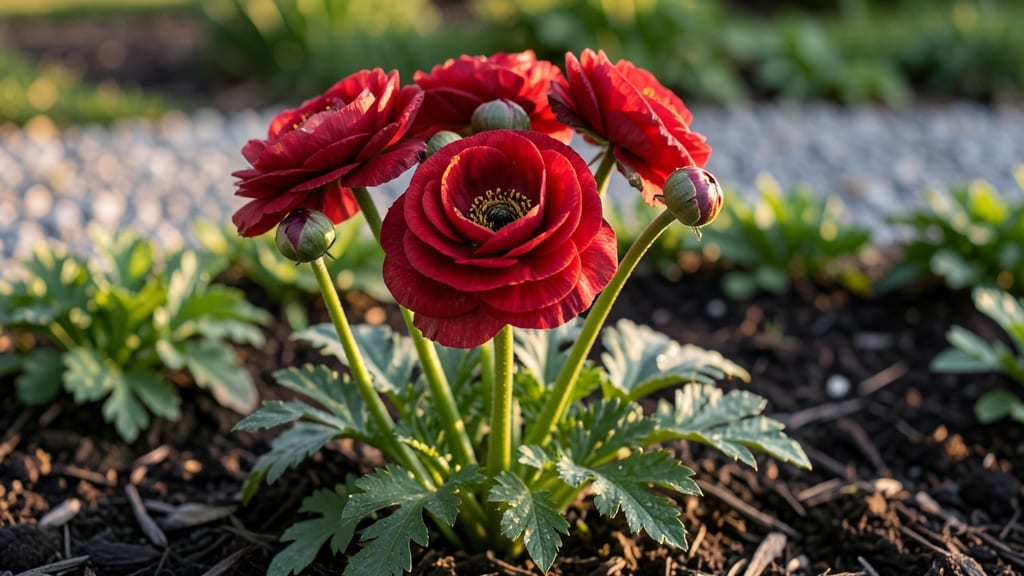
Ranunculus don't bloom every year as perennials in most climates—they're typically grown as annuals or biennials, though in warm regions, they may regrow and rebloom with proper care and winter protection.
Most gardeners treat ranunculus as seasonal plants because their tubers struggle with cold winters, entering dormancy rather than surviving as true perennials. 🌱 In cooler regions, they'll die back completely after blooming, while warmer climates might see reblooming if you protect the tubers from frost.
The key difference lies in their growth cycle—ranunculus prioritize energy for stunning flowers over winter hardiness, unlike hardy perennials like peonies.
To maximize blooms, I recommend digging up tubers after the first frost, storing them in dry peat moss until spring planting. In containers, you can extend their season by moving them indoors during cold snaps.
Even in marginal zones, these strategies often coax a second flush of blooms when conditions are right.
💡 In This Article
- Why Ranunculus Are Treated as Annuals in Most Gardens
- How to Extend Ranunculus Blooms and Overwinter Tubers
Why ranunculus are treated as annuals in most gardens
Ranunculus behave like annuals or biennials because their tuberous roots lack the cold-hardiness of true perennials. These tubers store energy but can't survive prolonged freezing—most varieties tolerate only 15-25°F for short periods. In contrast, hardy perennials like peony or daylily can endure -20°F winters.
The ranunculus tuber's primary function is rapid flower production rather than winter survival, which explains why gardeners replant them yearly in most climates.
The plant's growth cycle mirrors a biennial pattern: it focuses on leaf and root development in the first year, then blooms profusely the second year before dying back. However, unlike true biennials, ranunculus don't always complete this cycle—many gardeners plant fresh tubers annually to guarantee blooms.
This behavior stems from their Mediterranean heritage, where they evolved in mild, frost-free winters rather than temperate zones with harsh freezes. 🌡️
What makes ranunculus unique is their dormancy mechanism. When temperatures drop below 40°F, the plant triggers tuber dormancy, halting growth until warmth returns. This adaptation helps conserve energy but also means the plant won't regrow unless the tubers remain viable through winter.
In USDA Zones 8-10, where winters rarely drop below 20°F, tubers often survive and rebloom naturally—this is why some gardeners in these zones treat them as perennials.
Comparing ranunculus to true perennials like dahlias reveals another key difference: dahlia tubers can be stored and replanted for years, while ranunculus tubers degrade faster. After 2-3 years of storage, their viability drops below 50%, making annual replanting more reliable.
This rapid decline explains why professional florists and commercial growers treat ranunculus as annuals—consistent quality requires fresh planting stock each season.
The plant's flowering energy allocation also plays a role. Ranunculus devote 70-80% of their energy to producing those signature layered blooms rather than building cold-resistant structures. This biological trade-off means they'll always prioritize showy flowers over winter survival.
In your garden, this translates to 4-6 weeks of spectacular blooms—then the cycle resets unless you intervene with storage techniques.
One exception worth noting: Ranunculus asiaticus varieties show slightly better perennial tendencies in Zone 7b and warmer, where mulching with 4-6 inches of straw or leaves can protect tubers through mild winters.
However, even in these conditions, reblooming isn't guaranteed—it depends on how well the tubers survive the minimum winter temperatures in your specific microclimate. 🌿