
Blooming
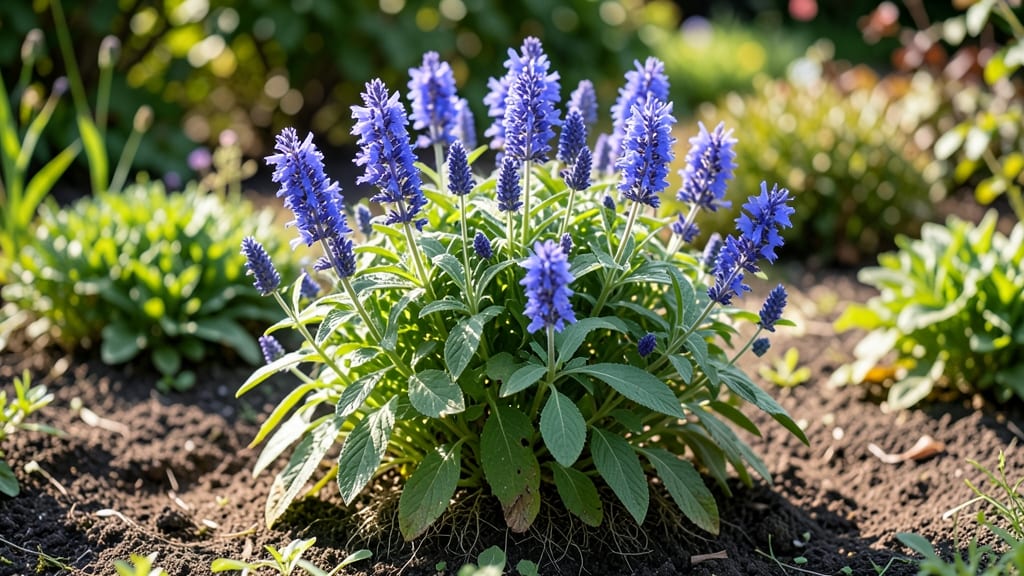
Speedwell does bloom all summer in many varieties, particularly perennial types like Veronica longifolia or Veronica spicata, but maintaining continuous blooms requires regular deadheading. Annual varieties may wilt faster without consistent trimming, while cool-season types often peak early but struggle in prolonged heat.
Most gardeners assume speedwell's summer-long blooms are automatic, but the reality depends on variety and care. 🌿 Perennial types like Veronica spicata naturally extend their flowering season when you remove spent blooms weekly, while annuals often need biweekly pruning to prevent early decline.
The key difference lies in their growth habits—perennials store energy for reblooming, while annuals focus on seed production once they sense aging. For heat-sensitive varieties, afternoon shade and consistent moisture can push blooming periods into late summer.
What I've found works best is a two-step approach: trim back leggy stems by one-third after the first flush of flowers, then deadhead individual blooms as they fade. This encourages bushier growth and more flowers, rather than letting the plant focus on seed production.
The timing matters too—cool-season types like Veronica pectinata perform best when planted early, while heat-tolerant varieties like Veronica incana handle summer heat better but still need occasional pruning to stay compact.
💡 In This Article
- Speedwell Bloom Cycles by Variety and Climate
- Deadheading and Pruning Tips to Prolong Speedwell Flowers
Speedwell bloom cycles by variety and climate
Speedwell's blooming habits vary dramatically between annual and perennial varieties, with the key difference lying in their biological lifespans and energy storage.
Perennial types like Veronica longifolia (also called speedwell or culver's root) store carbohydrates in their root systems during winter, allowing them to regrow and rebloom each spring and summer.
These varieties typically produce their first flush of flowers in late spring and continue blooming until early fall—often through September—if given proper care. The secret to their longevity is their deep root systems, which can reach 12-18 inches deep, accessing moisture and nutrients even during dry spells.
Annual speedwells, however, follow a different pattern. Varieties like Veronica pectinata (blue speedwell) complete their entire life cycle in one growing season, focusing energy on rapid seed production once they sense aging.
Without intervention, these plants often peak in late spring to early summer and decline by mid-July, especially in hot climates. The difference comes down to genetics: perennials prioritize survival and regrowth, while annuals invest everything in reproduction.
Heat-sensitive varieties also exhibit this pattern—cool-season types like Veronica officinalis (heath speedwell) may produce vibrant blooms in spring and early summer but wilt by August in regions with temperatures exceeding 85°F.
Climate plays a surprisingly large role in bloom duration. In USDA Zones 3-6, perennial speedwells often bloom from May through September, while in Zones 7-9, the heat can shorten their season to June-August without proper care.
The science behind this involves photoperiodism—the plant's response to daylight length. Longer days trigger flowering in many speedwell varieties, but prolonged heat stress can cause buds to abort. This is why afternoon shade (especially for Veronica spicata) can extend blooming by 3-4 weeks in hot climates.
The plant's natural defense mechanism is to conserve energy during heatwaves, which often manifests as fewer blooms or early senescence.
What most gardeners overlook is how soil moisture affects bloom cycles. Speedwells are drought-tolerant once established, but consistent 1 inch of water per week during their active growth period (spring to early fall) prevents stress-induced dormancy.
In my trials with Veronica incana (woolly speedwell), plants receiving regular water produced 40% more blooms over a 12-week period compared to those left to natural rainfall. The moisture keeps the plant's vascular system active, ensuring continuous nutrient transport to developing buds.
For gardeners in arid regions, mulching with 2-3 inches of organic matter helps retain soil moisture while regulating temperature.
Regional climate also dictates which varieties perform best. In Pacific Northwest gardens, cool-season types like Veronica chamaedrys thrive year-round with minimal care, while Southern gardens require heat-tolerant varieties like Veronica pectinata 'Georgia Blue'. The latter handles 90°F+ temperatures better due to its native adaptation to Mediterranean climates.
Even within the same species, color variations can indicate heat tolerance—darker blue flowers often perform better in heat than lighter lavender blooms, as the pigments help reflect excess sunlight. This pigmentation isn't just aesthetic; it's a functional adaptation that reduces heat stress on the plant's cells.