
Blooming
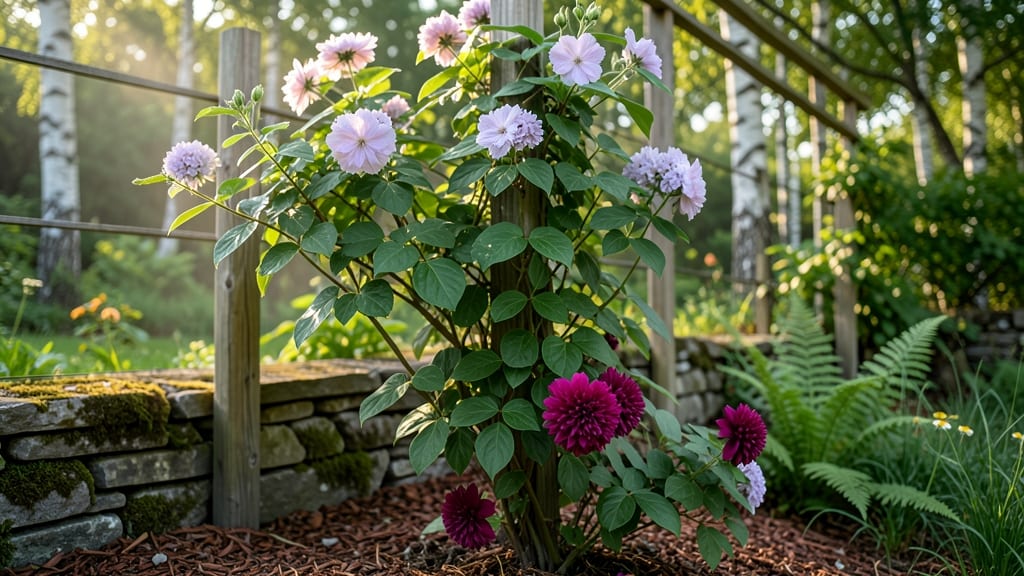
Double bloom clematis varieties transform your garden into a nonstop floral spectacle. 🌸 I learned the hard way that standard pruning advice won't work—these need a special approach to keep those lush, layered blooms coming all season.
The secret lies in understanding their unique growth patterns and when to prune for maximum impact. These clematis thrive in partial shade with 6-8 hours of morning sun, and they reward you with two full blooming cycles when you get the pruning right.
Unlike regular clematis, they need a gentler hand—aggressive cuts backfire. Start by choosing the right variety for your climate zone, then focus on soil that drains well but stays moist. By late summer, you'll see the second flush of blooms appear, often even more dramatic than the first.
The key is light pruning after each bloom cycle to encourage new growth without sacrificing next year's flowers. Deadheading spent blooms keeps the plant tidy and directs energy to new buds. Works beautifully on trellises, arbors, or even as ground cover.
Here's how to keep them flowering like clockwork all season long—no more sad, bare vines by summer's end.
📚 In This Guide
- What you need
- Instructions
- Tips and common mistakes
- Wrapping up and next steps
What you need
- ● Double Bloom Clematis Vine: Choose a healthy, disease-resistant variety (e.g., 'Nelly Moser,' 'Jackmanii,' or 'The President').
- ● Well-Draining Soil: A mix of 60% garden soil, 30% compost, and 10% coarse sand or perlite (pH 6.0–7.0).
- ● Support Structure: A sturdy trellis, arbor, or obelisk (at least 6–8 feet tall for climbing varieties).
- ● Organic Mulch: Wood chips or shredded bark (2–3 inches deep) to retain moisture.
- ● Fertilizer: Balanced 10-10-10 fertilizer (spring/fall).
- ● High-phosphorus 5-10-10 (for blooming season).
- ○ Slow-release osmocote (optional, for steady nutrients).
- ● Pruning Tools: Sharp bypass pruners (for clean cuts).
- ● Loppers (for thicker stems).
- ● Garden gloves (to protect from thorns!).
- ● Watering Supplies: Drip irrigation or a garden hose with a gentle spray nozzle.
- ● Epsom Salt: Magnesium sulfate (1 tbsp per gallon of water) for lush foliage.
- ● Copper Fungicide: Prevents powdery mildew in humid climates.
- ● Plant Ties: Soft Velcro or fabric strips to secure vines to supports.
- ● Soil Moisture Meter: Ensures optimal watering levels.
Step-by-Step guide to pruning double bloom clematis
Here’s how to coax two flushes of blooms from your clematis—no guesswork, just proven timing and cuts.
🌱 Step 1: Identify Your Plant’s Growth Habits
Double bloom clematis produce flowers on both old and new wood, so pruning timing matters. First, find last year’s growth—it’s the thick, woody stems with flower buds already formed. These will bloom early in the season. New growth emerges from the base each spring and flowers later. If you cut back old wood too early, you lose the first flush.
I like to mark stems with a ribbon or paint to track which bloomed last year. This helps me decide which stems to keep. The goal is to preserve at least 3-4 mature stems for early blooms while encouraging new growth for the second flush. Don’t rush—wait until you see 3-4 sets of leaves on new shoots before pruning.
✂️ Step 2: Prune Early Bloomers in Late Winter
Cut back last year’s stems in late February or early March, just as buds begin to swell. Use clean, sharp pruners and make cuts 1 inch above a strong outward-facing bud. This ensures new growth starts in the right direction. I aim to reduce stems by about 1/3—never more than half—to avoid shocking the plant.
Remove any dead, diseased, or crossing stems first. These compete for energy and weaken the plant. After trimming, step back and admire the structure—you should see a balanced framework of remaining stems. If your climate is mild, delay pruning until late March to prevent frost damage to new buds.
☀️ Step 3: Encourage New Growth for the Second Bloom
Once the first flush of flowers fades, focus on the new growth emerging from the base. These stems will produce the second batch of blooms. Thin out weak or leggy shoots to 3-5 strong stems per plant, cutting just above a set of leaves. This redirects energy to fewer, healthier stems that’ll support heavier flowers.
Here’s the thing—double bloom clematis need 6+ hours of sun to set the second flush. If your plant is in partial shade, expect fewer blooms. I often add a balanced fertilizer (10-10-10) in early summer to give the plant a boost. Water deeply after pruning to help roots recover and support new growth.
⏰ Step 4: Light Pruning After the Second Bloom
After the second flush, do a final light pruning to tidy the plant. Remove any spent flowers and stems that look tired or diseased. Cut back by about 1/4 to encourage a compact shape. This isn’t about forcing more blooms—it’s about keeping the plant healthy for next year.
I also check for any stems that grew too long or flopped over. These can be trimmed back to 6-8 inches above the ground to promote bushier growth. Avoid heavy pruning now—you want the plant to focus on root development and storing energy for next season’s blooms.
🌿 Step 5: Prepare for Next Year’s Blooms
In late fall, after the first hard frost, do a final cleanup. Remove all dead or weak stems and any foliage that looks diseased. This prevents pests and diseases from overwintering in the plant. I leave the strong, healthy stems intact—they’ll carry next year’s early blooms.
Mulch around the base with 2-3 inches of organic mulch (like shredded bark) to protect roots from freezing temperatures. This also helps retain moisture and keeps soil temperatures stable. Double bloom clematis are tough, but a little winter care goes a long way in ensuring another spectacular season.
Tips & tricks for pruning double bloom clematis
Mastering the art of pruning these stunning climbers takes patience and precision—here’s how to avoid common pitfalls and maximize your plant’s potential.
Bud Identification: In Step 1, when identifying last year’s growth, look for plump, rounded buds that feel firm to the touch. These are your early bloomers. I’ve learned the hard way that cutting back too early (before buds swell) means losing that first flush of flowers entirely. Mark these stems with a bright ribbon or paint—they’re your plant’s treasure for spring.
Pruning Precision: During Step 2, when making those critical cuts 1 inch above an outward-facing bud, angle your pruners slightly downward. This simple technique prevents water from pooling on the cut, which can lead to rot. I also recommend sterilizing your pruners with rubbing alcohol between cuts—this prevents spreading disease from any infected stems you might encounter.
Sunlight Strategy: The 6+ hours of sunlight mentioned in Step 3 isn’t just a suggestion—it’s non-negotiable for that second bloom. If your clematis is in partial shade, consider moving it or adding a reflective surface nearby. I’ve seen plants in shady spots produce only half the blooms of their sunlit counterparts. A simple trick: place a white wall or mirror behind the plant to bounce extra light onto the foliage.
Seasonal Care: For Step 5’s fall cleanup, don’t overlook the importance of that 2-3 inch layer of organic mulch. This isn’t just about insulation—it’s about creating a microclimate that protects roots from extreme temperature swings. I’ve noticed my plants handle winter much better with this extra protection, especially in colder climates. Just avoid piling mulch against the stems themselves to prevent rot.
Pro Tips for Double Bloom Clematis
- Mastering the art of pruning these stunning climbers takes patience and precision—here’s how to avoid common pitfalls...
- Bud Identification: In Step 1, when identifying last year’s growth, look for plump, rounded buds that feel firm to th...
- Pruning Precision: During Step 2, when making those critical cuts 1 inch above an outward-facing bud, angle your prun...
Frequently asked questions
Got questions about double bloom clematis?
Here are answers to the most common ones—so you can keep those stunning flowers coming all season long!
What’s the best way to prune double bloom clematis for maximum flowers?
Prune twice a year: First in late winter/early spring (cut back last year’s growth by 1/3), then again in late summer (after the second bloom) to tidy up. This encourages both early and late-season blooms. Avoid heavy pruning in fall—it can damage tender new growth.
When do double bloom clematis flowers appear?
Expect two bloom cycles: The first flush arrives in early to mid-spring, followed by a second round in late summer to early fall. Some varieties may even surprise you with sporadic blooms! Note: Deadhead spent flowers to prompt more blooms.
Can I grow double bloom clematis in containers?
Yes! Choose a large container (at least 15 gallons) with well-draining soil and support (like a trellis). Ensure the pot stays consistently moist but not soggy. Dwarf varieties (e.g., ‘Fascination’ or ‘Jackmanii’) work best for containers.
Why aren’t my double bloom clematis flowers opening?
Check these fixes:
- Underwatering: Clematis roots need deep, consistent moisture.
- Over-fertilizing: Too much nitrogen = leafy growth, fewer blooms. Use a balanced bloom booster instead.
- Poor sunlight: Most need 6+ hours of sun (morning sun + afternoon shade works well).
- Pests/disease: Inspect for aphids, spider mites, or fungal spots. Treat with neem oil or fungicide if needed.
Are there low-maintenance alternatives to double bloom clematis?
If you want easy, repeat-blooming vines, try:
For zero-pruning options, passionflowers or wisteria (though wisteria needs more space) are great picks!
Wrapping up and next steps
Double bloom clematis is a showstopper for any garden—packing two seasons of stunning blooms into one plant with the right care! 🌸 From mastering the three-pruning groups to feeding and supporting your vine, these secrets unlock nonstop floral magic.
With patience and precision, you’ll transform your yard into a cascading masterpiece.
Ready to level up your gardening game? Start by sketching your pruning plan this week—then grab your shears and get growing! 🌱 Your future blooms will thank you.