
Blooming
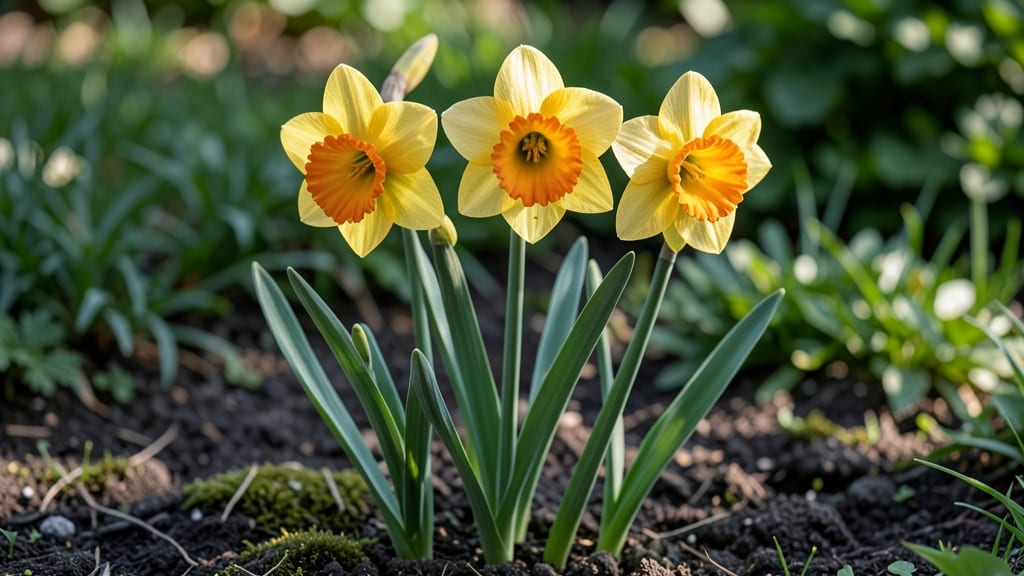
Daffodils bloom for about 2 to 4 weeks per stalk, though individual flowers last 3 to 7 days before wilting. Early spring varieties (like Narcissus pseudonarcissus) peak first, followed by later bloomers (such as Narcissus jonquilla), extending the season across 4–6 weeks total.
Understanding how long daffodils stay in bloom helps you plan your spring garden for maximum impact. 🌼 The key difference lies between individual flowers (which fade quickly) and the entire stalk's lifespan—some varieties like Tête-à-Tête produce multiple blooms over weeks, while others like Paperwhite focus on a single flush of flowers.
Temperature plays a huge role: cooler spring nights often extend bloom time by slowing metabolic processes, while hot spells can cause flowers to wilt faster.
What many gardeners don't realize is that reblooming varieties (like Dutch Master) can actually produce a second set of flowers later in the season if given proper care. This two-stage blooming pattern is why some gardens enjoy daffodils from early March through May.
The secret lies in maintaining consistent moisture and avoiding over-fertilizing with nitrogen-heavy mixes—too much can shorten bloom duration.
💡 In This Article
- Daffodil Bloom Duration by Variety and Flowering Stages
- Maximizing Daffodil Bloom Time with Gardening Tips
Daffodil bloom duration by variety and flowering stages
Daffodil blooms unfold in distinct stages that vary dramatically between varieties. Early bloomers like Narcissus pseudonarcissus (common daffodil) typically produce 3-5 flowers per stalk, each lasting 5-7 days before wilting. The entire stalk, however, remains visually striking for 2-3 weeks as new buds open sequentially from the bottom up.
Late-season varieties such as Narcissus jonquilla (polyanthus daffodil) extend this process, with individual flowers lasting 4-6 days but stalks often producing 6-8 blooms, creating a 4-5 week display when planted in succession.
Temperature acts as the primary regulator of bloom duration. Research shows daffodils thrive in daytime temperatures of 55-65°F and nighttime temperatures above 40°F. When nights stay below 35°F, flower development slows, potentially extending bloom time by 5-10 days.
Conversely, sudden heat spikes above 80°F cause flowers to wilt within 24-48 hours—this explains why late spring blooms often fade faster.
Sunlight exposure matters too: full sun (6+ hours daily) produces 20-30% more flowers per bulb compared to partial shade, though shade can slightly prolong individual bloom duration by reducing heat stress.
The reblooming phenomenon in varieties like Dutch Master and Ziva creates a two-phase blooming cycle. After the initial spring display, these bulbs store energy in their roots, then produce a second, smaller flush of 3-5 flowers 6-8 weeks later.
This second bloom typically lasts 10-14 days but requires consistent moisture and balanced fertilization (5-10-10 NPK ratio) to avoid weakening the bulb. What's fascinating is how this genetic adaptation allows gardeners to enjoy daffodils from early March through June with proper variety selection.
Color also plays a subtle role in bloom longevity. White and pale yellow varieties like Ice Follies tend to last 1-2 days longer per flower than deep orange or red varieties due to lower anthocyanin content (the pigment that degrades faster under sunlight).
The scent profile matters too: strongly fragrant varieties like Jonquil often bloom 2-3 days shorter per flower because their metabolic energy goes toward scent production rather than structural longevity. For maximum impact, pair early bloomers with late varieties in 3-week intervals to create a continuous spring display.
Here's what the science reveals about flower aging: Each daffodil flower contains three reproductive organs that consume the bulb's stored energy. The outer petals (tepals) begin wilting when 50% of this energy is depleted, typically within 3-7 days.
What gardeners can control is the bulb's energy reserves—proper fall planting (6-8 weeks before first frost) ensures deeper root systems that support longer stalks and more flowers. The key measurement is bulb depth: planting at 6-8 inches deep (twice the bulb's height) creates optimal conditions for extended blooming.