
Blooming
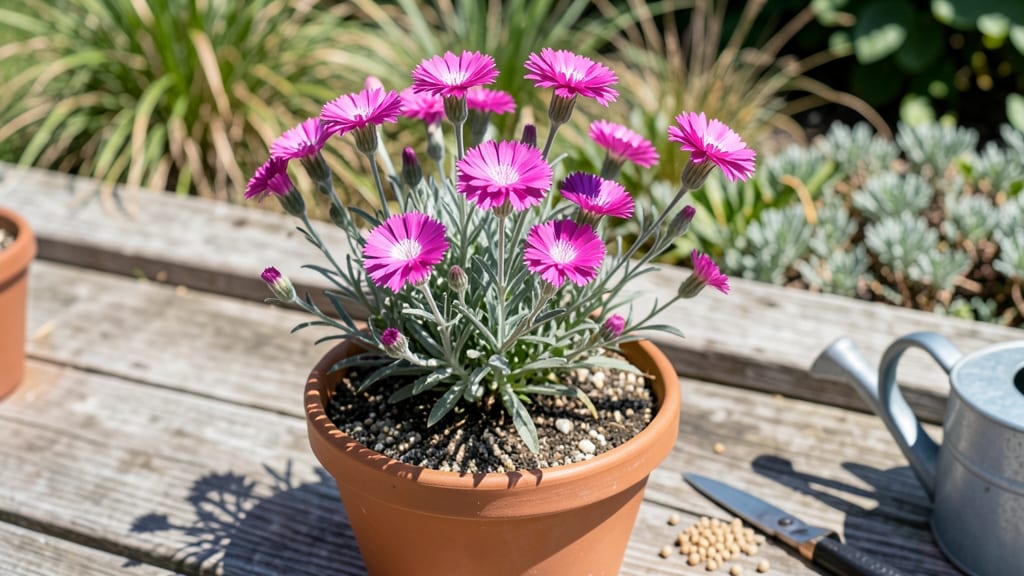
Your dianthus plants are begging for a second chance—all they need is how to get dianthus to bloom more with the right light and a little strategic pruning. 🌸 I’ve turned my once-sparse dianthus into a nonstop bloomer by focusing on two key fixes: morning sun exposure and deadheading like a pro.
The difference is shocking—what used to be a few sad flowers now bursts with color from spring to frost.
Most people overlook light as the #1 blooming killer. Dianthus craves 6+ hours of morning sun and afternoon shade in hot climates—too much midday heat stresses them into skipping flowers. Pair that with deadheading spent blooms every 3-5 days, and you’ll trigger a second flush of flowers within weeks.
I prune mine back by ⅓ after the first big bloom wave, and they reward me with a second (and sometimes third) round of flowers.
By mid-summer, your plants will look like they’re in a garden center display—dense, bushy, and covered in blooms. The secret isn’t fancy fertilizers (though a light spring feeding helps), but consistent care.
Even my black-thumb neighbors swear by this method after trying everything else. Let’s fix those sparse stems once and for all.
Works for both sweet williams and pinks, whether in garden beds or containers. The best part? You’ll see results in just 4-6 weeks—no waiting until next spring. Grab your pruners, and let’s get those flowers popping!
📚 In This Guide
- What you need
- Instructions
- Tips and common mistakes
- Wrapping up and next steps
What you need
- ● Dianthus plants: Healthy, mature plants (1-3 per pot or garden bed, depending on desired density).
- ● Pruning shears: Sharp, clean bypass pruners (sterilized with rubbing alcohol to prevent disease).
- ○ Gloves: Garden gloves (optional but recommended for prickly stems).
- ● Well-draining potting mix: A blend of 50% peat moss or coco coir, 30% perlite or sand, and 20% compost (for potted plants). For in-ground planting, amend soil with compost and sand (1:1 ratio).
- ● Balanced fertilizer: 10-10-10 or 20-20-20 (water-soluble, diluted to half-strength). OR slow-release granules (e.g., Osmocote).
- ● Watering can or hose: With a gentle spray nozzle (to avoid disturbing soil).
- ● Sunlight access: 6+ hours of full sun daily (south-facing window or outdoor spot).
- ● Grow lights: LED full-spectrum bulbs (for indoor plants needing supplemental light).
- ● Mulch: Gravel or pine bark (to retain moisture and regulate soil temp).
- ● Epsom salt: 1 tbsp per gallon of water (monthly foliar spray for magnesium boost).
- ● Deadheading scissors: Small, sharp scissors for precise trimming.
- ● pH test kit: To check soil acidity (ideal range: 6.0–7.0).
- ● Compost tea: Homemade or store-bought (for a nutrient-rich soil boost).
Step-by-Step instructions for encouraging dianthus to bloom more
Here’s how I coax my dianthus into nonstop blooms—no fancy tools, just smart timing and light tricks.
🌿 Step 1: Prune After Each Flowering Cycle
Deadhead spent blooms immediately by snipping the stem just above the next set of leaves or where it meets the main stem. This prevents seed formation and redirects energy into fresh buds. I use clean, sharp scissors to avoid tearing stems—rough cuts invite disease. Prune in the morning so wounds dry quickly.
Watch for new flower buds forming within 2-3 weeks at the base of the plant. If you skip pruning, the plant will focus on seed production instead of blooming. Dianthus blooms best when encouraged to rebloom, so never let flowers go to seed if you want continuous color.
☀️ Step 2: Move to Full Sun for Maximum Blooms
Dianthus thrives in 6-8 hours of direct sunlight daily. If your plants are leggy or blooming sparsely, they’re not getting enough light. A south-facing spot works best, but even east or west exposures can work if the plant gets strong morning or afternoon sun.
Rotate the pot a quarter turn weekly to prevent leaning toward the light. You’ll notice stems straighten and leaves stay vibrant within a few days. If indoors, place near a south-facing window or supplement with a grow light 4-6 inches away for 12-14 hours daily.
✂️ Step 3: Lightly Trim Leggy Growth in Spring
In early spring, check for stems that have stretched too tall or become bare at the base. Cut these back by one-third to encourage bushier growth and more blooms. This is also the time to divide overcrowded plants—separate clumps and replant sections to improve airflow and reduce competition.
After trimming, water deeply to help roots recover. You’ll see new shoots emerge within 3-4 weeks, signaling the plant is focusing on fresh growth rather than maintaining weak stems. Avoid heavy pruning in fall—this stresses the plant before winter dormancy.
💧 Step 4: Water and Fertilize Strategically
Water dianthus at the base, keeping soil evenly moist but never soggy. Overwatering causes root rot, which stunts blooming. Let the top 1-2 inches of soil dry out between waterings—this mimics their natural drought-tolerant habits. Use a well-draining potting mix to prevent waterlogging.
Feed with a balanced, water-soluble fertilizer (10-10-10) every 4-6 weeks during the growing season. Too much nitrogen makes plants leafy but flowerless. I stop fertilizing in late summer to let the plant prepare for winter. A light mulch around the base helps retain moisture without smothering the roots.
⏰ Step 5: Adjust Light in Fall for Winter Blooms
As daylight shortens in fall, move dianthus to a slightly sunnier spot if possible. They’ll still bloom in cooler weather if they get enough light. If growing in containers, bring them indoors before frost hits—place near a bright window or under grow lights to maintain blooming.
Reduce watering in winter, letting the soil dry more between drinks. Prune lightly in late winter to shape the plant and remove any dead growth. You’ll often see a second flush of blooms in early spring if you’ve kept the plant healthy through winter.
Tips & tricks for encouraging nonstop dianthus blooms
These simple adjustments will help your dianthus put on a show all season long.
The Timing Factor: When you're deadheading in Step 1, don't wait until flowers are completely wilted. Remove them as soon as petals start to fade—this prevents the plant from wasting energy on seed production. I've found that morning pruning gives the plant the whole day to recover before nightfall, which makes a noticeable difference in new bud formation within those 2-3 weeks.
Light Strategy: For indoor dianthus in Step 2, I've had the best luck with a combination of natural light and a simple LED grow light on a timer. Place the grow light 4-6 inches away and set it for 12-14 hours daily—this mimics summer daylight and keeps your plants blooming even when natural light is scarce. The key is consistency: keep the light schedule the same every day.
Pruning Precision: In Step 3, when trimming leggy growth, focus on removing stems that have lost their lower leaves—these are the ones that won't produce new blooms. Cut just above a leaf node where you see small buds forming. This targeted approach encourages bushier growth and more flowering stems. I always clean my pruning shears with rubbing alcohol between cuts to prevent disease spread.
Fertilizer Wisdom: The 4-6 week feeding schedule in Step 4 works best when you time it right. I fertilize right after a heavy watering session, which helps prevent root burn. And here's a pro tip: if you notice your dianthus producing more leaves than flowers, cut back on the fertilizer—too much nitrogen is the #1 reason plants get leafy but flowerless. A diluted solution (half-strength) works just as well and gives you more control.
Pro Tips for Get Dianthus To Bloom More
- These simple adjustments will help your dianthus put on a show all season long.
- The Timing Factor: When you're deadheading in Step 1, don't wait until flowers are completely wilted.
- Light Strategy: For indoor dianthus in Step 2, I've had the best luck with a combination of natural light and a simple LED grow light on a timer.
Frequently asked questions
Got questions about coaxing more blooms from your dianthus? You’re not alone!
Here are the most common concerns—and straightforward answers—to help you keep those pretty flowers coming back stronger than ever.
Why isn’t my dianthus blooming at all?
If your dianthus is just sitting there looking pretty but not flowering, it’s likely due to light deprivation or overcrowding. These plants thrive in full sun (6+ hours/day) and need space to breathe. Check your plant’s location—shady spots or dense foliage can stunt blooms. Also, ensure it’s well-drained; soggy roots = no flowers!
When is the best time to prune for more blooms?
Prune right after flowering (spring or early summer) to encourage a second flush of blooms. Avoid cutting back too aggressively—trim just above a set of leaves or a bud to promote new growth. Never prune in fall or winter—dianthus needs its energy to survive dormancy!
Can I force dianthus to rebloom in fall?
Most dianthus varieties are spring/summer bloomers, but some (like Dianthus chinensis) can produce a light fall display if given bright light and deadheaded regularly. For a true fall rebloom, try Dianthus barbatus (sweet Williams), which often flowers twice a year with proper care.
How much should I cut back for a bushier plant?
For a fuller, bushier dianthus, prune back 1/3 of the plant’s height after the first bloom cycle. Use clean, sharp shears to avoid damaging stems. Pro tip: If your plant looks leggy, trim the longest stems first to encourage compact growth and more flowers!
What if my dianthus keeps dying back after blooming?
If your dianthus wilts or dies after flowering, it might be overwatered or stressed from heat. Dianthus loves well-draining soil—amend clay soil with sand or gravel. Also, mulch lightly to retain moisture without suffocating roots. If it’s a perennial, it may just be entering dormancy—don’t panic!
Wrapping up and next steps
With the right care—like pruning strategically, ensuring bright, indirect light, and feeding your dianthus the right nutrients—you’ll soon be rewarded with vibrant, nonstop blooms that steal the show! 🌸 Remember, patience and consistency are key, but the effort is totally worth it.
Ready to transform your garden? Grab your shears, adjust that light, and give your dianthus the love it deserves! Next, check out our guide on troubleshooting wilting dianthus for extra peace of mind.