
Planting
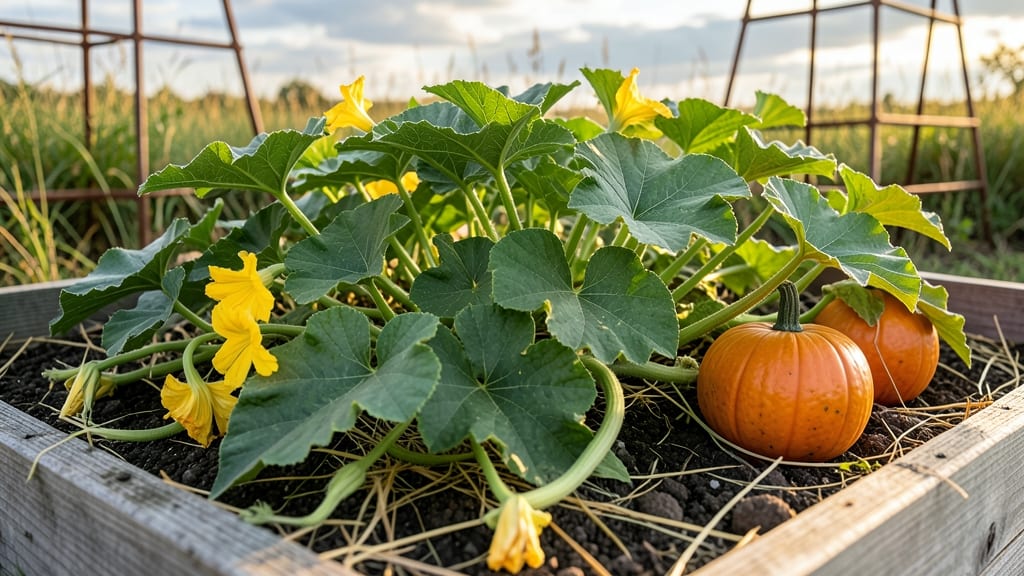
Pumpkin is not a nightshade plant—it belongs to the Cucurbitaceae family, which includes squash, cucumbers, and melons, while nightshades like tomatoes and peppers are part of the Solanaceae family. Their differences lie in botanical traits, growth habits, and edible parts.
This botanical distinction matters because pumpkins and nightshades have completely different growing needs and even edible parts. 🌱 While nightshades produce fruits from their flowers (like tomatoes), pumpkins develop from their ovaries, creating a hard-shelled gourd.
The confusion often stems from their similar vine-like growth habits, but their family differences affect everything from soil preferences to pest control strategies.
For gardeners, this means you won't find pumpkins sharing the same soil requirements as tomatoes or peppers. Pumpkins thrive in well-draining, nutrient-rich soil with plenty of space to sprawl, while nightshades prefer slightly acidic conditions and more compact growing areas.
The edible parts also differ—pumpkins offer seeds and flesh, while nightshades provide fruits and sometimes leaves.
💡 In This Article
- Botanical Families: Nightshades vs. Cucurbits
- Growing Pumpkins vs. Nightshades: Key Differences for Gardeners
Botanical families: nightshades vs. cucurbits
Pumpkins belong to the Cucurbitaceae family, often called the gourd family, which includes over 1,200 species like squash, cucumbers, and melons. This family is characterized by their large, sprawling vines and distinctive flowers with five petals that often have a yellow hue.
The key botanical difference lies in their fruit structure—pumpkins develop from inferior ovaries, meaning their flowers' reproductive parts sit below the petals, creating the hard rind we associate with gourds. 🌿 Nightshades, on the other hand, belong to the Solanaceae family and produce fruits from superior ovaries, where the ovary sits above the petals.
The confusion between pumpkins and nightshades often stems from their similar vine-like growth habits and the fact that both produce edible fruits. However, their botanical structures differ significantly.
For instance, a pumpkin's flesh develops from the ovary wall, while nightshades like tomatoes develop from the ovary itself, which is why tomatoes are classified as fruits botanically. Additionally, pumpkins have a fibrous, stringy texture when raw due to their vascular bundles, unlike the smooth, fleshy texture of nightshades.
Another critical difference is in their leaf structures. Pumpkin leaves are broad, lobed, and often have a rough texture, while nightshade leaves are typically smoother and more oval-shaped. This distinction is crucial for gardeners and botanists because it affects how plants interact with their environment.
For example, pumpkin leaves have a waxy coating that helps retain moisture in their sprawling vines, while nightshade leaves often have a slightly hairy texture that can deter pests differently.
Chemically, these families also differ. Nightshades contain alkaloids like solanine, which can be toxic in high amounts, while pumpkins contain cucurbitacins, which can have medicinal properties but are bitter and undesirable in edible varieties.
This chemical divergence explains why pumpkins and nightshades have different culinary uses and why they’re not interchangeable in recipes or gardening practices.
To visualize the difference, think of a pumpkin's growth pattern: it starts as a tiny flower that swells into a hard-shelled fruit with seeds inside, much like a cucumber or melon.
In contrast, a tomato begins as a flower that develops into a fleshy fruit with seeds embedded in its pulp. The edible parts of each plant reflect these botanical distinctions—pumpkin flesh and seeds versus tomato flesh and sometimes leaves.
Understanding these botanical differences is essential for gardeners, chefs, and plant enthusiasts alike. For instance, if you're growing pumpkins and nightshades in the same garden, you won’t face cross-pollination issues because they belong to entirely different families.
This separation also means their pest management strategies differ—pumpkins are more susceptible to squash bugs and cucumber beetles, while nightshades often battle hornworms and aphids.
So, the next time you're in the garden or kitchen, take a moment to appreciate these botanical distinctions. They’re not just academic—they shape how we grow, cook, and enjoy these plants! 🌱