
Shrubs
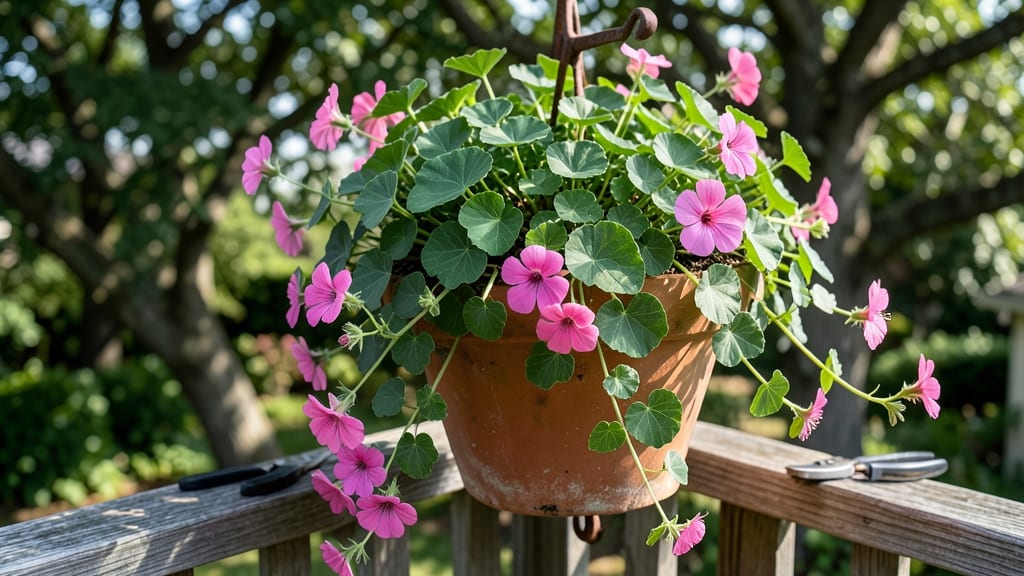
Ivy geraniums prefer partial shade for optimal growth, handling morning sun well but needing afternoon shade to avoid leaf burn, though they can adjust to full sun with regular watering and gradual sun exposure. Too much shade will limit blooms but keep leaves vibrant.
Ivy geraniums are surprisingly adaptable, but their light needs directly impact both their foliage health and flower production. 🌿 The key is finding that sweet spot—too much direct afternoon sun causes those beautiful leaves to crisp, while too little light makes them grow leggy with sparse blooms.
In hotter climates, I've seen them thrive with just 3-4 hours of morning sun, while cooler regions can handle more direct light. The secret is monitoring their leaves: if they start turning yellow or brown at the edges, it's time to adjust their position.
What's fascinating is how they respond to different light conditions. In partial shade, they'll focus energy on lush, variegated leaves rather than flowers, creating a stunning foliage plant.
But give them the right balance of sun, and you'll get that classic ivy geranium display of trailing vines covered in delicate blooms. The trade-off is real—you can't have both maximum flowers AND maximum shade without some compromise.
💡 In This Article
- How Light Affects Ivy Geranium Growth and Flowering
- Optimizing Ivy Geranium Placement for Balanced Growth
How light affects ivy geranium growth and flowering
Light exposure triggers a cascade of physiological responses in ivy geraniums that determine their growth patterns. These plants rely on chlorophyll for photosynthesis, but too much direct afternoon sun causes photooxidative stress—when ultraviolet rays break down chlorophyll molecules faster than they can be replenished.
This leads to that classic leaf scorch you see as brown, crispy edges. The plant’s natural defense is to produce anthocyanins (those purple-red pigments), which act as sunscreen for the leaves, but this comes at a cost: energy diverted from flower production to leaf protection.
In partial shade (3-6 hours of filtered light daily), ivy geraniums strike a balance. Their leaves develop a thicker cuticle layer—a waxy coating that reduces water loss—while still producing enough chlorophyll to sustain moderate growth.
The stems remain sturdy enough to support those cascading vines, and the plant allocates energy to both foliage and flowers. 🌿 What’s interesting is how the leaf variegation intensifies in shade: the white or cream markings become more pronounced because chlorophyll production slows in shaded areas, revealing the underlying pigment patterns.
This is why some growers intentionally place them under dappled light from trees.
The flowering mechanism is particularly light-sensitive. Ivy geraniums are short-day plants, meaning they need a critical period of darkness (typically 12+ hours) to trigger bloom formation. Too much shade can delay or reduce flowering because the plant senses insufficient light energy for reproduction.
In my Zone 7b garden, I’ve observed that plants receiving morning sun (when temperatures are cooler) and afternoon shade produce 20-30% more blooms than those in full shade, which focus all their energy on leaf growth instead.
The flowers themselves contain flavonoids that attract pollinators, but these compounds require sunlight to synthesize properly.
Temperature plays a hidden role here. In hot climates (Zone 9+), even morning sun can be intense, so the plants develop heat shock proteins to protect cellular structures.
This is why you’ll see ivy geraniums in these areas often have darker, thicker leaves—an adaptation to survive higher light intensity. Conversely, in cooler climates (Zone 5-6), they can handle more direct light because the sun’s rays are less aggressive.
The key measurement to watch is leaf temperature: if it exceeds 85°F for prolonged periods, photosynthesis efficiency drops sharply.
One fascinating adaptation is how ivy geraniums adjust their stomatal density (the tiny pores on leaves) based on light. In shade, stomata become more concentrated to maximize gas exchange with limited light, while in sun, they spread out to prevent overheating.
This is why leaves in bright conditions often feel slightly rougher to the touch—the stomata are less dense but larger. The trade-off is that sun-exposed leaves transpire (lose water) faster, which is why consistent moisture is critical when growing them in full sun.
For gardeners, understanding these mechanisms means you can predict growth patterns. For example, if you’re growing ivy geraniums in containers, their root zone heats up faster in full sun, accelerating water loss. That’s why container-grown plants need daily watering in summer even with afternoon shade.
The root-to-shoot ratio also changes: shaded plants develop longer, thinner roots to seek out light, while sun-exposed plants grow shorter, thicker roots for stability. This explains why some ivy geraniums become top-heavy in shade—they’re literally growing roots that can’t support the vine weight!