
Shrubs
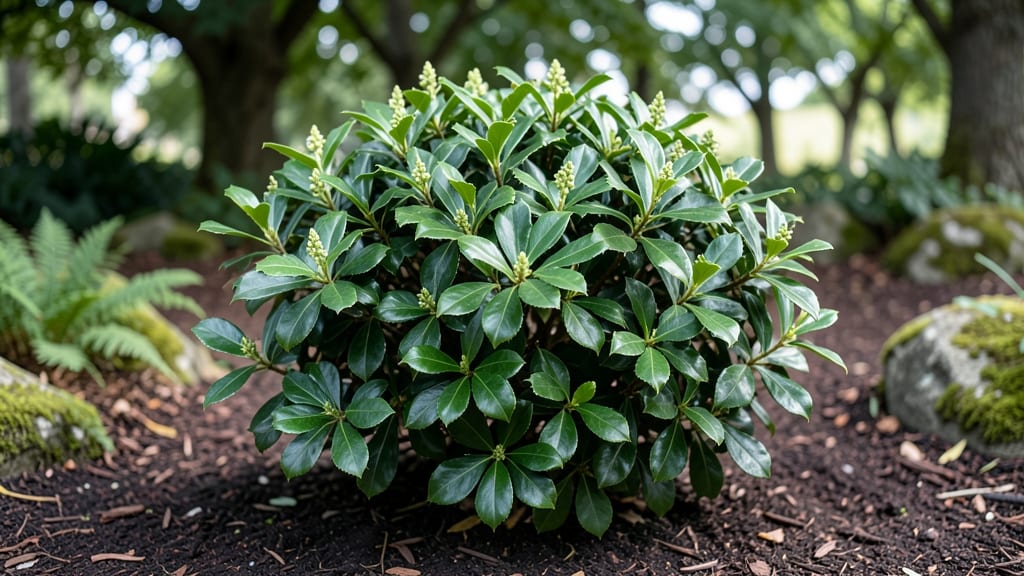
Japanese holly for shade is the secret weapon for lush, evergreen privacy where sunlight barely reaches. 🌿 I've planted these dense shrubs in my north-facing yard, and they've transformed bare corners into vibrant green walls that stay vibrant all winter.
The key is matching their needs: moist, well-draining soil with a slightly acidic pH (6.0-6.5), and partial to full shade. Unlike sun-loving hollies, these thrive under trees or along north-facing walls, growing 3-5 feet tall with a spread of 4-6 feet.
They're slow but steady growers, gaining about 6-12 inches per year. What you'll end up with is a hedge that stays dense year-round, with glossy leaves that repel deer and provide year-long interest.
The foliage remains rich green even in deep shade, making it perfect for problem areas most plants avoid. For best results, plant in early spring or fall when roots can establish before extreme temperatures.
Prune lightly after flowering to maintain shape, and watch as your shady spots become the envy of the neighborhood.
📚 In This Guide
- What you need
- Instructions
- Tips and common mistakes
- Wrapping up and next steps
What you need
- ● Japanese holly plants: 3–5 mature shrubs (3–5 ft tall) for a dense hedge, spaced 4–6 feet apart.
- ● High-quality soil: Well-draining, acidic soil (pH 5.0–6.5); amend with peat moss or pine bark if needed.
- ● Organic mulch: 2–3 inches of pine needles, wood chips, or shredded bark to retain moisture.
- ● Fertilizer: Slow-release acid-loving plant fertilizer (e.g., 10-10-10 or holly-specific blend).
- ● Watering can or hose: With a gentle spray nozzle for deep, even watering.
- ● Pruning shears: Sharp, bypass-pruners (for clean cuts) and hedge shears (for shaping).
- ○ Gloves & long sleeves: To protect from sharp holly spines (optional but recommended!).
- ● Epsom salt: 1 tbsp per plant annually to boost magnesium (great for glossy leaves!).
- ● Soil pH test kit: To confirm acidity before planting.
- ● Plant supports: Stakes or cages for young shrubs in windy areas.
- ● Drip irrigation system: For large hedges (saves time and ensures consistent moisture).
- ● Deer repellent: If local wildlife is a concern (e.g., hot pepper spray).
How to plant and care for Japanese holly in shady spots
Japanese holly thrives where others falter—here's how to grow it lushly in deep shade.
🪴 Step 1: Choose the Right Location and Soil
Japanese holly handles shade better than most evergreens, but it still needs partial shade—think dappled light or morning sun with afternoon shade. Avoid dense, dark shadows where it struggles to photosynthesize. I always test the spot by observing how other plants grow there: if ferns and hostas thrive, your holly will too.
Amend the soil with 2-3 inches of organic matter (like compost or leaf mold) before planting. Japanese holly prefers slightly acidic soil (pH 5.0-6.5). If your soil is heavy clay, mix in sand or perlite to improve drainage—waterlogged roots will yellow leaves and stunt growth. Dig a hole twice as wide as the root ball but only as deep as the container it came in.
🌱 Step 2: Plant at the Correct Depth and Stake if Needed
Remove the plant from its container and loosen the roots gently if they're circling. Place it in the hole so the top of the root ball sits level with the surrounding soil—burying too deep suffocates the plant, while planting too high stresses it. Backfill with native soil mixed with a handful of compost, tamping lightly to eliminate air pockets.
Water deeply after planting to settle the soil, then add 1-2 inches of mulch (wood chips or pine needles work best) to retain moisture and regulate temperature. If your holly is tall or top-heavy, stake it temporarily with two bamboo stakes tied loosely to the trunk—this prevents wind damage while roots establish. I always use soft fabric ties that won't cut into the bark.
☀️ Step 3: Water Deeply and Adjust Care for Shade Conditions
Water once a week during the first growing season, aiming for 1-1.5 inches of water per week—more in extreme heat or sandy soil. Check moisture by sticking your finger 2 inches into the soil; if it feels dry, water again. Overwatering is the biggest mistake in shade—holly roots rot easily in soggy conditions. After the first year, mature plants need water only during prolonged dry spells.
Fertilize lightly in early spring with a balanced, slow-release fertilizer (10-10-10). Too much nitrogen makes holly grow soft, floppy stems that snap in wind. I skip fertilizer in shade gardens entirely—holly grows slowly and doesn't need feeding to stay healthy. Prune only to shape in late winter, removing any dead or crossing branches with clean cuts just above a leaf node.
✂️ Step 4: Prune for Shape and Health Yearly
Japanese holly rarely needs heavy pruning, but I give mine a light trim in late winter to encourage bushier growth. Use bypass pruners to make cuts just above a leaf or bud, always cutting at a 45-degree angle. Never shear holly into a formal shape—it grows best with natural, layered branches. Remove any dead, diseased, or rubbing branches first; these spread problems quickly.
Watch for yellowing leaves—this usually means too much shade or overwatering. If branches grow leggy, move the plant to a slightly sunnier spot. Holly berries (on female plants) attract birds, so I plant mine near windows where I can watch them feed. Male and female plants must be nearby for pollination, but if you only have one, don't worry—holly grows well without berries too.
Tips & tricks for perfect Japanese holly in shade
Common mistakes can turn your holly into a sad, leggy shadow—here's how to avoid them and create a thriving evergreen hedge.
Location Test: Before planting, observe how other shade-loving plants like ferns and hostas grow in your spot. If they're thriving, your Japanese holly will too. I've learned the hard way that dense, dark shadows where nothing else grows are a recipe for failure—holly needs that dappled light to photosynthesize properly. If you're unsure, plant a temporary marker and check the sunlight patterns for a week before committing.
Soil Prep Secret: When amending soil with 2-3 inches of organic matter, mix in a handful of sulfur granules if your soil tests above pH 6.5. Japanese holly loves that slightly acidic environment, and this small addition makes a big difference. I test my soil every few years—it's the only way to catch pH drift before it causes yellowing leaves. For clay-heavy soil, I add sand or perlite while digging the hole, but I never exceed 20% sand content—too much can dry out roots.
Planting Depth Check: The top of the root ball should sit level with the surrounding soil—this is non-negotiable. I use a small stick or level to verify before backfilling. Burying too deep suffocates the plant, while planting too high stresses it. After planting, press down gently around the edges to eliminate air pockets, but don't compact the soil too firmly—roots need room to breathe and spread.
Mulch Layer Strategy: That 1-2 inches of mulch isn't just decoration—it's your moisture and temperature regulator. I always use wood chips or pine needles because they break down slowly and maintain consistent soil moisture. Keep mulch 2-3 inches away from the trunk to prevent rot. In winter, a thicker layer (up to 3 inches) provides extra insulation against freezing temperatures.
Pro Tips for Japanese Holly For Shade
- Common mistakes can turn your holly into a sad, leggy shadow—here's how to avoid them and create a thriving evergreen hedge.
- Location Test: Before planting, observe how other shade-loving plants like ferns and hostas grow in your spot.
- Soil Prep Secret: When amending soil with 2-3 inches of organic matter, mix in a handful of sulfur granules if your soil tests above pH 6.5.
Frequently asked questions
Got questions about growing Ilex crenata (Japanese holly) in shady spots?
You’re not alone! Here are answers to the most common queries to help you cultivate a lush, low-maintenance privacy screen—even in deep shade.
Can Japanese holly survive in full shade?
This evergreen thrives in partial to full shade, making it ideal for under trees or north-facing yards. While growth may be slightly slower in deep shade, it retains its glossy leaves and dense form. Just ensure 6+ hours of indirect light for best results.
How fast does Japanese holly grow for privacy?
Growth is moderate: expect 12–24 inches per year under ideal conditions. For a 6-foot-tall hedge, plan for 3–5 years of growth. Prune lightly in late winter to encourage bushier, faster growth—just avoid heavy cuts that expose old wood.
What’s the best alternative if Japanese holly struggles in my shade?
Try these shade-loving evergreens:
- Dwarf inkberry holly (Ilex glabra ‘Compacta’): Tougher in wet soil, berries for birds.
- Emerald green arborvitae (Thuja occidentalis ‘Smaragd’): Faster-growing but needs slightly more light.
- Leucothoe (dog hobble): Flowers in spring, thrives in damp shade.
Why are my Japanese holly leaves turning yellow?
Yellowing leaves usually signal overwatering, poor drainage, or nutrient deficiency. Check soil moisture—holly prefers consistently moist but not soggy conditions. Amend heavy clay with compost, and fertilize lightly in spring with acidic, slow-release fertilizer (e.g., 10-10-10).
Will Japanese holly produce berries in shade?
Berries (if female plants are present) may be smaller or fewer in deep shade since they rely on sunlight for pollination. For guaranteed fruit, plant one male and one female cultivar (e.g., ‘Green Lustre’ female + ‘Strongbox’ male). Even without berries, the holly’s dense foliage offers year-round privacy!
Wrapping up and next steps
Japanese holly (Ilex crenata) is the perfect shade-loving shrub for adding year-round privacy, structure, and beauty to your garden—even in the darkest corners. With its glossy foliage, low-maintenance nature, and adaptability to deep shadows, it’s a standout choice for evergreen landscaping.
Whether you’re transforming a gloomy backyard or adding a polished touch to a formal garden, this resilient plant delivers effortless elegance with minimal fuss.
Ready to elevate your outdoor space? Start by selecting the right variety for your climate, then plant with confidence—your future shade sanctuary awaits! 🌿✨