
Blooming
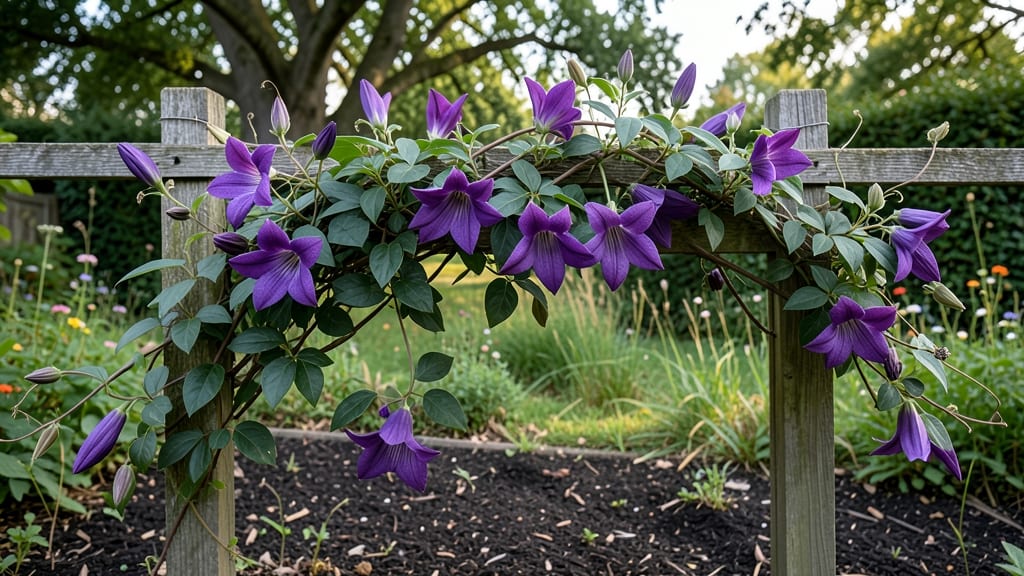
Nothing beats the drama of large bloom clematis climbing your trellis like a living waterfall. 🌸 I’ve grown these showstoppers for years, and the secret to their nonstop blooms lies in the right pruning timing—Group 1 varieties (like 'Jackmanii') need a late-winter haircut, while Groups 2/3 ('Nelly Moser') bloom twice and demand a gentler touch.
One wrong cut, and you’ll miss that summer spectacle entirely.
The real magic happens when you pair them with the right support—a sturdy trellis or arbor—and soil that drains like a dream. These vines are thirsty drinkers but hate soggy feet, so amend clay soil with compost and mulch heavily to keep roots cool.
The payoff? Flowers from early summer through frost, with some varieties even reblooming in fall if you deadhead faithfully.
By late winter, you’ll be sharpening your pruners, knowing exactly where to cut for that burst of spring growth. The vines climb aggressively, so train them early to avoid tangled messes, and watch as those 6- to 8-inch blooms transform your garden into a floral masterpiece.
Pests? Mostly just slugs on new shoots—spray with soapy water if they become a problem.
This works for city balconies (with dwarf varieties) or country gardens—just scale the trellis. The key is patience: it takes a season or two for these powerhouses to reach their full potential, but once they do, they’ll outshine anything else in your yard.
Ready to turn your vertical space into a blooming extravaganza?
📚 In This Guide
- What you need
- Instructions
- Tips and common mistakes
- Wrapping up and next steps
What you need
- ● Clematis plant: Choose a large-flowering variety (e.g., 'Jackmanii,' 'Nelly Moser,' or 'Princess Diana'). Opt for 3–4 mature plants (or 1–2 if space is limited) for a dramatic display.
- ● Well-draining soil: Amend heavy clay with compost or peat moss (1–2 bags per planting area). Aim for a pH of 6.0–7.0.
- ● Support structure: Trellis or arbor: At least 6–8 feet tall (clematis vines can reach 10+ feet!). Use metal or wood for durability.
- ● Obelisk or stakes: 5–6 feet tall, spaced 3–4 feet apart for climbing support.
- ● Mulch: 2–3 inches of organic mulch (e.g., shredded bark or straw) to retain moisture and regulate soil temperature.
- ● Fertilizer: Balanced fertilizer (10-10-10): 1–2 tablespoons per plant at planting time.
- ● High-phosphorus fertilizer (e.g., 5-10-5): 1 tablespoon in early spring for blooms.
- ● Slow-release granules: 1 cup mixed into soil at planting for steady nutrition.
- ● Drip irrigation system: Ensures consistent moisture without overwatering.
- ● Pruning shears: Bypass pruners (for clean cuts) or loppers for thicker stems.
- ● Copper tape: Wrap around stems to deter clematis wilt (a fungal disease).
- ● Garden gloves: Protect your hands from thorns (some varieties are spiky!).
Instructions: planting and pruning large bloom clematis for stunning year-round flowers
Here's how I grow vibrant, repeat-blooming clematis that put on floral shows from spring through fall.
🌱 Step 1: Plant in Well-Draining Soil With Proper Support
Choose a location with 6+ hours of morning sun and afternoon shade in hot climates—clematis roots burn easily. Dig a hole twice as wide as the root ball but only as deep as the container it came in. Clematis roots need to sit just below soil level, never buried deeper.
Mix the native soil with 3 inches of compost and a handful of bone meal at the bottom of the hole. This gives roots a phosphorus boost for vigorous early growth. Gently loosen the roots if they're circling and position the plant so the thickest stem sits 2-3 inches below soil level—this prevents stem rot.
Install your trellis or support structure immediately. I use a 6-foot obelisk> for climbing varieties, securing it firmly before backfilling. Water deeply after planting to settle the soil around roots, but avoid creating air pockets that trap moisture.
☀️ Step 2: Water Deeply and Mulch for Root Health
Keep the soil consistently moist for the first 4-6 weeks>, watering when the top 2 inches feel dry. Deep watering—1-2 gallons per plant>—encourages roots to grow downward rather than staying shallow. You'll see new leaves appear within 2-3 weeks> if moisture is right.
Spread 2-3 inches of mulch> around the base, keeping it 6 inches away from the stem> to prevent rot. I use shredded bark mulch because it breaks down slowly and improves soil structure over time. This layer also protects roots from extreme temperature swings.
✂️ Step 3: Prune for Seasonal Blooms (Group 1 Varieties)
Large bloom clematis are Group 1 varieties, meaning they flower on previous season's growth>. Prune immediately after blooming in late spring> while flowers are still vibrant. Cut back 1/3 of the oldest stems> to the first pair of healthy buds, and remove any dead or crossing stems completely.
Here's the thing—never prune more than 1/3 of the plant at once>. I like to make clean cuts at 1/4-inch above a bud> using sharp pruners. This ensures you'll still have stems to produce next year's blooms. After pruning, fertilize with a balanced 10-10-10 formula> to support regrowth.
🌿 Step 4: Summer Care for Strong Fall Blooms
During summer, water 2-3 times weekly> if rainfall is light, aiming for 1 inch per week>. You'll notice new shoots forming at the base—these are your future blooming stems. Pinch back the tips of these new shoots when they reach 6 inches> to encourage bushier growth.
Watch for powdery mildew on leaves, especially in humid climates. At the first sign of white powder, spray with a neem oil solution> (1 tablespoon per gallon of water). This prevents the fungus from spreading to your blooms. Deadhead spent flowers regularly to redirect energy into new buds.
⏰ Step 5: Winter Protection for Next Year's Flowers
Once temperatures drop below 30°F>, wrap the crown with 4-6 inches of straw mulch> and cover the trellis with burlap. This protects the dormant buds that will produce next spring's flowers. In Zone 5 and colder, I add a lightweight frost blanket> over the entire plant for extra insulation.
Prune again in early spring> (March) before new growth begins. Remove any dead stems and cut back any that were damaged by winter. You'll see fresh green shoots emerge within 2-3 weeks**>—this is your signal that the plant is waking up and ready for another season of blooms.
Tips & tricks for perfect large bloom clematis care
These practical insights will help you avoid common pitfalls and maximize your clematis' floral potential.
Soil Depth Secret: When planting, the 2-3 inches below soil level for the thickest stem is critical—this prevents stem rot while keeping roots accessible to moisture. I've seen too many plants fail because they were buried too deeply, cutting off oxygen to the stem base. Use a level or ruler to verify depth before backfilling.
Watering Technique: The 1-2 gallons per plant recommendation isn't just about quantity—it's about thorough saturation. Water until you see moisture emerge from the drainage holes at the bottom of the pot (if potted) or when the top 2 inches feel completely damp. Shallow watering encourages weak, shallow roots that can't support heavy blooms.
Pruning Precision: Those 1/4-inch cuts above buds might seem small, but they're what ensure clean healing and prevent disease entry. Use sharp pruners and make cuts at a 45-degree angle to shed water away from the wound. I mark the 1/3 pruning rule on my calendar to avoid accidentally over-pruning during late spring cleanups.
Winter Protection: The 4-6 inches of straw mulch should extend beyond the plant's base—think of it as a thermal blanket. In Zone 5 and colder, I add a lightweight frost blanket over the entire structure, securing it with stakes to prevent wind damage. This creates a microclimate that protects those critical dormant buds.
Pro Tips for Large Bloom Clematis
- These practical insights will help you avoid common pitfalls and maximize your clematis' floral potential.
- Soil Depth Secret: When planting, the 2-3 inches below soil level for the thickest stem is critical—this prevents ste...
- Watering Technique: The 1-2 gallons per plant recommendation isn't just about quantity—it's about thorough saturation...
Frequently asked questions
about large bloom clematis—because every gardener deserves clarity! Here are the top questions to help you master these stunning vines.When do large bloom clematis flowers appear, and how long do they last?
Most large-flowering clematis bloom in late spring to early summer, with a second flush in late summer or fall (depending on the variety). Individual flowers last 5–10 days, but pruning and deadheading can extend the season. Early bloomers (Group 1) may rebloom lightly if pruned carefully.
How do I prune large bloom clematis for maximum flowers?
Prune right after flowering (for Group 2) or in early spring (for Group 3). Cut back 1/3 of the previous year’s growth, leaving 2–3 strong buds per stem. Avoid over-pruning—these beauties need last year’s stems for next year’s blooms! Pro tip: Wear gloves—clematis stems are spiky!
Can large bloom clematis grow in containers, or do they need a trellis?
Yes! They thrive in large containers (15+ gallons) with well-draining soil and a sturdy trellis or obelisk. Just ensure the pot stays moist but not soggy—containers dry out faster. For trellises, choose open frameworks (like A-frame arbors) to support their weight.
What pests or diseases should I watch for with large bloom clematis?
Common issues include:
- Clematis wilt (fungal): Brown stems? Remove infected parts and improve airflow.
- Aphids: Spray with water or use insecticidal soap.
- Powdery mildew: Keep foliage dry and apply fungicide if needed.
Are there drought-tolerant large bloom clematis varieties?
Some varieties handle drought better than others! Try ‘Jackmanii’ or ‘The President’—they’re hardy and adaptable. For extreme drought, mulch heavily and water deeply 1–2 times per week during dry spells. Bonus: Drip irrigation keeps roots happy!
Wrapping up and next steps
Growing large bloom clematis is a rewarding journey that brings vibrant color and vertical beauty to your garden year after year! With the right soil, sunlight, and pruning precision, these stunning climbers will thrive and dazzle you with their dramatic flowers. Don’t wait—start your clematis adventure today!
Ready to transform your space? Pick a variety, prepare your planting site, and get pruning—your garden’s next masterpiece is just a season away! 🌸✨