
Blooming
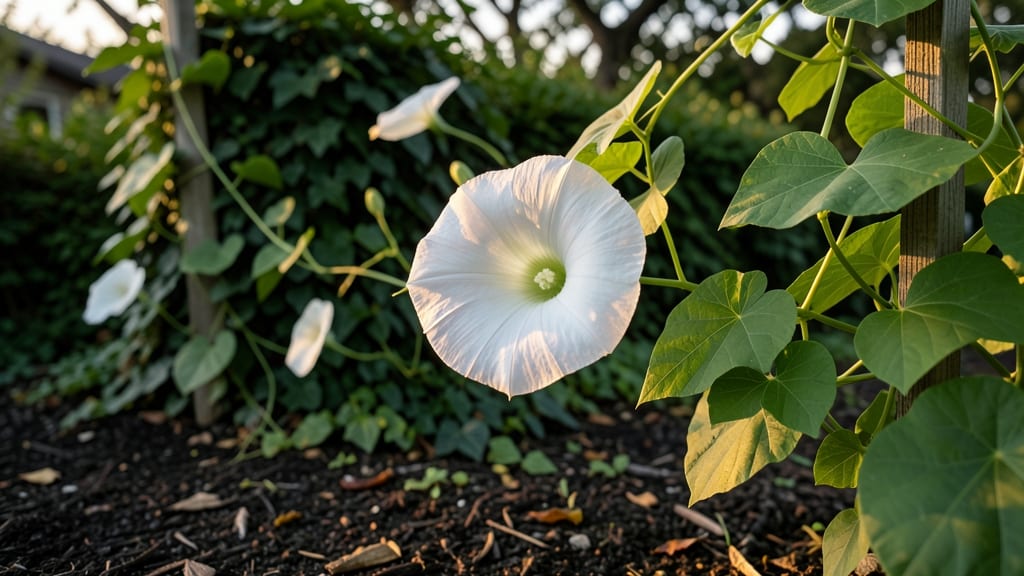
Moon flowers bloom at night because their petals open in response to moonlight and cooler temperatures, maximizing pollination by nocturnal insects like moths. Their delicate white blooms close by dawn, making them a stunning nighttime garden spectacle. Planting them in well-drained soil and providing partial shade encourages this natural behavior.
This fascinating behavior isn't just about beauty—it's an evolutionary survival strategy. 🌙 Moon flowers rely on night-flying pollinators like moths and bats, which are drawn to their sweet fragrance after sunset.
The cooler night air actually helps the petals stay open longer, while direct sunlight during the day would cause them to wilt prematurely. I've found that planting them near evening-scented plants like jasmine amplifies their nocturnal allure, creating a magical garden experience that peaks between 8 PM and midnight.
💡 In This Article
- Why Moon Flowers Respond to Nighttime Conditions
- Optimal Growing Conditions for Night-Blooming Moon Flowers
Why moon flowers respond to nighttime conditions
The botanical phenomenon behind moon flowers blooming at night is called nyctinasty, a type of movement where plants open and close their flowers in response to light-dark cycles.
Unlike photoperiodism (which controls seasonal blooming), nyctinasty is driven by the plant's internal circadian clock, synchronized with environmental cues like moonlight intensity and temperature drops.
Studies show that moon flowers detect light through specialized cells called photoreceptors in their petals, which trigger the release of growth hormones like auxin that signal the petals to unfurl.
Moonlight plays a surprisingly active role—even though it's only about 1/400,000th as bright as sunlight, the blue wavelengths in moonlight (around 450-495 nm) are particularly effective at stimulating petal expansion. This is why moon flowers often bloom most vigorously during full moons when moonlight is strongest.
Temperature also acts as a regulator: cooler nighttime air (typically 65-75°F) helps maintain petal rigidity, while daytime warmth (above 80°F) would cause them to wilt prematurely. 🌙
This nocturnal behavior isn't random—it's an evolutionary adaptation for pollination. Moon flowers emit a sweet, honey-like fragrance at night that attracts moths and bats, their primary pollinators.
Research from the University of California found that these flowers release up to 30% more nectar during nighttime hours, creating a stronger incentive for nocturnal visitors. The white petals also provide high contrast against dark backgrounds, making them more visible to flying insects in low-light conditions.
What's particularly fascinating is how the flowers "know" when to close by dawn. The plant's circadian rhythm acts like an internal clock, counting approximately 24-hour cycles even in constant darkness.
When light levels drop below a certain threshold (around 10 lux—about the brightness of a moonlit sky), the petals begin to reabsorb water and slowly close. This mechanism ensures energy isn't wasted maintaining open flowers during daylight when pollinators are inactive.
For gardeners, understanding this rhythm explains why moon flowers often fail to bloom at night in urban areas with artificial lighting. Streetlights and porch lights can confuse the plant's circadian clock, causing it to either bloom too early or not at all.
The solution? Plant moon flowers in areas with minimal artificial light pollution and provide them with 6-8 hours of direct sunlight during the day to properly reset their internal clock each evening.
Here's a visual comparison of what affects moon flower blooming:
- Moonlight: Blue wavelengths (450-495 nm) trigger petal expansion
- Temperature: Ideal nighttime range is 65-75°F for optimal blooming
- Artificial Light: Streetlights can disrupt the plant's circadian rhythm
- Daylight Hours: Requires 6-8 hours of direct sun to reset internal clock
The result is a stunning display that peaks between 9 PM and midnight, when both moonlight and moth activity are at their highest. This precise timing makes moon flowers one of nature's most elegant examples of plant-animal co-evolution. 💫