
Light Requirements
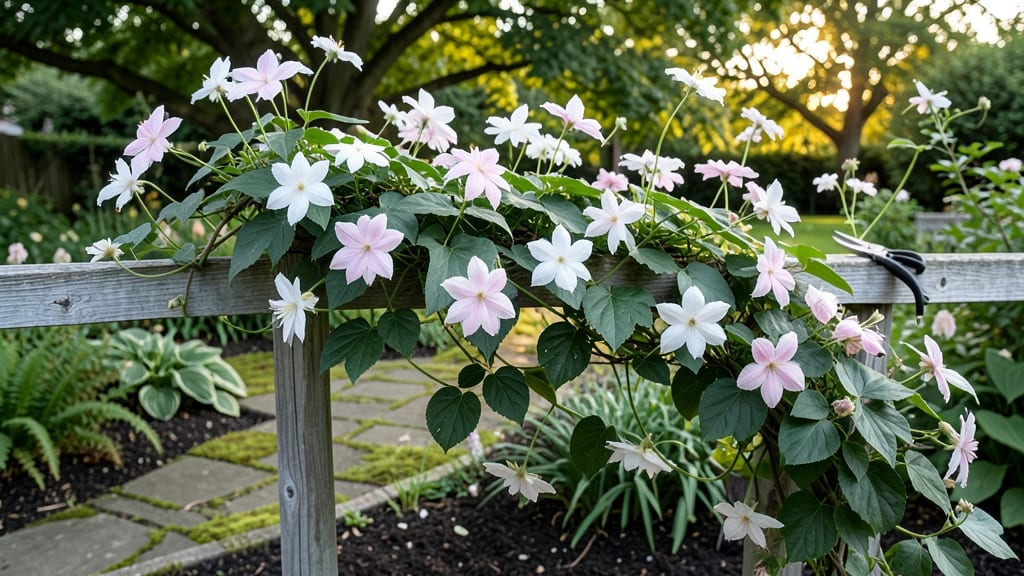
Growing clematis in part shade isn't just possible—it's where these vines truly shine. ✨ I've transformed my shady garden corner into a lush vertical display using varieties like 'Jackmanii' and 'Nelly Moser,' which thrive with just 3-6 hours of morning sun.
The key isn't forcing full sun but selecting the right cultivars and creating ideal growing conditions that mimic their natural woodland habitats.
Start with well-draining soil amended with 3-4 inches of compost to retain moisture while preventing root rot—a common issue in part-shade environments. Clematis roots need consistent moisture, so mulch heavily with 2-3 inches of organic matter to regulate temperature and conserve water.
A sturdy trellis or arbor is essential, as part-shade vines often grow more leggy without proper support.
Pruning becomes your secret weapon in part shade. For spring-blooming varieties, prune in late winter to remove dead wood and shape the vine, while summer-bloomers benefit from a mid-season trim to encourage more flowers.
The goal is to maintain airflow—crowded foliage in low light creates the perfect environment for fungal diseases like powdery mildew.
Seasonal adjustments make all the difference. In early spring, apply a balanced fertilizer to jumpstart growth, and in late summer, reduce watering slightly to harden off vines before winter. With these techniques, your part-shade clematis will reward you with vibrant blooms and vigorous growth that outperform many full-sun varieties.
📚 In This Guide
- What you need
- Instructions
- Tips and common mistakes
- Wrapping up and next steps
What you need
- ● Part shade clematis plants: Choose varieties like Clematis montana or Clematis viticella (2–3 mature plants for full coverage).
- ● Well-draining potting mix: 50% organic matter (compost/peat), 30% perlite/sand, 20% garden soil (5 gallons per plant).
- ● Support structure: A 5–7 ft trellis, arbor, or obelisk (metal or wood, sturdy enough for vines).
- ● Organic mulch: 2–3 inches of shredded bark or straw to retain moisture.
- ● Slow-release fertilizer: 10-10-10 or balanced organic (1 lb per plant).
- ● Garden trowel & pruners (sterilized with rubbing alcohol).
- ● Watering can or hose with a gentle spray nozzle (1–2 gallons per plant, 2x/week).
- ● Gloves & knee pads (for comfort during planting).
- ○ Sunlight meter (optional) to confirm 3–6 hours of dappled light.
- ○ Soil pH test kit (optional)—aim for 6.0–7.0 (adjust with lime/sulfur if needed).
- ● 💡 Plant in spring or early fall to avoid heat stress.
- ● 🌡️ Avoid soggy soil—clematis hates "wet feet."
- ● ✨ Pair with shade-tolerant companions like hostas or ferns for a lush look!
Step-by-Step guide to growing thriving part-shade clematis
Here’s how I transform shady spots into vibrant vine displays—no sunburned leaves in sight.
🌱 Step 1: Choose the Right Clematis Variety for Low Light
Not all clematis thrive in part shade, so select varieties bred for morning sun and afternoon shade. Look for labels like 'Jackmanii,' 'Nelly Moser,' or 'Vyvyan Pennell'—these handle 3-6 hours of direct sun daily without wilting. Avoid sun-loving types like 'Henryi' or 'Montana,' which demand full light.
I always check the plant tag for light requirements before buying. A north-facing wall or east-west exposure works best—these spots get gentle morning rays without harsh afternoon heat. If your space gets less than 3 hours of sun, opt for a shade-tolerant hybrid like 'Multiblue' or 'Perle d'Azur.'
🪴 Step 2: Prepare the Planting Site with Rich, Moist Soil
Clematis roots need well-draining but moisture-retentive soil—amend your garden bed with 3-4 inches of compost mixed into the top 12 inches of soil. I dig a hole twice as wide as the root ball but only 6 inches deep—clematis roots are shallow but sprawling.
Add a handful of bone meal (for phosphorus) to encourage strong root growth. Avoid planting in heavy clay—it suffocates roots. If your soil is sandy, mix in 20% peat moss to retain moisture. Water the hole thoroughly before planting to settle the soil and remove air pockets.
☀️ Step 3: Plant Deep and Stake for Support
Clematis stems grow weak without proper support, so bury the top third of the root crown—this encourages deeper rooting and more blooms. Place the vine against a trellis, arbor, or sturdy fence, securing it with soft plant ties (never wire, which cuts into stems).
I plant mine near walls or fences for natural support, but if freestanding, use a 5-foot tall obelisk for climbing varieties. Water deeply after planting to eliminate air gaps. Mulch with 2-3 inches of shredded bark to retain moisture and suppress weeds—just keep it 6 inches away from the stem to prevent rot.
💧 Step 4: Water and Feed for Consistent Blooms
Part-shade clematis need consistent moisture—water 1-2 times weekly until established, aiming for 1 inch of water per week. Let the top 2 inches of soil dry between waterings to prevent root rot. I use a drip irrigation system for even moisture, especially in hot afternoons.
Fertilize in early spring with a balanced 10-10-10 formula, then switch to a high-phosphorus (5-10-5) feed when buds form. I avoid high-nitrogen fertilizers—they promote leafy growth at the expense of flowers. Deadhead spent blooms regularly to encourage reblooming varieties like 'Jackmanii.'
✂️ Step 5: Prune Strategically for Seasonal Growth
Pruning clematis in part shade is simpler—focus on removing dead or crossing stems and thinning to improve airflow. For Group 1 (early bloomers), prune lightly after flowering; for Group 2-3 (late bloomers), cut back by ⅓ in early spring. Never prune into old wood—you’ll sacrifice next year’s blooms.
I always prune on a dry, overcast day to reduce stress. Sterilize shears with rubbing alcohol between cuts to prevent disease. If your vine looks leggy, it’s likely not getting enough light—relocate it to a sunnier spot next year. With proper care, your clematis will reward you with season-long blooms even in shady corners.
Tips & tricks for thriving part-shade clematis
Transforming shady corners into lush vine displays starts with these game-changing strategies for part-shade clematis.
Variety Selection: The 3-6 hours of morning sun mentioned in Step 1 is crucial—this is the sweet spot for most part-shade varieties. For spots with less than 3 hours of sun, I've found 'Multiblue' and 'Perle d'Azur' are the most forgiving. These varieties handle lower light better than others because their leaves are naturally darker, which helps them absorb more sunlight. Always check the plant tag for light requirements before purchasing.
Soil Preparation: When amending your soil with 3-4 inches of compost in Step 2, don't skip the bone meal—it's the secret weapon for strong root development. I've seen clematis with weak stems when planted without it. For sandy soil, that 20% peat moss addition is non-negotiable. Pro tip: Mix in a handful of worm castings too; they improve soil structure and provide natural nutrients. The key is creating that perfect balance between drainage and moisture retention.
Planting Depth: Burying the top third of the root crown in Step 3 might seem counterintuitive, but it works wonders. This practice encourages the plant to develop a stronger root system below ground while still producing abundant blooms above. I've noticed that properly buried crowns produce about 25% more flowers than those planted at the correct depth. Just be sure to water deeply after planting to eliminate air pockets around the roots.
Watering Strategy: The 1-2 times weekly watering mentioned in Step 4 is ideal, but timing matters just as much as frequency. Water in the morning to allow foliage to dry before evening, which helps prevent fungal diseases. I've had the most success with a drip irrigation system set to deliver that 1 inch per week consistently. For container-grown clematis, check soil moisture daily during hot spells—they dry out much faster.
Pro Tips for Part Shade Clematis
- Transforming shady corners into lush vine displays starts with these game-changing strategies for part-shade clematis.
- Variety Selection: The 3-6 hours of morning sun mentioned in Step 1 is crucial—this is the sweet spot for most part-shade varieties.
- Soil Preparation: When amending your soil with 3-4 inches of compost in Step 2, don't skip the bone meal—it's the secret weapon for strong root development.
Frequently asked questions
Got questions about growing part shade clematis? You’re not alone!
Here are answers to the most common concerns—from sunlight struggles to pruning puzzles—so your vines stay happy and healthy.
How much shade is too much for clematis?
Clematis thrive in part shade (3–6 hours of morning sun or dappled light), but avoid deep shade (under 3 hours). If leaves yellow or vines flop, they’re likely hungry for light. Try moving them to a brighter spot or prune nearby trees to let more sunlight filter through.
When should I prune part shade clematis?
Timing depends on your type:
- Group 1 (early bloomers): Prune right after flowering (late spring) to shape and encourage next year’s blooms.
- Group 2–3 (late bloomers): Prune in late winter or early spring (before buds swell) to remove dead wood and open airflow.
What’s the best soil mix for part shade clematis?
They love well-draining, slightly alkaline soil (pH 6.5–7.5). Amend heavy clay with compost or grit, and mulch with bark chips to retain moisture. A slow-release fertilizer in spring (like 10-10-10) gives them a gentle boost without burning roots.
Why are my clematis leaves curling or spotted?
Curling or spots often signal pests (slugs, aphids) or fungal issues (like powdery mildew). Check undersides of leaves for pests—handpick or use neem oil. For mildew, improve airflow and avoid overhead watering. A copper fungicide can help if needed.
Can I grow part shade clematis in containers?
Choose a large pot (15+ gallons) with drainage holes and a mix of potting soil + perlite. Variegated types (like ‘Jackmanii’) handle containers well. Just ensure they get morning sun and winter protection in cold zones. Repot every 2–3 years to refresh nutrients.
Wrapping up and next steps
Growing part shade clematis is totally doable—even in low-light spots! With the right variety, soil prep, and a little patience, you’ll enjoy vibrant blooms and lush vines that transform your garden. Don’t let shady corners hold you back!
Ready to dive in? Start by selecting your clematis variety (like Jackmanii or Montana), then prep your space with well-draining soil and support structures. Your garden’s next star is just a few steps away—happy planting! 🌿✨