
Blooming
October gardens don’t have to fade into brown—these 10 late-blooming plants extend your season with vibrant colors, fragrance, and essential pollinator support. Perfect for gardeners who love fall interest and want to keep bees and butterflies buzzing until frost.
Japanese Anemone for Graceful Fall Blooms

If you love the quiet beauty of October gardens but struggle with shade spots that stay bare, Japanese anemone is your secret weapon. This underrated perennial thrives where others fade, producing delicate pink or white blooms from late summer through October—often when most gardens are winding down.
What makes it stand out? It’s drought-tolerant once established and completely deer-resistant, so you won’t lose your investment to hungry critters. Plant it in partial to full shade where its vertical stems (reaching 3-4 feet) add drama to borders, while butterflies flock to its nectar-rich flowers. A single clump multiplies over time, creating natural drifts of color with minimal effort.
Perfect for gardeners with shaded areas or those who want low-maintenance pollinator plants, Japanese anemone proves that October can be just as vibrant as summer. 🌿
Asters for Late-Season Pollinator Feasts

When your garden seems to lose its sparkle by October, asters step in as the unsung heroes of late-season color. These native perennials burst into clusters of purple, blue, and white blooms just as other flowers fade, providing a vital food source for monarchs and bees during their final feeding frenzy before winter.
Plant asters in full sun to partial shade with well-drained soil, and they'll reward you with blooms from September through November. Varieties like 'Patriot' (deep purple) or 'Alma Potschke' (soft pink) thrive in USDA zones 3-9, making them adaptable for most climates. Cut back faded blooms to encourage more flowers and leave seed heads for winter interest.
Perfect for pollinator gardens, meadows, or cottage-style borders, asters are low-maintenance yet high-impact—ideal for gardeners who want to extend their season while supporting wildlife. 🌻
Mums for Classic Fall Color and Texture

Skip the basic yellow mum—modern chrysanthemums now come in deep burgundy, fiery orange, and even green-tinted varieties that add unexpected texture to fall containers. These aren’t your grandmother’s blooms; they’re bold, long-lasting, and perfect for cutting gardens or mass plantings in full sun.
For best results, plant them in well-draining soil and fertilize with a balanced formula every 4-6 weeks. Deadhead spent blooms to encourage more flowers, and watch them thrive in USDA zones 5-9. Unlike traditional mums, these varieties often rebloom in cooler weather, extending your fall display well into November.
Urban gardeners and small-space lovers will appreciate how well these adapt to containers—just ensure pots have drainage holes. Whether you’re filling window boxes or creating a dramatic border, mums bring instant color with minimal fuss. 💚
Goldenrod for Pollinators and Golden Foliage

If you’ve ever blamed goldenrod for your fall allergies, think again—this native beauty is actually a pollinator powerhouse that blooms just as bees and butterflies need food most. Its bright yellow plumes appear in late summer and last well into October, providing critical nectar when other flowers have faded.
Goldenrod thrives in full sun to partial shade and tolerates poor, dry soils, making it ideal for meadow gardens or wildflower mixes. The seed heads that follow the blooms add winter interest and food for birds. Plus, it’s completely non-invasive and rarely spreads aggressively, unlike some other late-season bloomers.
Perfect for gardeners who want low-maintenance beauty with high ecological value, goldenrod is a must for native plant enthusiasts and pollinator-friendly landscapes. 🌻
Sedum Autumn Joy for Succulent-Like Blooms

If you love low-maintenance plants that refuse to quit, Sedum Autumn Joy is your October superstar. This drought-proof succulent relative delivers coral-pink flower clusters that stay vibrant until the first frost, making it a standout for late-season color.
Thriving in rock gardens, containers, or sunny borders, it handles heat and dry spells like a champ while producing plump, fleshy leaves that store water. Deadhead spent blooms to encourage more flowers, and watch it spread gradually to create a lush, textured ground cover. Perfect for gardeners who want year-round structure with minimal fuss.
Urban gardeners and rockery enthusiasts will appreciate how Autumn Joy adds height and drama without demanding special care. Its succulent-like foliage also makes it a great choice for water-wise landscapes. 🌻
Russian Sage for Fragrant Purple Spikes

If you crave a low-maintenance plant that thrives in dry conditions while adding height and fragrance to your garden, Russian sage is your answer. Its silvery foliage and lavender-blue flower spikes create a striking vertical accent that blooms reliably in October, often lasting until frost.
This hardy perennial thrives in full sun to partial shade, making it ideal for borders, cottage gardens, or even containers. It’s drought-tolerant once established, requiring little water once roots are settled, and its fragrant blooms attract bees and hummingbirds—making it a pollinator powerhouse. Prune back in early spring to encourage fresh growth and maintain its tidy form.
Perfect for gardeners who want minimal fuss with maximum impact, Russian sage is especially great for xeric landscapes or areas with poor, dry soil. 🌟
Toad Lily for Unique Spider-Like Flowers

If you’re craving something truly unusual for your October garden, the toad lily (Tricyrtis hirta) delivers with its spider-like, dark purple blooms that appear as if they’ve stepped out of a fairy tale. Unlike most October flowers, this woodland native thrives in shade and moisture, making it perfect for understory planting or woodland garden edges.
Plant toad lilies in partial to full shade with well-draining, humus-rich soil—they’ll reward you with late-season blooms from September through October. The dark green, lance-shaped leaves provide a striking contrast to the unusual flowers, and they’re completely deer-resistant, a bonus for gardeners in rural areas. Water regularly to keep the soil evenly moist, especially during dry spells.
This plant is ideal for gardeners who love unique textures and woodland charm, or those with shady spots that need a late-season pop of color. Its moisture tolerance also makes it a great choice for rain gardens or areas with poor drainage. 🌷
Copper Beech Trees for Dramatic Fall Foliage

If your October garden needs a bold statement without the fuss of flowers, copper beech trees (Fagus sylvatica 'Purpurea') deliver drama with their fiery copper foliage. Unlike flowering plants, these deciduous trees create a stunning year-round backdrop that enhances nearby blooms like asters or mums while requiring minimal maintenance.
Plant them in full sun to partial shade for optimal color development, and enjoy their slow-growing nature—ideal for small gardens or as a focal point near patios. The leaves maintain their vibrant hue until frost, then transition to a soft bronze before dropping, leaving behind a clean, tidy appearance. Their disease-resistant nature makes them low-maintenance stars for both urban and rural landscapes.
Perfect for gardeners who love high-impact, low-effort plants, copper beeches add architectural interest and seasonal color without the need for pruning or deadheading. 🌻
Black-Eyed Susan for Cheerful Yellow Blooms

Skip the fuss of finicky perennials—Black-Eyed Susan (Rudbeckia hirta) is the ultimate no-stress October bloomer. Its cheerful daisy-like yellow flowers burst forth in late summer and keep going until frost, even in poor soil or rocky beds where other plants struggle.
This native beauty thrives in full sun to part shade and handles drought like a pro, making it perfect for beginner gardeners or busy pollinator enthusiasts. Deadhead spent blooms to encourage more flowers, and watch as butterflies and bees flock to its nectar-rich petals. It’s the golden ticket for extending your garden’s season with minimal effort.
Plant it in masses for a wildflower meadow effect or tuck single stems into borders—its versatility makes it a must-have for any October garden. 🌻
Sweet Autumn Clematis for Fragrant Climbing Vines

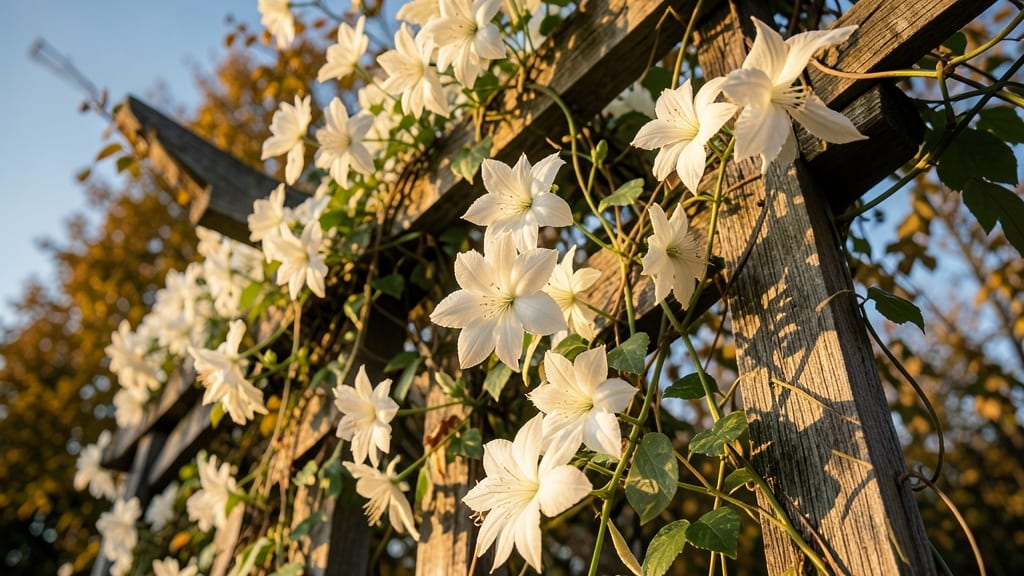
If you crave a fragrant October garden that doubles as a vertical masterpiece, Sweet Autumn Clematis is your answer. This vigorous climber bursts into clusters of creamy-white, highly aromatic flowers that perfume the air when most gardens have gone quiet—perfect for adding drama to trellises, arbors, or even chain-link fences.
Thriving in USDA Zones 4-9, this hardy vine needs only 6 hours of sun daily and tolerates a range of soils, though it prefers well-draining conditions. Prune back the previous year’s growth in early spring to encourage fresh, vigorous vines—this simple step ensures your clematis will reward you with football-sized blooms** from September through October. The vines can reach 15-20 feet, so provide sturdy support and watch as it transforms bare structures into living tapestries.
Ideal for gardeners who love low-maintenance yet high-impact plants, Sweet Autumn Clematis also attracts pollinators like bees and butterflies, extending their late-season forage. Plant it near patios or seating areas to enjoy its intoxicating scent on crisp autumn evenings. 🌿