
Blooming
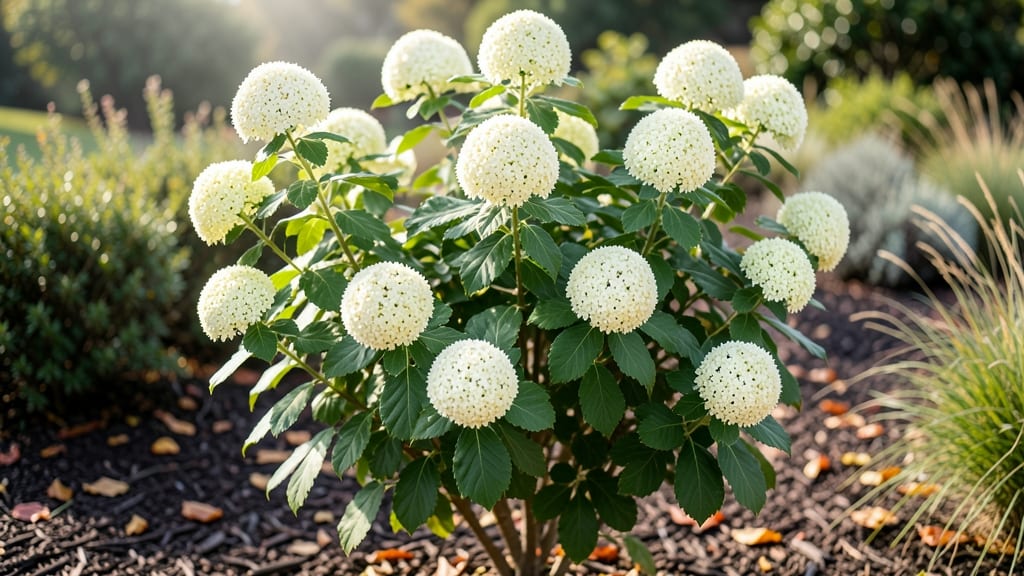
The snowball viburnum blooms in late spring to early summer, transforming your garden into a cloud of white fluff. 🌿 I’ve watched mine burst into bloom around mid-May in my zone 6 garden, though timing shifts with climate—cooler regions may see flowers a month later.
The key to extending that show? Pruning at the right time, which I’ll share to keep your shrub looking its best for weeks.
Sunlight and pruning are the secret weapons for encouraging longer blooms. Snowball viburnums thrive in full sun to partial shade, but too much shade delays flowering. After blooms fade, trim back old wood to promote fresh, vigorous growth—this is when your plant sets the stage for next year’s display.
I’ve found that light pruning in late summer also prevents overcrowding, keeping flowers abundant.
With the right care, your snowball viburnum can stay in bloom for 4-6 weeks, drawing pollinators and adding drama to your landscape. The clusters of white blossoms create a stunning backdrop for perennials like hostas or ferns, while their fragrant blooms add a touch of elegance.
Pruning isn’t just about shaping—it’s about giving your plant the best chance to shine.
Whether you’re planning a spring garden tour or just love the sight of these iconic blooms, these tricks will help you get the most out of your snowball viburnum. Next time you see those fluffy clusters, you’ll know exactly how to keep them coming back year after year.
📚 In This Guide
- What you need
- Instructions
- Tips and common mistakes
- Wrapping up and next steps
What you need
- ● Pruning shears: Bypass pruners (sharp, clean, and sterilized with rubbing alcohol to prevent disease). Quantity: 1 pair.
- ● Loppers: For thicker branches (if needed). Quantity: 1 pair.
- ● Gloves: Heavy-duty gardening gloves (to protect from thorns and sap). Quantity: 1 pair.
- ● Disinfectant: 10% bleach solution (1 part bleach to 9 parts water) or rubbing alcohol for sterilizing tools.
- ○ Pruning sealant (optional but helpful): For larger cuts to prevent disease entry.
- ● Notebook & pen: To jot down notes on pruning cuts or viburnum health.
- ● Timing: Prune right after blooming (late spring/early summer) to avoid cutting off next year’s flowers.
- ● Weather: Choose a dry, overcast day to minimize stress on the plant.
- ● Safety: Wear long sleeves and closed-toe shoes—snowball viburnum has sharp thorns!
- ● Research: Familiarize yourself with your viburnum’s growth habits (e.g., Viburnum opulus vs. Viburnum bodnantense).
Pruning secrets to extend snowball viburnum bloom time
Here’s how to coax your shrub into a longer, showier display—no guesswork, just proven timing.
✂️ Step 1: Time Your Pruning After Blooms Fade
Wait until late spring or early summer—after those iconic white clusters have dropped but before new buds form. This ensures you’re not cutting off next year’s flowers. I always prune mine in June when the foliage is lush but no new blooms are visible yet.
Look for spent flower clusters that have turned brown and crispy. These are your signal to act. If you prune too early, you risk removing flower buds that haven’t opened yet. If you wait too long, you’ll encourage dense, leggy growth that weakens the plant.
✂️ Step 2: Cut Back to the First Healthy Bud
Use sharp bypass pruners to make clean cuts at a 45-degree angle, just above an outward-facing bud. This encourages branches to grow outward for a fuller shape. I like to step back every few cuts to visualize the overall form—snowball viburnums thrive when they’re open and airy.
Remove no more than one-third of the plant’s total growth in a single session. Over-pruning stresses the shrub and can reduce next year’s blooms. If your viburnum is young (under 3 years old), skip heavy pruning entirely—just remove dead or crossing branches.
☀️ Step 3: Thin Out Crowded Branches for Better Airflow
Focus on removing branches that grow inward or cross others. These compete for sunlight and nutrients, weakening the plant’s ability to produce abundant blooms. I target branches thinner than a pencil—they rarely contribute to the shrub’s structure or flower production.
Thinning improves airflow, which is critical for preventing fungal diseases like powdery mildew. You’ll know you’ve done enough when you can see light filtering through the center of the shrub. This also makes future pruning easier because you’re not wrestling with tangled growth.
⏰ Step 4: Feed and Water for Stronger Next-Year Blooms
After pruning, apply a balanced 10-10-10 fertilizer (or an organic equivalent) around the root zone. This gives the plant the nutrients it needs to recover and set next year’s flower buds. Water deeply to help roots absorb the fertilizer, aiming for 1-2 inches of moisture per week during dry spells.
Mulch with 2-3 inches of organic mulch (like shredded bark) to retain moisture and regulate soil temperature. This step is non-negotiable—viburnums are drought-sensitive, and consistent moisture prevents bud drop. I always check soil moisture by sticking my finger 2 inches deep—if it’s dry, it’s time to water.
🌱 Step 5: Monitor for New Growth and Adjust Light
Watch for fresh green shoots emerging from the pruned areas—this is your confirmation that the plant is healing. If growth is sparse or weak, your viburnum may need more sunlight. Snowball viburnums prefer full sun to partial shade, but too much shade reduces flowering.
If your shrub is in a shady spot, consider thinning nearby trees or relocating it to a sunnier area. You’ll see a difference in bloom size and abundance within a season. And here’s the thing—if you prune correctly now, you’ll have larger, longer-lasting blooms next year without extra effort.
Tips & tricks for extending snowball viburnum blooms
These simple tricks will help you maximize your shrub's floral display without the guesswork.
Timing is Everything: The June window for pruning is your golden opportunity—this is when your viburnum has finished blooming but hasn't started setting next year's buds. I've seen gardeners miss this window completely, then wonder why their blooms never last as long. Mark your calendar now for late spring/early summer, and don't be tempted to prune earlier. Those buds are precious for next season's show!
The 45-Degree Angle Secret: When making those clean cuts in Step 2, the 45-degree angle isn't just for looks—it prevents water from pooling on the cut surface, which can lead to rot. I've made this mistake before and ended up with unsightly cankers. Always cut just above an outward-facing bud to encourage that full, airy growth pattern that snowball viburnums are famous for. Think of it as directing the plant's energy where you want it to go.
One-Third Rule: Never remove more than one-third of your plant's growth in a single session—this is non-negotiable. I learned this the hard way when I overzealous pruned a young viburnum and nearly killed it. The plant needs its leaves to photosynthesize and build energy for next year's blooms. For mature plants, this means you can prune every 1-2 years rather than annually. Less is more with these shrubs!
Light Test: After pruning, perform the light test—if you can't see light filtering through the center of your shrub, you haven't thinned enough. This simple visual check prevents that dense, tangled mess that makes future pruning a nightmare. I always step back and squint my eyes to check for even light distribution. Proper airflow isn't just about looks—it's about preventing those pesky fungal diseases that can ruin your blooms.
Pro Tips for Snowball Viburnum Bloom Time
- These simple tricks will help you maximize your shrub's floral display without the guesswork.
- Timing is Everything: The June window for pruning is your golden opportunity—this is when your viburnum has finished ...
- The 45-Degree Angle Secret: When making those clean cuts in Step 2, the 45-degree angle isn't just for looks—it preve...
Frequently asked questions
Got questions about snowball viburnum bloom time?
You’re not alone! Here are answers to the most common queries—so you can keep those stunning white clusters blooming longer.
When is the best time to plant snowball viburnum for optimal blooms?
Plant your snowball viburnum in early spring or fall—this gives roots time to establish before winter or summer stress. Avoid planting in late summer or fall in hot climates, as heat can shock young plants. Choose a spot with full sun to partial shade for the best bloom performance!
Why isn’t my snowball viburnum blooming this year?
Common culprits include over-pruning (cutting back after blooms), poor sunlight, or nutrient deficiencies. Snowball viburnums bloom on old wood, so avoid heavy pruning until after flowering. Check soil pH (aim for 5.0–7.0) and fertilize lightly in early spring with a balanced 10-10-10 formula.
How long do snowball viburnum flowers last, and can I extend their bloom time?
Snowball viburnum blooms typically last 2–4 weeks in spring, but you can prolong their display! Prune lightly after blooming to encourage new growth, and water deeply during dry spells. For a second flush of blooms, avoid heavy pruning—just shape the plant in late summer/early fall.
Are there any alternatives to snowball viburnum with similar blooms?
If you love snowball viburnum’s showy, white clusters, try these low-maintenance alternatives:
- Korean Spice Viburnum (Viburnum carlesii) – Fragrant pink blooms in early spring.
- Wax Leaf Ligustrum (Ligustrum japonicum) – Dense foliage with small white flowers.
- Doublefile Viburnum (Viburnum plicatum) – Layered, arching branches with spring blooms.
- Mock Orange (Philadelphus) – Highly fragrant white flowers (but needs more pruning).
Can I prune snowball viburnum in winter to encourage earlier blooms?
No—never prune in winter!
Snowball viburnums bloom on last year’s wood, so pruning in winter removes potential flower buds. Instead, prune right after blooming (late spring/early summer) to shape the plant and remove dead wood. For a cleaner look, thin out crowded branches by 20–30%.
Wrapping up and next steps
Now that you’re armed with the best pruning tricks to extend your snowball viburnum’s bloom time, it’s time to roll up your sleeves and give your plant the care it deserves! 🌸 Remember, timing, technique, and a little patience are key—your efforts will reward you with stunning, long-lasting blooms year after year.
Ready to transform your garden? Start by marking your calendar for the ideal pruning window and grab those shears—your snowball viburnum is waiting for its glow-up! 🌿✨