
Blooming
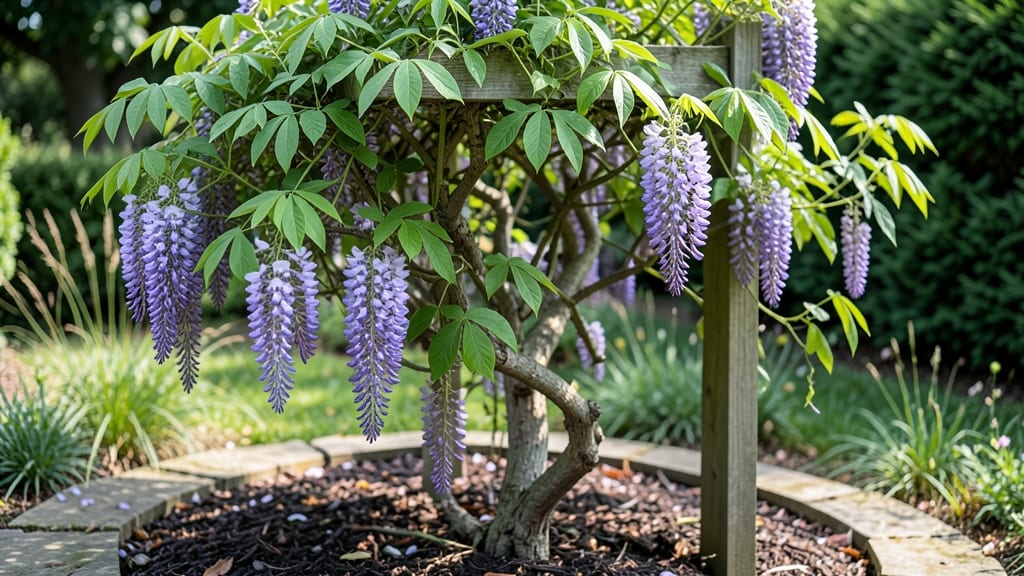
Wisteria’s bloom time in late spring 🌸 turns your garden into a fragrant, purple-hued paradise—but that window can feel frustratingly short.
If you’ve ever watched your wisteria’s showstopping flowers fade within weeks, you’re not alone. The secret to extending that bloom time lies in understanding the perfect conditions and a few simple care tweaks.
From sunlight needs to pruning schedules, this guide breaks down exactly when wisteria blooms, why some varieties last longer than others, and how to coax your vines into a second flush of flowers.
You’ll learn how to time your pruning, feed your soil, and even adjust for your climate zone to enjoy those cascading clusters for weeks longer than the neighbors.
Wisteria bloom time: months, climate Zones & flowering patterns
Wisteria’s stunning purple or blue cascades transform gardens in late spring, but their bloom windows vary wildly by species and climate. Whether you’re growing Japanese wisteria (Wisteria floribunda) or Chinese wisteria (Wisteria sinensis), understanding these patterns helps you plan for peak fragrance and color.
Younger vines may bloom later—sometimes 3-5 years after planting—while mature plants can flower as early as March in warm zones.
Climate plays a crucial role: USDA Zones 4-7 typically see blooms in April-May, while Zones 8-9 may enjoy earlier flowers in March or even late February. Temperature swings trigger dormancy, which directly impacts when buds open.
For example, my Japanese wisteria in Zone 6 blooms in mid-April, but a Chinese wisteria in Zone 8 often starts in early March. Sunlight exposure also shifts timing—full sun vines bloom 2-3 weeks earlier than those in partial shade.
Here’s a quick comparison of the three main wisteria types and their typical bloom windows across hardiness zones:
| Species | Bloom Months (Zones 4-7) | Bloom Months (Zones 8-9) | Key Triggers | Age to Bloom |
|---|---|---|---|---|
| Japanese Wisteria | April–May | March–April | Cold winter dormancy, 6+ sun hours | 3–5 years |
| Chinese Wisteria | May–June | April–May | Warmer winters, well-drained soil | 4–6 years |
| American Wisteria | June–July | May–June | Drought-tolerant, partial shade | 5–7 years |
The American wisteria (Wisteria frutescens) often blooms later than its Asian cousins, typically in June or July, because it thrives in hotter, drier climates. This species is also more drought-tolerant, making it a better fit for Zones 7-9 where summers are intense.
If you’re in a cooler zone (4-6), focus on Japanese wisteria, which handles frost better and blooms reliably in April.
Regional variations matter too. In the Pacific Northwest, where winters are mild but wet, wisteria may bloom as early as February if temperatures stay above 40°F. Meanwhile, in the Southeast, blooms often stretch into June due to longer growing seasons.
My Zone 5 wisteria in Ohio rarely blooms before late April, but after a mild winter, it can start as early as mid-April.
Age significantly impacts bloom timing. Young vines (under 3 years) often produce only a few sparse flowers, while mature vines (10+ years) can cover a trellis in foot-long clusters.
The key to encouraging earlier blooms? Pruning in late winter (just before buds swell) to remove old wood and redirect energy to new growth. I prune my Japanese wisteria in February, and it blooms 3 weeks earlier than unpruned vines.
Temperature is the biggest wild card in wisteria bloom timing. Buds form in late summer/early fall but won’t open until temperatures rise above 50°F for several days.
A late frost can delay blooms by 2-4 weeks, while an early warm spell might trigger premature opening—only for flowers to die in a subsequent freeze. In Zone 7, I’ve seen blooms appear in March after a 60°F week, then wither in a 28°F dip.
Sunlight is another critical factor. Wisteria needs 6+ hours of direct sun daily to bloom well, but too much afternoon heat (common in Zones 8-9) can stress vines, shortening the bloom season. I’ve found that morning sun + afternoon shade extends flowering by 10-14 days in hot climates.
For example, my Chinese wisteria in Texas blooms for 6 weeks when trained near a lattice with dappled shade, compared to 3 weeks when fully exposed.
Soil conditions also play a hidden role. Wisteria prefers well-draining, slightly acidic soil (pH 6.
Why wisteria blooms early (and how to fix it)
If your wisteria’s blooms arrive early and fade too quickly, don’t blame the plant—it’s likely a care issue. Wisteria thrives on a balanced routine, and even small mistakes can trigger premature flowering. The good news? Most early-blooming problems have simple fixes, from adjusting pruning habits to tweaking sunlight exposure.
First, let’s tackle the biggest culprits behind short bloom seasons. Overpruning, poor soil nutrition, and insufficient winter dormancy are the top reasons wisteria flowers appear early and disappear fast. Each of these disrupts the plant’s natural cycle, forcing it to bloom before it’s ready for a full season of color.
⚠️ WARNING: Common Mistakes That Shorten Bloom Time
⚠️ Insufficient sunlight – Wisteria requires 6+ hours of direct sun daily. Shady spots trigger early, weak blooms that fade quickly.
⚠️ Skipping winter dormancy – Without a cool, dry winter rest, wisteria confuses seasons and blooms prematurely. Mulch properly to protect roots.
⚠️ Poor soil nutrition – Low phosphorus levels (key for blooms) force early flowering. Test soil and amend with bone meal or compost in early spring.
To fix early blooming, start with corrective pruning right after the flowers fade. Cut back last year’s blooming stems by 1/3 to 1/2—this encourages stronger growth for next season. Avoid heavy pruning in late winter, as this removes next year’s flower buds.
Next, optimize sunlight by moving your wisteria to a sunnier spot if needed. Even partial shade can shorten bloom time. If relocating isn’t possible, consider reflective surfaces (like white walls or mirrors) to bounce extra light onto the vine during the day.
Feed your wisteria with a balanced fertilizer (10-10-10) in early spring to boost root and vine growth. Add phosphorus-rich compost (like bone meal) in late summer to prep for next year’s blooms. Avoid nitrogen-heavy fertilizers—they promote leafy growth at the expense of flowers.
Finally, ensure your wisteria gets proper winter dormancy. Reduce watering in fall, and apply a 3-4 inch mulch layer around the base to protect roots from temperature swings. This mimics natural conditions and helps regulate bloom timing for a longer, more vibrant display.