
Light Requirements
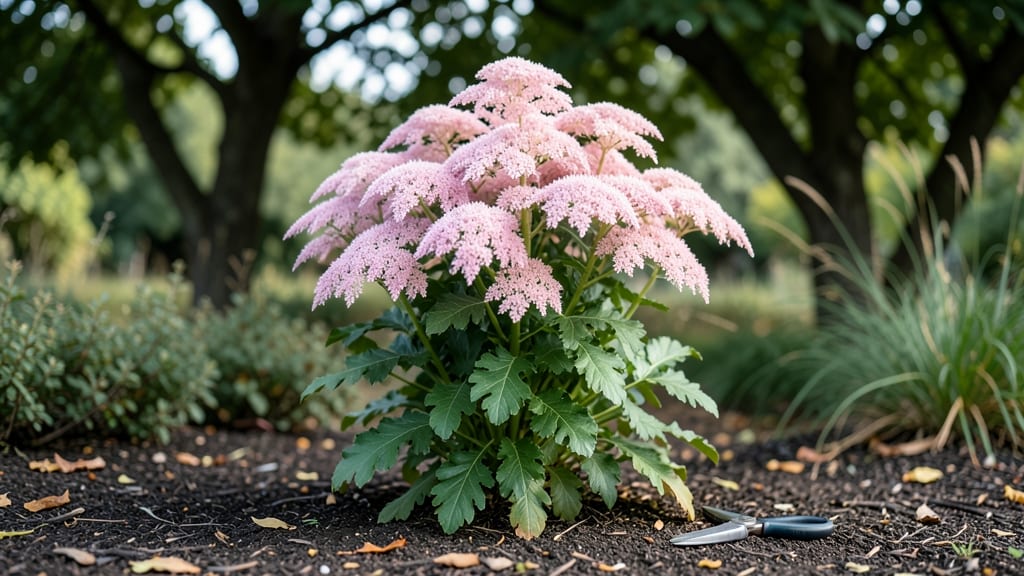
Growing astilbe in full shade turns your darkest corners into a vibrant display of feathery plumes that outshine anything in the sun. 🌿 I’ve watched these shade-loving stars transform my woodland garden from dull to dazzling—proof that full shade doesn’t mean full disappointment.
The secret lies in rich, moist soil and a few simple care tweaks that keep roots happy while the blooms reach skyward.
You’ll need well-draining soil mixed with compost (think 3 parts soil, 1 part compost), and a spot where moisture lingers but doesn’t pool—astilbe roots hate soggy feet.
Plant in spring or early fall when temperatures are mild, spacing clumps 18-24 inches apart to give their ferny foliage room to flourish. Mulch heavily with shredded bark to retain moisture and suppress weeds, then step back and watch the magic unfold.
Watering is the only tricky part: astilbe loves moisture but despises soggy soil. Aim for 1-1.5 inches per week, adjusting for rain—let the top inch dry out between waterings to prevent root rot.
Deadhead spent blooms in late summer to encourage a second flush of color, and divide clumps every 3-4 years to keep them vigorous. The payoff? Clouds of pink, white, or red plumes that last from June through August—and beyond.
Here’s the best part: astilbe thrives where most plants fail. Pair it with hostas, ferns, and impatiens for a low-maintenance shade garden that blooms reliably year after year. No full sun? No problem—just give it the right conditions, and these feathery wonders will outperform anything in the sun.
📚 In This Guide
- What you need
- Instructions
- Tips and common mistakes
- Wrapping up and next steps
What you need
- ● Astilbe plants: 3–5 Astilbe varieties (e.g., 'Fanal,' 'Deutschland,' or 'Bridal Veil')—choose based on height (1–4 ft) and bloom color (pink, white, red, or purple).
- ● Well-draining potting mix: 1–2 bags (50 lbs each) of moisture-retentive soil blend (e.g., 60% peat moss, 30% perlite, 10% compost).
- ● Containers or garden bed: For containers: 1–2 large pots (12–18" diameter) with drainage holes.
- ● For garden beds: A shady spot with 6+ hours of indirect light and loose, humus-rich soil.
- ● Organic fertilizer: 1 bag of balanced slow-release fertilizer (10-10-10 or 5-5-5) or fish emulsion (for organic gardens).
- ● Mulch: 1–2 bags of shredded bark or pine needles (2–3" layer) to retain moisture.
- ● Garden trowel or hand shovel (for transplanting).
- ● Watering can or hose with a gentle spray nozzle (astilbes love consistent moisture!).
- ● Pruning shears (to trim dead blooms and encourage regrowth).
- ● Garden gloves (for messy soil or thorny varieties like Astilbe chinensis).
- ○ Optional: Peat moss or coconut coir (to boost moisture retention).
- ● Slow-release iron supplements (if soil is alkaline).
- ● Decorative garden stakes or rings (to support tall varieties like 'Glut').
Step-by-Step instructions for planting astilbe in full shade
Here's how to create a thriving astilbe garden where others fail—no sun required.
🌱 Step 1: Choose the Perfect Planting Location
Astilbe loves moist, well-draining soil and 4-6 hours of dappled shade (morning sun is ideal). I always look for spots under trees where other plants struggle—those are prime locations. Avoid deep shade where leaves stay dry and roots get no indirect light.
Dig a hole twice as wide as the root ball but only as deep as the container's base. Loosen the sides of the hole with your hands to prevent soil compaction. This helps roots spread quickly into the surrounding soil. If your soil drains poorly, mix in a handful of perlite or coarse sand to improve aeration.
💧 Step 2: Prepare Soil for Moisture-Loving Roots
Astilbe roots need consistent moisture but hate soggy conditions. Amend the planting hole with 2-3 inches of compost mixed into the native soil. I like to blend it thoroughly—you should see dark organic matter evenly distributed. This gives your plants a nutrient boost while improving water retention.
Test moisture by squeezing a handful of soil—it should hold together when pressed but not feel sticky. If it crumbles, add a bit more compost. Water the hole deeply before planting to settle the soil and eliminate air pockets around the roots.
🪴 Step 3: Plant and Water for Immediate Support
Remove the plant from its container and gently tease apart any circling roots. Place it in the hole so the top of the root ball sits level with the surrounding soil—burying too deep suffocates the plant, while planting too high causes stress. Fill around the roots with the amended soil, pressing lightly to eliminate gaps.
Water immediately after planting, giving the soil a deep soaking until it's evenly moist to a depth of 6 inches. You'll see water pooling at the surface before draining away—this confirms proper drainage. Mulch with 2-3 inches of shredded bark or leaves to retain moisture and suppress weeds.
☀️ Step 4: Maintain Consistent Moisture for Peak Blooms
Astilbe thrives when soil stays evenly moist but not waterlogged. Water 2-3 times per week in hot weather, checking the top 2 inches of soil—if it feels dry, it's time to water. I use a soaker hose for gentle, deep hydration that encourages strong root growth.
Fertilize lightly in spring with a balanced 10-10-10 fertilizer (about 1 tablespoon per plant). Too much fertilizer causes leggy growth and fewer blooms. Deadhead spent flowers to encourage more blooms and prevent self-seeding if you don't want volunteers popping up everywhere.
✂️ Step 5: Divide and Refresh Every 3-4 Years
Astilbe forms dense clumps that benefit from division every 3-4 years in early spring or fall. Dig up the entire plant and separate it into smaller sections, ensuring each has 3-5 healthy stems. Replant immediately in fresh soil—this rejuvenates growth and prevents overcrowding.
Watch for yellowing leaves, which often signal root rot from poor drainage. If this happens, improve soil aeration and reduce watering slightly. With proper care, your astilbe will reward you with lush, feathery plumes from early to mid-summer, long after sun-loving plants have faded.
Tips & tricks for thriving astilbe in shady spots
These little-known tricks will help your astilbe flourish where others fail—no sunshine required.
Location Secret: The 4-6 hours of dappled shade in Step 1 is your golden window. Look for spots where morning sunlight filters through tree leaves—this gives just enough light without scorching the delicate foliage. I've seen astilbe thrive under maple trees where hostas wilt. Avoid northern exposures that block all light entirely.
Soil Prep Pro Tip: When amending with 2-3 inches of compost in Step 2, mix in a handful of leaf mold if you have it—it mimics the forest floor conditions astilbe loves. Leaf mold improves moisture retention while preventing that compacted, clay-heavy feel. If you don't have leaf mold, coconut coir works as a substitute for the same effect.
Watering Wisdom: That deep soaking to 6 inches in Step 3 isn't just about planting—it's about training your soil. After initial planting, maintain this moisture level by watering at the base rather than overhead. I use a 5-gallon watering can with a spout to direct water exactly where roots will spread. This prevents fungal issues that come from wet leaves.
Maintenance Must-Know: The 2-3 times weekly watering in Step 4 becomes especially critical during summer heat. I set a reminder on my phone for every other day to check that top 2 inches—if it's dry, water immediately. Mulch acts like a moisture blanket, but check beneath it too. Astilbe roots need that consistent hydration to produce those show-stopping plumes.
Pro Tips for Astilbe Full Shade
- These little-known tricks will help your astilbe flourish where others fail—no sunshine required.
- Location Secret: The 4-6 hours of dappled shade in Step 1 is your golden window.
- Soil Prep Pro Tip: When amending with 2-3 inches of compost in Step 2, mix in a handful of leaf mold if you have it—it mimics the forest floor conditions astilbe loves.
Frequently asked questions
Got questions about growing astilbe in full shade? You’re not alone! Here are answers to the most common queries to help you cultivate stunning, low-light blooms with ease.
Can astilbe grow in total shade (no direct sunlight)?
Yes! Astilbe thrives in full shade (2–4 hours of dappled light or no direct sun). However, deep, dark shade (like under dense evergreens) may reduce blooms. For lush foliage and flowers, aim for partial shade with morning sun if possible.
How long does it take for astilbe to bloom after planting?
Most astilbe varieties bloom 60–90 days after planting in spring. If planted in late spring or summer, expect flowers the following year. Patience pays off! Mulch and consistent watering speed up establishment.
Why are my astilbe leaves turning yellow in shade?
Yellowing leaves often signal overwatering, poor drainage, or nutrient deficiency. Ensure soil stays moist but not soggy—astilbe hates "wet feet." Amend heavy clay with compost, and fertilize lightly in spring with balanced 10-10-10.
What’s the best astilbe variety for deep shade?
Choose darker-hued varieties like 'Fanal' (deep red), 'Deutschland' (purple), or 'Bridal Veil' (white). These tolerate 3+ hours of shade while still producing plentiful blooms. Avoid pale pinks (e.g., 'Glut') for full shade.
Can I divide astilbe in full shade?
Divide every 2–3 years in early spring or fall to rejuvenate plants. Full shade makes division easier—no risk of transplant shock from harsh sun. Just dig up clumps, separate roots, and replant with fresh mulch.
Are there shade-loving alternatives to astilbe?
If you want similar texture/color, try:
- Hosta (foliage, low-light)
- Heuchera (colorful leaves, drought-tolerant)
- Lungwort (Pulmonaria) (spotty blooms, early spring)
- Japanese Painted Fern (Athyrium) (silvery fronds)
Wrapping up and next steps
Transforming your shady spots into vibrant displays of color is easier than you think! Astilbes prove that full shade doesn’t mean sacrificing beauty—just choose the right variety, prep your soil, and give them consistent moisture.
With their feathery plumes and low-maintenance nature, these plants are the perfect way to add wow to your garden without the fuss.
Ready to dive in? Start by picking your favorite astilbe and head to your local nursery or order online—your shady garden oasis awaits! 🌿✨