
Light Requirements
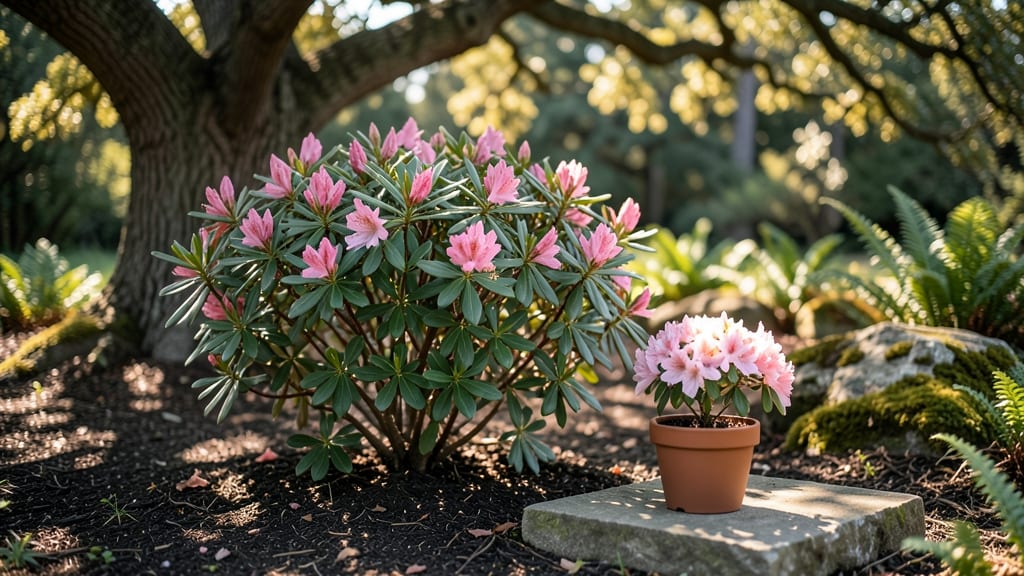
Choosing the right spot—whether azalea full sun or shade—is key to coaxing vibrant blooms and glossy foliage from your plants.
Struggling to keep your azaleas blooming beautifully? The battle between full sun or shade might be the key—and getting it wrong could mean sparse flowers or even plant decline.
Most gardeners assume azaleas hate full sun, but the truth is more nuanced: they need protection from harsh afternoon rays, especially in hotter zones like 6a.
Below, I’ll break down the exact light conditions your azaleas crave—whether you’re in a humid South or a cooler climate—plus how to adjust care for vibrant blooms every season.

Azalea sunlight needs: full sun vs shade requirements explained
Azaleas are prized for their vibrant blooms and lush foliage, but their sunlight needs often confuse gardeners. Unlike sun-loving shrubs, azaleas thrive in partial shade, yet they still need filtered light to produce abundant flowers.
The key lies in understanding how evergreen vs deciduous varieties and regional climates influence their light requirements—and why too much sun or too little can stunt their growth.
Most azaleas originate from woodland understories, where they receive dappled sunlight through tree canopies. This natural habitat explains why they prefer morning sun with afternoon shade. However, some modern hybrids can tolerate full sun in milder climates, while others struggle even with bright indirect light.
The challenge? Balancing photosynthesis efficiency with heat stress prevention to ensure those showstopping blooms.
Photosynthesis in azaleas works best with moderate light intensity. Too much direct sun can overheat leaves, causing leaf scorch or bud drop, while too little light reduces chlorophyll production, leading to weak stems and sparse flowers. The ideal light balance maximizes flower production while minimizing stress—typically 4-6 hours of morning sun paired with afternoon shade.
Regional climates play a huge role in azalea sunlight needs. In hot, dry zones (like USDA Zones 7-9), azaleas often need more shade to prevent dehydration, while in cooler, northern climates, they can handle more sunlight.
For example, a Georgia azalea might thrive with 6 hours of sun, while a Pacific Northwest azalea could struggle in more than 4 hours of direct light. Always consider your local microclimate when choosing a planting spot.
| Azalea Type | Sunlight Needs | Best Climate Zones | Bloom Impact |
|---|---|---|---|
| Evergreen Azaleas | 4-6 hrs morning sun, afternoon shade | Zones 6-9 (cooler climates) | Vibrant, long-lasting blooms |
| Deciduous Azaleas | 3-5 hrs filtered light, dappled shade | Zones 5-8 (humid regions) | Moderate blooms, lush foliage |
| Heat-Tolerant Hybrids | 5-7 hrs sun with afternoon shade | Zones 7-10 (hot climates) | Bright blooms, drought-resistant |
| Dwarf Azaleas | 2-4 hrs morning sun, partial shade | Zones 6-9 (containers or borders) | Compact blooms, ideal for pots |
Identifying the perfect sunlight spot for your azaleas starts with observing your yard’s sunlight patterns. Use a sunlight tracker (or a simple app) to map how sunlight moves across your garden from 6 AM to 6 PM.
Look for areas with gentle morning light and shade after 10 AM, such as under deciduous trees or near north-facing walls. Avoid spots where leaves turn yellow or crispy, which signals too much sun, or where growth is leggy and sparse, indicating insufficient light.
If your azaleas are already planted, you can test their current light exposure by placing a white piece of paper near the plant for an hour. If the paper shows sharp shadows, the light is too intense.
If it’s barely visible, the area is too shady. For container-grown azaleas, rotate pots quarter-turns weekly to ensure even light exposure on all sides. This prevents one-sided growth and keeps the plant symmetrical and healthy.
Scientific studies show that azaleas produce more flowers when they receive consistent, moderate light rather than intense spikes of sunlight. The chloroplasts in azalea leaves are optimized for low-to-moderate light conditions, which is why they struggle in full sun.
However, blue light wavelengths (found in morning sun) are crucial for flower bud formation. That’s why east
How to adjust azalea care for different light conditions
Azaleas thrive in partial shade, but their care changes dramatically between full sun and shade conditions. In full sun, they need extra water and mulch protection to prevent leaf scorch, while shade-loving varieties benefit from soil amendments to compensate for lower light.
Let’s break down how to adjust your care routine for each scenario.
First, consider your local climate. In hot, dry regions, azaleas can handle morning sun with afternoon shade, while cooler zones may support full sun with proper hydration.
Always start by testing your soil pH—azaleas demand acidic soil (4.5–6.0) regardless of light exposure. Without this, even ideal light won’t guarantee blooms.
Azalea Care: Full Sun vs Shade
Full Sun (6+ hours/day)
- Watering: Daily deep soaks
- Fertilizing: High phosphorus (bloom boost)
- Pruning: Light trimming after blooms
- Mulch: 3-inch organic layer
Partial Shade (4-6 hours/day)
- Watering: Every 2-3 days (less frequent)
- Fertilizing: Balanced NPK (10-10-10)
- Pruning: Shape in late winter
- Mulch: 2-inch layer (retain moisture)
Full Shade (<4 hours/day)
- Watering: Weekly (soil stays damp)
- Fertilizing: Low nitrogen (avoid leafy growth)
- Pruning: Minimal (promote air circulation)
- Mulch: 1-inch layer (prevents compaction)
In full sun, azaleas demand consistent moisture—water deeply in the morning to reduce evaporation. Use a drip irrigation system to deliver water at the roots, avoiding wetting leaves, which can cause fungal issues.
For shade-grown azaleas, water less frequently but ensure the top 2 inches of soil stay moist. A simple finger test works best: stick your finger in the soil—if it’s dry past your first knuckle, it’s time to water.
Fertilizing also shifts with light. In full sun, feed with a high-phosphorus fertilizer (like 10-30-20) every 6 weeks in spring to fuel blooms.
For shade conditions, switch to a balanced 10-10-10 fertilizer and apply it sparingly—too much nitrogen in low light leads to lush foliage but fewer flowers. Always fertilize after watering to prevent root burn.
Pruning strategies differ too. In full sun, prune lightly after the blooming season to shape the plant and improve airflow, which reduces stress. For shade-loving azaleas, prune in late winter to remove dead wood and encourage new growth.
Avoid heavy pruning in shade—it can leave the plant vulnerable to pests or disease due to reduced sunlight for recovery.
Finally, mulching is your secret weapon. In full sun, use a 3-inch layer of organic mulch (like pine bark) to retain moisture and regulate soil temperature. In shade, a 2-inch layer suffices—too much mulch can suffocate roots in low-light conditions. Refresh mulch annually to maintain its protective benefits.
Adjusting azalea care for light conditions isn’t just about sun vs. shade—it’s about balancing water, fertilizer, and pruning to match your plant’s environment. With these tweaks, your azaleas will reward you with vibrant blooms year after year, no matter where you plant them. 🌸