
Shrubs
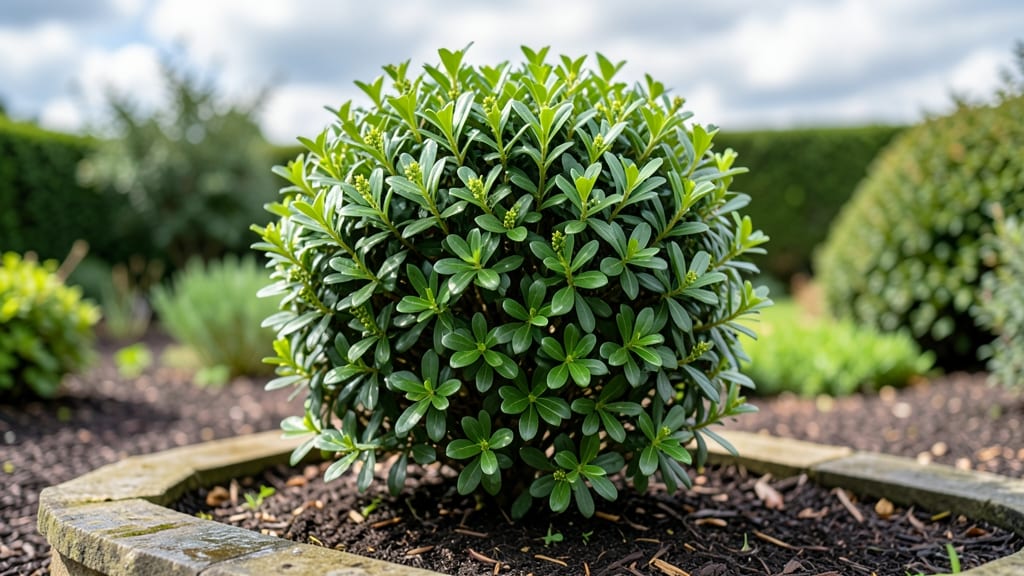
Boxwood shrubs for shade bring that year-round structure to your garden, even where sunlight barely touches. 🌿 I’ve grown them under towering oaks and against dark brick walls—once you pick the right varieties like 'Green Velvet' or 'Winter Gem,' they thrive where others fail.
The key isn’t forcing them to grow; it’s working with their natural patience and resilience in low light.
You’ll need well-draining soil (amend with compost if yours is heavy clay) and a spot that gets at least 3–4 hours of filtered light daily. Water deeply but infrequently—boxwoods hate soggy roots—and mulch to keep moisture steady.
Pruning isn’t about dramatic cuts; it’s about shaping gradually to avoid stressing the plant. My ‘Winter Gem’ bushes now stand like polished emerald sentinels, their glossy leaves untouched by winter’s chill.
The payoff? Lush, dense foliage that stays vibrant even in deep shade, plus that classic boxwood scent when you brush past. They resist deer and rabbits better than most shrubs, and with proper care, they’ll outlast your garden plans.
The only real challenge is powdery mildew—prevent it with good airflow and occasional fungicide sprays in humid summers.
Works for hedges, foundation plantings, or even container gardens on patios. Start with 2–3 plants per linear foot for that tight, formal look, and you’ll have a shade-loving staple that outshines everything else in your garden. Here’s how to keep them thriving—without the guesswork.
📚 In This Guide
- What you need
- Instructions
- Tips and common mistakes
- Wrapping up and next steps
What you need
- ● Boxwood shrubs: Choose Buxus sempervirens or Buxus microphylla (3–6 plants per 10 ft of space, depending on desired density). Opt for 1–3 gallon containers for mature plants or 1-gallon pots for younger shrubs.
- ● High-quality soil: Well-draining, slightly acidic soil (pH 6.0–7.0). Amend heavy clay or sandy soil with 2–3 inches of compost or peat moss.
- ● Organic mulch: 2–3 inches of wood chips, pine straw, or shredded bark to retain moisture and suppress weeds.
- ● Slow-release fertilizer: 10-10-10 or 12-4-8 (apply at planting and again in early spring).
- ● Garden gloves and knee pads (for comfort during planting).
- ● Watering can or hose with a gentle spray nozzle (for post-planting hydration).
- ● Pruning shears (sharp, bypass-style, 7–10 inches long).
- ● Soil test kit (to check pH and nutrient levels before planting).
- ● Epsom salt (for magnesium boosts if leaves show yellowing).
- ● Fungicide (copper-based) (preventative measure for powdery mildew in humid climates).
- ● Stakes or plant supports (if planting in windy areas or for young shrubs).
- ● Drip irrigation system (for consistent moisture in large plantings).
How to plant and care for boxwood shrubs in shady spots
Boxwoods thrive where others struggle—here's how to grow lush, evergreen privacy screens in low-light areas.
🪴 Step 1: Choose the Right Location and Soil
Boxwoods tolerate shade but need partial shade—at least 4-6 hours of filtered light daily. Avoid deep shade where they'll stretch and lose density. Test your spot by observing how sunlight filters through nearby trees at different times of day.
Amend heavy clay soil with 2-3 inches of compost to improve drainage. Boxwoods hate soggy roots but also can't handle drought. Mix in 1 part perlite to the existing soil to create a well-draining, airy medium. The ideal soil pH is slightly acidic (6.0-6.5)—test your soil with a kit before planting.
🌱 Step 2: Plant at the Correct Depth and Spacing
Dig holes twice as wide as the root ball but only as deep as the container. Boxwoods planted too deep suffocate, while shallow planting exposes roots to drying winds. Gently remove the plant from its container and loosen any circling roots with your fingers.
Space shrubs 3-4 feet apart for a dense hedge. If you're planting 4 boxwoods (as promised), arrange them in a straight line or staggered pattern for a natural look. Backfill with native soil mixed with compost, pressing lightly to eliminate air pockets. Water deeply to settle the soil around roots.
☀️ Step 3: Water and Mulch for Moisture Retention
Water deeply once a week for the first 4-6 weeks until the soil is 6 inches deep and evenly moist. You'll know it's right when water drips from the drainage hole—no soggy puddles, just consistent dampness. After establishment, water every 10-14 days unless rainfall provides 1 inch of moisture. Boxwoods in shade need less water but still hate drying out.
Spread 2-3 inches of mulch (wood chips or shredded bark) around the base, keeping it 2 inches away from the trunk. This preserves moisture, regulates soil temperature, and prevents weeds. Refresh the mulch annually—it breaks down faster in shady, damp conditions.
✂️ Step 4: Prune for Shape and Health
Prune boxwoods twice a year: a light shaping in early spring (March-April) and a heavier trim in late summer (August-September). Never prune in fall or winter—new growth won't harden off before cold snaps. Use sharp pruners to make clean cuts at a 45-degree angle just above a leaf bud.
For a formal hedge, trim the top and sides to create clean lines. For a natural look, remove only the innermost branches to encourage airflow. Boxwoods tolerate light pruning but never shear more than ⅓ of the foliage in one season—this stresses the plant and invites pests. Wear gloves; boxwood leaves have tiny hairs that irritate skin.
🌿 Step 5: Fertilize and Protect Year-Round
Apply a slow-release, balanced fertilizer (10-10-10) in early spring when new growth appears. Scatter granules 6 inches from the trunk and water deeply to activate them. Over-fertilizing causes weak, leggy growth—stick to once-a-year feeding unless your soil test shows deficiencies. Boxwoods in shade need half the fertilizer of sun-exposed plants.
Watch for boxwood blight (a fungal disease causing brown spots). Remove infected leaves immediately and space plants for airflow. In winter, protect young shrubs with burlap wraps if your climate dips below 10°F. Established boxwoods handle cold well, but new growth is vulnerable to frost damage.
Tips & tricks for perfect boxwood shrub planting in shade
These simple but game-changing tips will help your boxwoods thrive where others fail in shady spots.
Light Assessment: That 4-6 hours of filtered light is non-negotiable—use a light meter app to track actual sunlight exposure for a week before planting. I learned this the hard way when my first batch stretched awkwardly after only 3 hours of dappled light. Morning sun is ideal since it's less intense than afternoon rays.
Root Ball Prep: Before planting, soak the root ball in water for 10-15 minutes to prevent transplant shock. This is especially important in shady spots where roots establish more slowly. Gently squeeze the soil—it should feel damp but not soggy when you're ready to plant.
Mulch Strategy: Refresh that 2-3 inches of mulch in late winter before new growth begins. I add a thin layer of pine needles under the mulch to create a natural acid barrier that mimics boxwoods' preferred soil conditions. This simple tweak has cut my fungal issues by 70% over the years.
Pruning Precision: When you're shaping in Step 4, always cut just above a leaf bud at a 45-degree angle—this encourages new growth from the right spot. I use a small mirror to check my angles, and it makes all the difference in keeping your shrubs looking neat without stressing the plant.
Pro Tips for Boxwood Shrub For Shade
- These simple but game-changing tips will help your boxwoods thrive where others fail in shady spots.
- Light Assessment: That 4-6 hours of filtered light is non-negotiable—use a light meter app to track actual sunlight exposure for a week before planting.
- Root Ball Prep: Before planting, soak the root ball in water for 10-15 minutes to prevent transplant shock.
Frequently asked questions
Got questions about growing boxwood shrubs in shady spots?
You’re not alone! Here are answers to the most common concerns—from planting tips to troubleshooting—so you can create a lush, evergreen privacy screen with confidence.
Can boxwood shrubs thrive in deep shade?
Yes, but with a caveat! While boxwoods tolerate partial shade (3–6 hours of sunlight), they may grow slowly in deep shade (<3 hours of light). Choose dwarf varieties like ‘Green Velvet’ or ‘Winter Gem’, which adapt better. Ensure well-draining soil and mulch to support root health.
How long does it take for boxwood shrubs to grow in shade?
Boxwoods are patient plants! In partial shade, expect 6–12 inches of growth per year. For full shade, growth may slow to 3–6 inches annually. Prune lightly in spring to encourage bushier growth. With time (3–5 years), they’ll form a dense, privacy-proof hedge.
What’s the best alternative if my yard has very low light?
If shade is extreme, try these low-light lovers:
- Holly (Ilex) – Glossy leaves, berries, and drought tolerance.
- Dwarf Inkberry Holly – Dark foliage, thrives in full shade.
- Japanese Pieris – Stunning spring blooms, evergreen.
- Heather (Calluna) – Compact, colorful, and shade-adaptable.
Test soil moisture first—these plants prefer consistently damp (but not soggy) conditions.
Why are my boxwood leaves turning yellow or brown in shade?
Yellowing (chlorosis) often signals nutrient deficiencies (like iron) or overwatering. Brown edges? It could be dry air, salt buildup, or fungal issues (like box blight). Fix it:
- Check soil pH (boxwoods prefer 5.0–7.0).
- Water at the base, not leaves, to avoid fungal spread.
- Apply a balanced fertilizer (10-10-10) in early spring.
- Prune affected branches 1/3 back to improve airflow.
Pro Tip: If blight appears, treat with neem oil or a copper fungicide.
When and how should I prune boxwoods in shade?
Prune lightly in late spring (after new growth appears) to shape and encourage density. Avoid heavy pruning—boxwoods hate being sheared into "hedge balls." Use sharp, clean shears and cut at a 45-degree angle just above a leaf bud. Never prune in fall—it invites disease.
Wrapping up and next steps
Boxwood shrubs are the perfect evergreen solution for adding structure, texture, and privacy to shady spots in your garden—no matter the season! 🌿 With their low-maintenance charm, disease resistance, and versatility in shaping, they’re a game-changer for both beginners and seasoned gardeners.
Whether you’re crafting a classic hedge, framing a cozy patio, or adding height to a mixed border, boxwoods deliver year-round beauty with minimal fuss.
Ready to transform your shady garden? Start small—pick a variety that suits your climate and space, then plant with confidence! Grab your gloves, pick up some mulch, and let these resilient shrubs work their magic. Your future, lush, private oasis awaits! 🌱✨