
Light Requirements
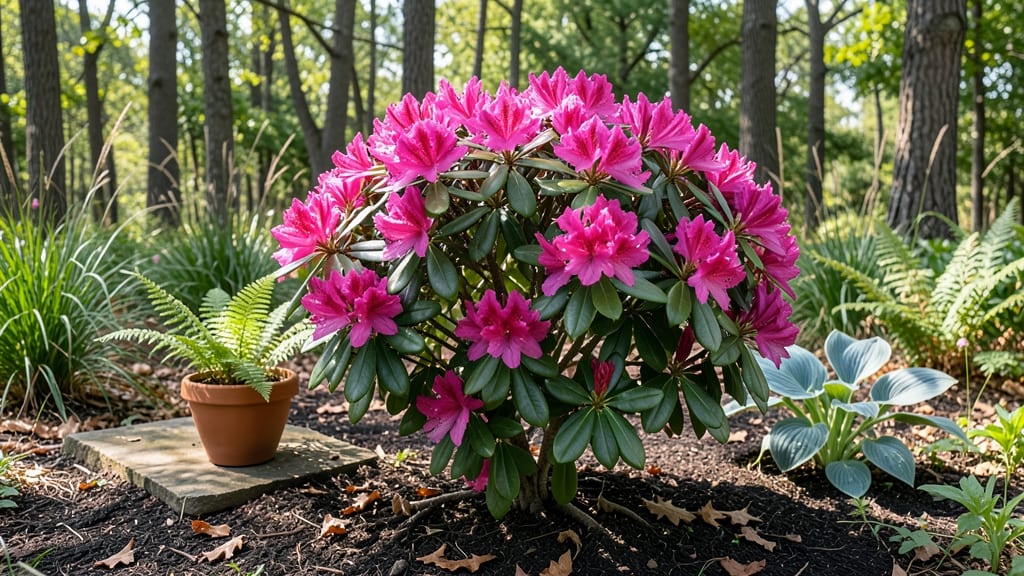
Azaleas can grow in shade, thriving in partial to full shade conditions but requiring at least 3-4 hours of morning sunlight daily. Dwarf varieties and evergreen types adapt best to low-light environments, while flowering performance varies by cultivar.
Azaleas aren't just sun-lovers—they're surprisingly adaptable to shadier spots, especially when given that critical morning light boost. 🌿 The key lies in their natural habitat: many wild azaleas grow under forest canopies where they receive dappled sunlight.
Without those few hours of direct light, though, their energy production slows, leading to fewer blooms and weaker stems. I've seen evergreen varieties handle shade better than deciduous ones, as their leaves maintain photosynthesis year-round.
For container growers, choosing dwarf cultivars like 'PJM' or 'Rhodora' gives you more flexibility in placement while still delivering stunning flowers.
What's fascinating is how azaleas prioritize energy—when light is limited, they'll often produce smaller but more vibrant blooms rather than sacrificing color intensity. This makes shade-grown azaleas particularly striking in garden designs where you want pops of color without the sun exposure.
Just remember: the north side of your home gets the least light, while east-facing spots offer that perfect morning sun window most azaleas crave.
💡 In This Article
- How Shade Affects Azalea Growth and Flowering
- Best Azalea Varieties for Shady Gardens
How shade affects azalea growth and flowering
Azaleas rely on chlorophyll production to convert sunlight into energy through photosynthesis, but their efficiency drops dramatically in deep shade. Without adequate light, the leaves produce less chlorophyll, resulting in paler foliage and weaker stems.
This is why azaleas grown in full shade often develop long, leggy growth rather than compact, bushy forms.
The morning sun is especially critical because it provides the highest light intensity when photosynthesis is most efficient—typically between 8 AM and 11 AM when temperatures are cooler and humidity is lower. 🌞
Flowering performance takes a direct hit in low-light conditions. Azaleas form flower buds in late summer and early fall, a process that requires stored energy from photosynthesis. In shade, this energy reserve is depleted faster, leading to fewer blooms or smaller, less vibrant flowers.
For example, a Girard’s Pink azalea might produce 30-40% fewer flowers in full shade compared to partial shade, where it receives 4-6 hours of filtered light daily. The color intensity also suffers—shade-grown azaleas often develop muted tones due to reduced anthocyanin production, the pigments responsible for their vivid hues.
Leaf health is another clear indicator of light stress. Inadequate light causes azaleas to develop chlorosis (yellowing between leaf veins) as the plant struggles to produce enough chlorophyll.
Over time, this weakens the plant's immune system, making it more susceptible to pests like lace bugs or fungal diseases like powdery mildew. The good news? Azaleas are remarkably resilient—they'll often recover if moved to brighter conditions before bud formation begins in late summer.
However, sudden light changes can shock the plant, so gradual adjustments work best. 🌱
Not all shade is equal. Partial shade (3-6 hours of dappled sunlight) is ideal because it provides enough light for moderate growth while protecting leaves from harsh afternoon sun that can scorch.
In contrast, full shade (less than 3 hours of light) forces azaleas into survival mode, prioritizing leaf production over flowers. This is why evergreen varieties like Rhododendron 'Catawbiense Grandiflorum' thrive better in shade—they maintain photosynthesis year-round, whereas deciduous types rely on seasonal light cycles.
For container-grown azaleas, rotating the pot every few weeks ensures even light exposure and prevents lopsided growth.
Temperature plays a hidden role in shade-grown azaleas. Cooler microclimates under trees or in north-facing spots slow metabolic processes, which can actually help conserve energy. However, if temperatures drop below 50°F at night, the plant may struggle to recover from daily light deficits.
This is why shade-loving azaleas often perform best in USDA Zones 5-8, where daytime warmth balances cooler nights. In hotter climates (Zones 9-10), afternoon shade becomes essential to prevent leaf scorch while still allowing morning sun for energy production. 🌡️
One surprising adaptation: azaleas grown in shade develop thicker, waxier leaves as a protective measure against potential drought stress from reduced transpiration. This trait makes them slightly more drought-tolerant than sun-exposed counterparts, but it doesn't compensate for the energy deficit caused by insufficient light.
For optimal results, pair shade-grown azaleas with organic mulch (2-3 inches deep) to retain soil moisture and cool roots—a critical factor when photosynthesis is limited.